
Acorn
August 4, 2026
⚙️ Hyundai Motor: IONIQ 9’s Product Strength and Production Stability Pull in Opposite Directions - 2026.08.04
Hi, this is Dotori. The clearest change at Hyundai Motor is the news that the IONIQ 9 outperformed the Volvo EX90 in a European comparison test of large electric sport utility vehicles. At the same time, production-line stoppages and labor-management risks have resurfaced. It is quite an unusual combination: the product is winning applause while the factory is struggling. 🔗
IONIQ 9, Has It Passed the Product-Strength Test in Europe?
Reports said that the IONIQ 9 beat the Volvo EX90 in an evaluation by a German automotive magazine [1]. Another comparison-test report also said that the IONIQ 9 received a higher rating than the Volvo EX90 by emphasizing space and performance [4]. A comparison of electrified luxury sport utility vehicles by the German specialist magazine Auto Motor und Sport also reported that the IONIQ 9 scored 572 points overall [2].
What has been confirmed here is only that it outperformed its rival in a specialist-magazine comparison test. The materials provide no basis for concluding that this evaluation will immediately lead to stronger sales or improved profitability. Still, it appears meaningful that the IONIQ 9’s space and performance were treated as competitive factors among the vehicles compared in Europe’s large electric-vehicle market.
Let’s Start with the Big Picture: Product and Production Are a Relay
Looking at Hyundai Motor within the electrification value chain, the news can be seen as a structure in which the benefits are prioritized differently: first, finished-vehicle product strength, second, conversion into sales in the electric-vehicle market, and third, production stability. No matter how well the first runner performs, the record does not continue if the next runner drops the baton. If the IONIQ 9 evaluation is a signal at the product stage, actual sales and production are the next segments.
This connection is the key. It is possible to interpret a specialist-magazine evaluation as raising interest in the brand and product, but until it is confirmed in sales volume, there is still a gap between expectations and results. Dotori views this evaluation as a conditionally positive factor demonstrating the competitiveness of Hyundai Motor’s electric-vehicle lineup. However, the company has not confirmed any sales improvement or financial impact based on the evaluation results.
The Real-World Variable Created by the Production-Line Stoppage 🏭
Domestic sales in July were tallied at 48,113 units, and Hyundai Motor cited production disruptions caused by a production-line stoppage lasting 9 days as the official reason for the decline in sales [5]. A separate report also said that Hyundai Motor sold 48,113 units domestically and 273,041 overseas, for a total of 318,454 units, meaning global sales fell 5.1% year over year. The company explained that weaker industry demand, production disruptions caused by the strike, and pent-up demand awaiting new models were contributing factors [6].
These figures belong to a different layer from the IONIQ 9’s evaluation. They mean that, regardless of product competitiveness, stopping production immediately affects deliveries and sales flows. If we draw the electrification value chain on a board, product development, demand generation, production, and delivery must mesh like gears. When one gear stops, the others also find it difficult to pick up speed.
Questions Remaining in the Domestic Market
An analysis also said that Hyundai Motor’s leading position in the domestic market is wavering, while weakening electric-vehicle competitiveness and labor-management risks have been mentioned together [3]. This is a risk factor raised by the media rather than a confirmed company outlook. Therefore, the IONIQ 9’s strong overseas evaluation and the variables surrounding domestic sales and production should be viewed together rather than separately.
In the reference stock-price table, Hyundai Motor’s closing price on August 4 was ₩391,000,, the change rate was -0.51%, and trading volume was 637,762. More important than the price on a single day are whether the product evaluation leads to actual demand and how smoothly deliveries recover after the production stoppage. It remains to be seen whether the IONIQ 9’s evaluation will be repeatedly confirmed in the marketplace, and whether labor-management variables and production stability will become the next links in the chain.
📰 Reference News (6)
Hyundai Motor IONIQ 9 Beats ‘Volvo EX90’ in German Specialist Magazine Evaluation - Chosun Ilbo
조선일보 · 2026.08.04
📰 View original
“Ahead of the Volvo EX90”… Hyundai Motor’s ‘IONIQ 9’ Praised by German Specialist Magazine
네이버뉴스 · 2026.08.04
📰 View original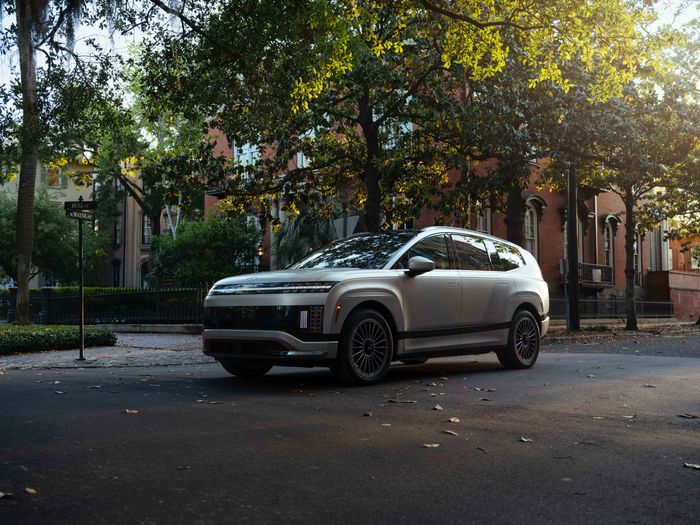
Hyundai Motor’s No. 1 Position at Home Is Shaking… Falling Behind in EVs and Now Facing Labor Risks - Dailian
데일리안 · 2026.08.04
📰 View original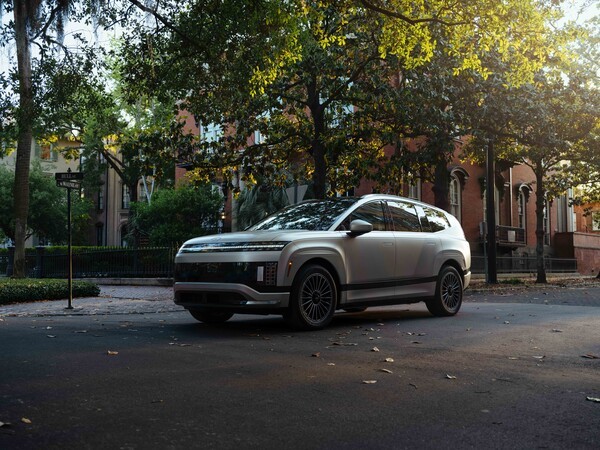
IONIQ 9 Beats Volvo EX90 in Europe’s Large Electric SUV Competition… Proves Product Strength with ‘Space and Performance’ - Industry News
네이버뉴스 · 2026.08.04
📰 View original
Production Line Stopped for 9 Days… Hyundai Motor Sales Also Slumped
네이버뉴스 · 2026.08.04
📰 View original
Hyundai Motor’s July Global Sales Down 5.1% Due to Strike and Demand Awaiting New Models
네이버뉴스 · 2026.08.03
📰 View original
Comments 0
to comment Login