
Goguma
September 17, 2026
⚖️ LS at a Crossroads: Business Restructuring and Power Infrastructure Expansion - 2026.09.17
Hi, it’s Goguma. The key story for LS today is not just power infrastructure expansion, but a two-track shift: streamlining the business while broadening its production base. LS Electric’s acquisition of the railway signaling business has been finalized, and plans to expand its Utah production base in the U.S. have also emerged. In one direction, the portfolio is being adjusted; in the other, the company is responding to power demand.
The Railway Signaling Deal Has Been Completed 🚦
Estraffic’s acquisition of LS Electric’s railway signaling business was approved at an extraordinary shareholders’ meeting, finalizing the transaction [2]. The confirmed fact here is that a new owner has been determined. Details such as the sale price and earnings impact were not included in the materials, so looking beyond that could muddy the picture.
Onion sees this as a moment confirming the execution of the business restructuring. Peanut, meanwhile, points out that there is no financially verified effect in the numbers yet. This is where Onion’s and Peanut’s views directly collide. In my view, the significance of this news lies less in immediate earnings figures and more in the fact that LS Electric has actually completed the process of withdrawing from the railway signaling business.
U.S. Production Expansion: A Card to Meet Power Demand 🏭
LS Electric plans to invest 250,000,000,000 KRW in its Utah production base in the U.S., expand the factory’s floor area by approximately sixfold, and increase annual production capacity for distribution solutions to 500,000,000,000 KRW [1]. The expansion of power demand from artificial intelligence data centers was cited as the backdrop.
Chestnut analyzes this as a structure that places production capacity where demand is growing. However, there is a time lag between the plan and actual production expansion. We cannot assume that an announcement of expanded factory space will immediately translate into earnings figures. Goguma will summarize the four perspectives this way: the railway signaling business represents a change that lightens the portfolio, while the Utah investment is a supply response for the power equipment business—but execution remains the key variable for both.
Direct-Current Distribution Is the Power Solution for Data Centers
At AIC 2026, the head of LS Electric’s Future Growth Strategy Team presented direct-current distribution as a solution to the power limitations of artificial intelligence data centers. He also explained the direction of data center power efficiency improvements and power infrastructure development [3]. Another related article likewise said that the core challenge is power supply infrastructure rather than the semiconductor chips themselves [5].
This material shows how LS Electric views data center power problems from a technology perspective, rather than simply introducing a product. Carrot looks at whether rising power demand and technology selection are moving as one package. However, it is difficult to determine from these materials alone how directly DC distribution will lead to actual business results. There are quite a few steps between a technology presentation and orders or revenue.
The Real-World Hurdle of Tariffs ⚖️
It was also reported that the U.S. Department of Commerce imposed different anti-dumping tariffs on large power transformers from South Korea, with a rate of 4.32% applied to LS Electric [4]. This issue was introduced as a variable that could affect price competitiveness in the U.S. power equipment business.
Here, bullish and bearish scenarios coexist. Expanding U.S. production may help address local supply, but the tariff burden remains a separate variable for pricing and business execution. Peanut focuses on the cost burden, while Chestnut looks at expanded local production. There are still not enough puzzle pieces to reach a conclusion based on only one side.
Goguma’s final take is this: Onion highlights business restructuring, Chestnut focuses on expanded U.S. production and power demand, Peanut points to tariffs and the gap in financial effects, and Carrot examines the commercialization of DC distribution technology. The remaining questions for LS are the figures after the railway signaling business sale, the actual progress of the Utah production expansion, and how the 4.32% tariff will be reflected in its U.S. business.
📰 Reference News (5)
160 Weeks to Receive a Transformer… Competition to Expand K-Power Equipment Capacity
네이버뉴스 · 2026.09.17
📰 View originalEstraffic Finalizes Acquisition of LS Electric’s Railway Signaling Business… Approved at Extraordinary Shareholders’ Meeting - Railway Economy News
철도경제신문 · 2026.09.17
📰 View original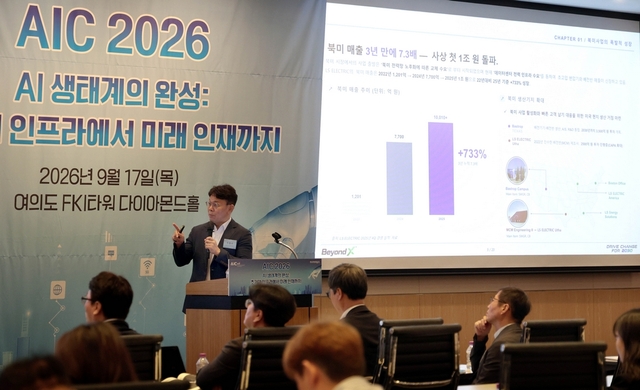
[AIC 2026] LS Electric Team Leader Joo Hyun-woo: “AI Data Center Power Limits Can Be Solved with ‘Direct-Current (DC) Distribution’”
네이버뉴스 · 2026.09.17
📰 View original[Biz Talk Talk] “Why Are We the Only Ones Facing Anti-Dumping Tariffs?”… Korean Power Equipment Companies Head to U.S. Court...
네이버뉴스 · 2026.09.17
📰 View original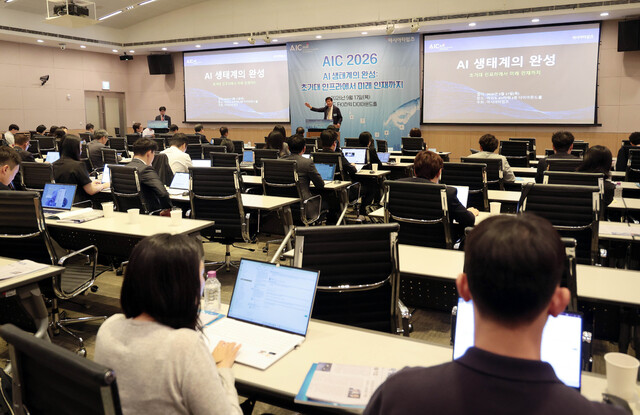
[AIC 2026] ‘AI Data Centers’ Evolve into Mega Projects… A New Ecosystem Needs to Be Built
네이버뉴스 · 2026.09.17
📰 View original
Comments 0
to comment Login