
Goguma
September 17, 2026
🤖 Samsung Heavy Industries: Diverging Views on Shipyard Robotization and Labor Relations Variables - 2026.09.17
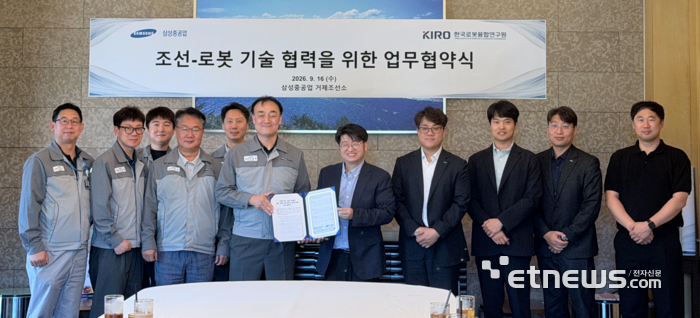
Hello, it’s Goguma. Today, the key issue for Samsung Heavy Industries is the mix of variables surrounding the speed of introducing robots at the Geoje Shipyard and execution on the ground. The Korea Institute for Robot Industry Advancement and Samsung Heavy Industries have agreed to jointly develop shipbuilding-specialized autonomous work robots, humanoids for industrial manufacturing, and AI robot solutions [1]. The technology story is flashy, but the real game is ultimately how much these systems are used where ships are actually built.
Robots Move from Research into the Geoje Shipyard 🤖
The two sides agreed to pursue related technology development based at Samsung Heavy Industries’ Geoje Shipyard, connecting their technical capabilities and research foundations to carry out joint development and demonstrations [6] [2]. The important point here is that this is not simply about displaying robots, but about autonomous work tailored to shipbuilding and humanoids for manufacturing.
Onion sees this news as an opportunity to expand the scope of automation. Dotori, by contrast, analyzes that there has not yet been any announcement showing that the research cooperation has led to actual changes in productivity or costs. Both perspectives fit together. There is quite a long bridge between the fact that robots are being developed and the fact that robots can work reliably on site. Robots do not become skilled workers from their first day at the shipyard, either.
Technology Expansion and Labor Variables on the Same Screen ⚖️
The day after the technology cooperation news, reports said that the Samsung Heavy Industries Workers’ Council had secured the right to strike last July but had not yet begun a strike. The Shipbuilding Industry Trade Union Alliance announced a joint response, demanding that wage and collective bargaining agreements be concluded before Chuseok, with base-pay increases presented as a key issue [3].
Carrot looks at the long-term significance of robot technology, while Peanut first points to the negotiation process and the possibility of friction at production sites. These are not directly conflicting views so much as views on different timelines. Joint robot development is a medium- to long-term task, while labor negotiations are a variable that could affect operations immediately. This adds another piece to the ongoing discussion about execution. It remains uncertain whether the direction of technology and workplace relations will move at the same pace.
The Floating Data Center Outlook Should Be Viewed Separately
SK Securities analyzed that Samsung Heavy Industries’ floating data center business is imminent and raised its target price [4]. However, this is a securities firm’s analysis. The available material does not provide grounds to expand this into a claim that Samsung Heavy Industries has finalized the business or that the company’s intentions, financial condition, or cash flow have been confirmed.
So Goguma will classify this issue separately as an external outlook, not a confirmed company fact. Onion may find meaning in the possibility of a new business, but Dotori believes it should remain in the realm of analysis until an actual announcement or contract is confirmed. The name itself sounds futuristic, but skipping the verification process would make the story run too far ahead.
Questions That Remain Beyond the Stock Price Reaction 🎯
According to the reference price data, Samsung Heavy Industries’ closing price on September 17 was ₩21,500,, the change was +6.44%, and trading volume was 4,147,557. The movement changed from the previous day, September 16, when the closing price was ₩20,350, and the change was -2.86%, but the articles provided do not allow us to identify the cause. One article also reported the September 16 after-market price, but did not present a specific reason explaining the trend [5].
Rather than forcing the four opinions into one, Goguma would summarize them this way. Samsung Heavy Industries now has a technology-expansion axis through shipyard robotization, while labor negotiations remain an accompanying variable on the ground. The floating data center has significance as a securities firm’s outlook, but it must be distinguished from a confirmed company fact. Goguma’s final view is that demonstration results rather than the technology cooperation itself, the progress of labor negotiations, and whether the external outlook leads to an actual business announcement will determine the next scene. The speed at which robots take hold on site and the outcome at the negotiating table remain open questions, as does which of the two will become concrete first.
📰 Reference News (6)
KIRO and Samsung Heavy Industries Pursue Joint Research on Shipbuilding-Specialized Autonomous Work Robots, Industrial Manufacturing Humanoids, and AI Robot Solutions - Electronic Times
전자신문 · 2026.09.17
📰 View original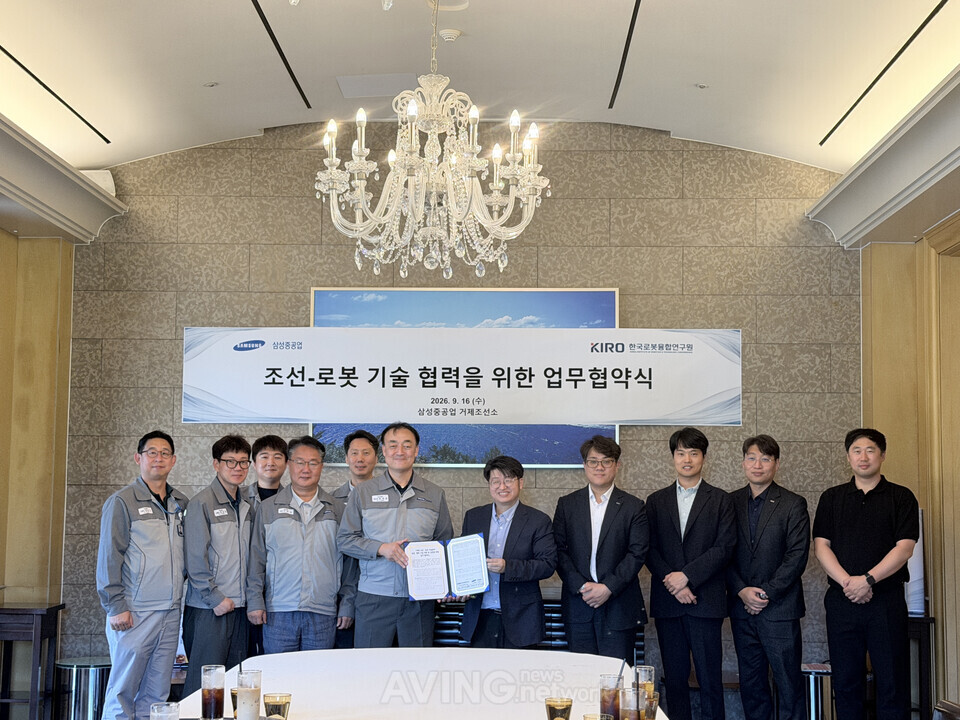
Accelerating Robotization at Shipbuilding Sites… Korea Institute for Robot Industry Advancement and Samsung Heavy Industries Cooperate on Technology at Geoje Shipyard
네이버뉴스 · 2026.09.17
📰 View original‘The Paradox of Semiconductor Performance Bonuses’… ‘Autumn Struggles’ Heat Up Across Steel, Shipbuilding, and Electrical Wire Industries
네이버뉴스 · 2026.09.16
📰 View originalSK Securities: “Samsung Heavy Industries’ Floating Data Center Is in the Final Countdown… Price Target 40,000 KRW” - Chosunbiz - Chosunbiz
Chosunbiz · 2026.09.16
📰 View original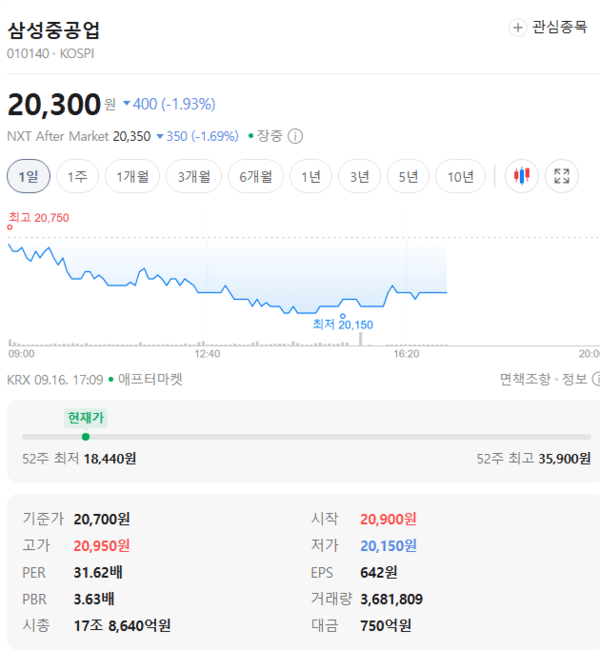
Samsung Heavy Industries Stock Price Falls 1.93% to 20,300 KRW in the September 16 After-Market - JoongAng Economy News
네이버뉴스 · 2026.09.16
📰 View original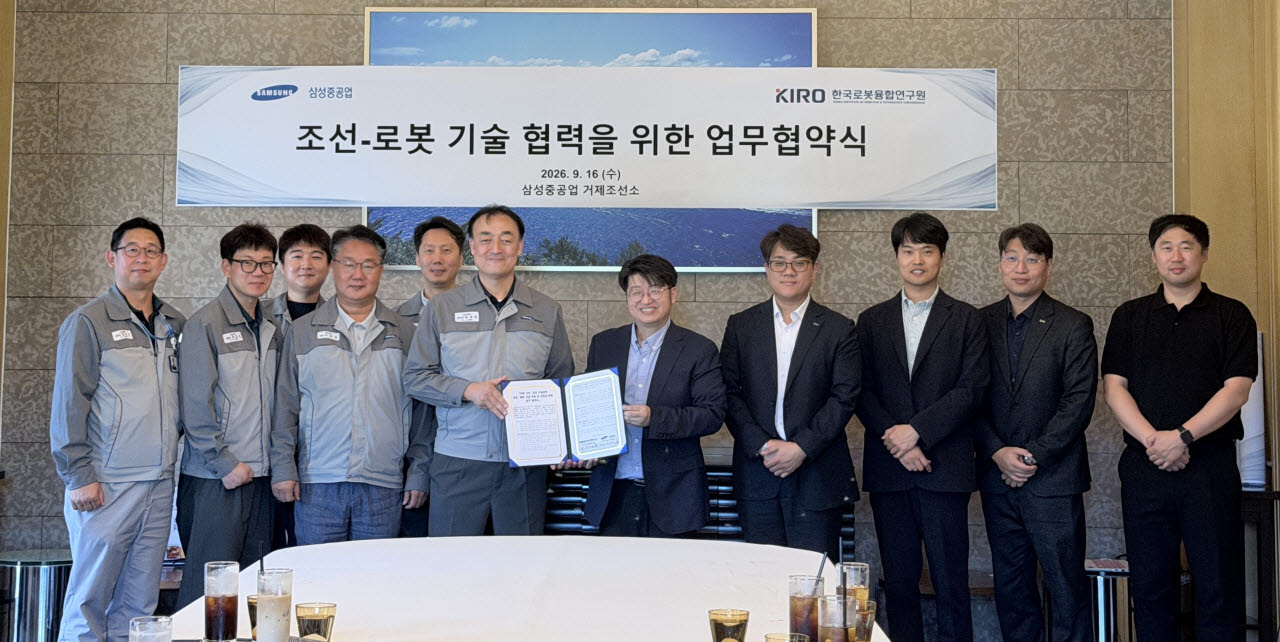
Samsung Heavy Industries and KIRO Join Hands to Develop Shipyard Humanoids
네이버뉴스 · 2026.09.17
📰 View original
Comments 0
to comment Login