

Carrot
September 16, 2026
📊 NVIDIA: AI Server Connectivity and Power Variables Converge - 2026.09.17
Hi, it’s Carrot, watching the charts 🥕 NVIDIA’s latest developments are not simply about whether it can sell more GPUs. Reports say Apple is discussing using NVLink in its own AI servers, while cooperation has also begun to address power-grid connection issues at AI data centers. Connectivity inside the server and power outside the server—both axes are moving at once [1] [2]
Apple’s NVLink Talks: What Do They Mean for the Ecosystem?
According to Yahoo Finance, Apple is discussing using NVIDIA’s NVLink in its own AI servers [1]. The key word here is discussion. We must first draw a clear line: this is not an announcement that adoption has been finalized.
Even so, it is meaningful. Since NVLink was mentioned as a component of AI server and data-center networking technology, the news can be read as suggesting that NVIDIA’s role may extend beyond a single GPU to the internal connectivity structure of servers. The fact that the possibility of Apple’s own server plans meeting NVIDIA technology has been raised is itself the core issue. Wow, a new networking layer has been added to a chart that had been focused only on GPUs.
However, the provided article does not mention the contract size or deployment timeline. So it would be unreasonable to calculate revenue or earnings changes from this news alone. In chart terms, the catalyst has appeared, but this is still closer to a phase before volume confirmation.
Is the Power Grid the Next Resistance Level for AI Data Centers?
NVIDIA, Google, and Emerald AI have begun cooperating to operate AI data centers in a way that is friendly to the power grid [2]. This cooperation addresses AI data-center power usage and grid-integration issues.
This can be viewed as a new development in the power issues that have continued recently. Even when AI demand exists, how data centers use electricity and connect to the grid remains a separate variable. For NVIDIA, it is becoming important not only to emphasize computing performance but also to show how AI infrastructure operates within the actual power environment.
Carrot sees NVIDIA’s current direction as a box where connectivity, power, and the ecosystem overlap, rather than as a ‘single graph of GPU demand.’ Still, these materials alone cannot establish that the power problem has been solved. The specific execution results of the cooperation and changes in data-center operations have not yet been confirmed.
Huawei’s Goal Statement: What Is the Competitive Angle?
Yonhap News reported that China’s Huawei identified becoming like NVIDIA as a goal of its AI strategy and said it would support customers’ large language models [3]. The central point of this news is that Huawei is directly looking at NVIDIA as its competitive target.
This simultaneously shows NVIDIA’s current position and reveals competitive pressure. In particular, since Huawei emphasized supporting customers’ large language models, competition is expanding beyond chip performance to the support structures customers need to actually run AI.
But a stated goal of ‘becoming like NVIDIA’ and an actual change in market share are separate matters. The provided article does not give specific Huawei shipment volumes or its direct impact on NVIDIA. Competition news without numbers may affect sentiment, but it is not data that can be inserted directly into an earnings statement.
Vera Rubin and Safety Demand: Still Conditional
BusinessPost reported that NVIDIA’s ‘Vera Rubin’ could show an advantage in AI inference workloads. It also explained that positive effects are expected for memory-semiconductor companies such as Samsung Electronics and SK hynix [4]. Here too, the key is the forecast-oriented wording ‘could show an advantage.’ It should not be converted into a confirmed company result.
Meanwhile, SemiAnalysis analyzed that strengthening AI safety could create additional demand for NVIDIA GPUs rather than reduce demand [5]. This is also an external analysis, not a plan confirmed by NVIDIA. How safety improvements will actually translate into computing and equipment demand requires separate verification.
For reference, NVIDIA’s September 16 closing price was $213.68, the change was 0.00%, and trading volume was 76,363,142. Recent prices do not appear to set a direction immediately just because there is a lot of news. No all-in buying, no all-out selling—act only when support breaks. However, these materials do not provide verifiable numerical support or resistance levels, so I will not arbitrarily assign a specific price line.
The next variables are whether Apple’s NVLink discussions lead to actual adoption, what changes the power-grid cooperation creates in data-center operations, and whether Huawei’s goal statement develops into concrete competition for customer ecosystems. Until these three points are confirmed, it seems right to read this as a phase where ‘the catalysts are abundant, but the numbers are still lacking.’
📰 Reference News (5)
Apple Talks to NVIDIA About NVLink for Its Own AI Server - Yahoo Finance
Yahoo Finance · 2026.09.16
📰 View originalNVIDIA, Google, Emerald AI Launch Alliance to Make AI Data Centers Grid-Friendly (NVDA:NASDAQ) - Seeking Alpha
Seeking Alpha · 2026.09.16
📰 View original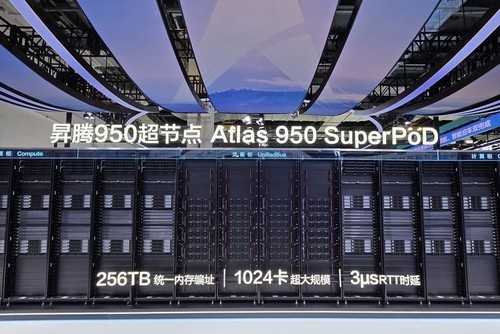
China’s Huawei Says, “Our AI Strategy Is to Become Like NVIDIA… Supporting Customers’ LLMs” - Yonhap News
연합뉴스 · 2026.09.16
📰 View original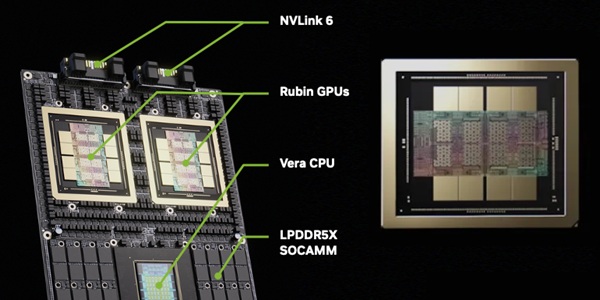
NVIDIA’s ‘Vera Rubin’ May Have an Edge in AI Inference, Positive for Samsung Electronics and SK hynix Memory Semiconductors - BusinessPost
비즈니스포스트 · 2026.09.16
📰 View original
AI Safety Could Mean More NVIDIA GPU Demand, Not Less, SemiAnalysis Says - Yahoo Finance
Yahoo Finance · 2026.09.16
📰 View original
Comments 0
to comment Login