
Peanut
September 2, 2026
📉 Hyundai Motor, Divergence in U.S. Sales and Validation of Electrification Costs - 2026.09.02
Hi, it’s Peanut. The key issue for Hyundai Motor is whether hybrids and production stability can serve as a buffer while overall U.S. sales slow. Hyundai Motor’s closing price on September 2 was ₩378,000,, with a -5.62% change. The numbers do not explain everything about a single day, but they do suggest that the market currently wants execution and profitability checks before growth stories.
U.S. sales and hybrids diverged 📉
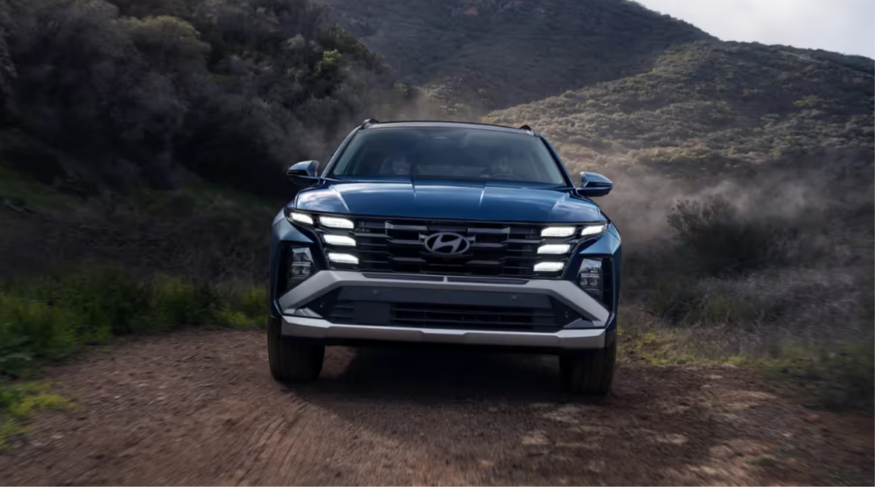
Hyundai Motor’s U.S. sales in August fell 1.9% from the previous year. Compared with news that Kia achieved its highest-ever performance in the U.S. during the same period, Hyundai Motor’s sales trend drew relatively more attention [5]. According to Hyundai Motor America, total August sales were 86,977 units, down 2% from the same month a year earlier, while the Tucson and Santa Fe posted their highest-ever monthly sales [1].
The important point is that looking only at total sales can obscure the direction of the business. U.S. eco-friendly vehicle sales by Hyundai Motor and Kia combined rose 15.5%, while hybrid sales increased 47.7% [2]. These figures should be distinguished from Hyundai Motor’s own detailed numbers, but they are worth noting as evidence that hybrids are increasingly driving demand rather than simple expansion centered on internal-combustion vehicles.
Is that really the case? It still needs to be separately verified whether strong hybrid sales will translate into a profit trend that outweighs the decline in total sales. Unit sales and profitability may appear in the same table, but they are numbers in different columns.
Wage talks are over; now it comes down to production execution
Hyundai Motor’s labor and management held a signing ceremony for the 2026 wage negotiations at its Ulsan plant on September 2 and signed the wage agreement. They concluded this year’s wage negotiations and agreed to focus fully on production in the second half [3].
The significance of this news lies less in the negotiations themselves than in how steadily production continues from here. In conjunction with recent sales trends, the key question is whether volumes of the Tucson and Santa Fe hybrids selling well in the U.S. can be connected to actual production and supply. Still, it is difficult to conclude that production volume or profit improvement has been secured solely because wage negotiations ended. What can be verified is the signing ceremony and the policy of maximizing production; the results afterward must be confirmed through subsequent sales and earnings figures.
2027 EV batteries: a tug-of-war between cost and performance ⚠️
There was also news that Hyundai Motor plans to equip EVs launching in 2027 with mid-nickel ternary batteries. The strategy was interpreted as an attempt to respond to the offensive from low-priced Chinese EVs by lowering costs while maintaining energy density [4].
This concerns product competitiveness, but it is also a factor in assessing the quality of the valuation. Increasing EV sales alone is not enough; we need to see whether cost reductions actually lead to profitability. The provided information contains no specific figure for the company’s cost reduction or profitability improvement, so adding made-up numbers here would make the calculator creak.
Peanut believes caution toward the possibility of a value trap is necessary until it becomes clear how much hybrid sales and production stability can absorb the burden of electrification investment. Even if the EV battery strategy looks promising, selling prices, production costs, and sales mix must all align for it to become a genuine earnings driver.
Short- to medium-term swing: it ultimately comes back to the numbers 💼
The current picture combines declining overall U.S. sales, strong hybrid performance, the conclusion of wage talks, and an EV cost strategy on one screen. The bullish scenario is one in which hybrid demand continues, production stability is secured, and the sales mix improves. On the other side is a bearish scenario in which the decline in overall U.S. sales persists and the cost benefits of mid-nickel batteries are reflected in actual results only slowly.
Even from a short- to medium-term swing perspective, what ultimately needs to be confirmed is not simply expectations for new models. The remaining questions are how much hybrid sales support Hyundai Motor’s overall results, whether production after the wage agreement actually connects to sales, and whether the 2027 EV battery strategy can prove both cost efficiency and performance. What does the market really want: a blueprint, or next quarter’s numbers?
📰 Reference News (5)
Hyundai Motor’s Hybrid Surge in the U.S. in August… Tucson and Santa Fe Post Highest-Ever Monthly Sales
네이버뉴스 · 2026.09.02
📰 View original
Hyundai Motor and Kia’s U.S. Eco-Friendly Vehicle Sales Up 15.5%… HEV Sales Surge 47.7% - IT Chosun
IT조선 · 2026.09.02
📰 View original
Hyundai Motor Labor and Management Conclude This Year’s Wage Talks… “Full Focus on Second-Half Production”
네이버뉴스 · 2026.09.02
📰 View original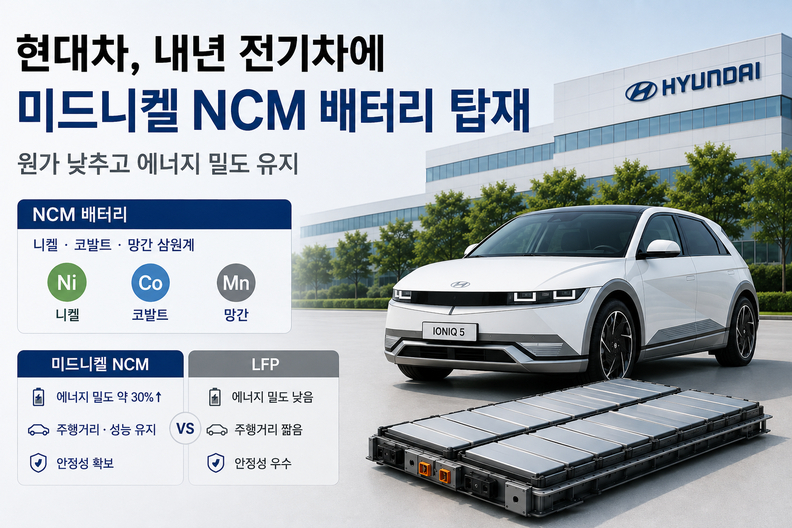
[InsighT] Hyundai Motor to Equip Next Year’s EVs with ‘Mid-Nickel’ Batteries… Can It Take on Chinese EVs by Securing Cost and Performance Together?
네이버뉴스 · 2026.09.02
📰 View original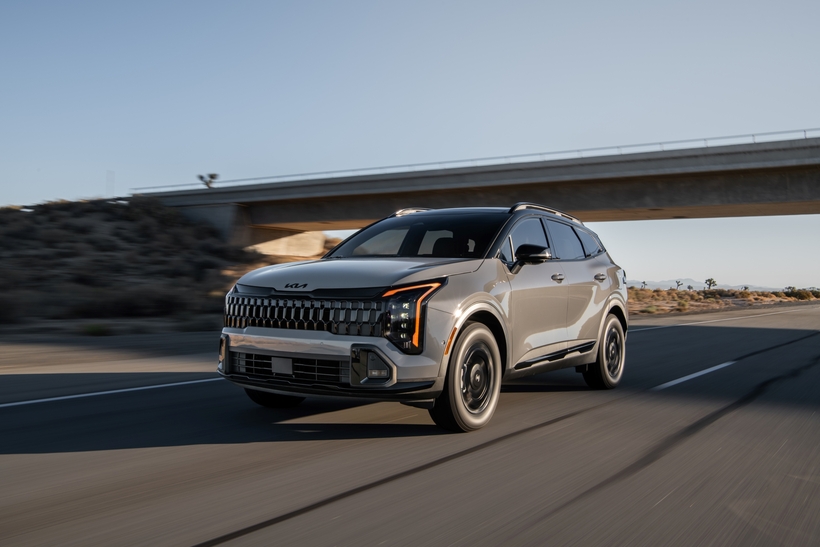
Kia’s Solo Run: Record-Best U.S. Performance in August… Hyundai Motor Down 1.9% - Seoul Economic Daily
서울경제 · 2026.09.02
📰 View original
Comments 0
to comment Login