
Goguma
September 14, 2026
🍠 LG Electronics Between Middle East AI Home Expansion and Profitability Challenges - 2026.09.14
Hi, it’s Sweet Potato. The LG Electronics news that stands out most today is that it opened the Middle East’s first business-to-business artificial intelligence home experience space in Riyadh, Saudi Arabia. This is more than simply launching a new product; it can be read as a move to target builders and the building management market by linking appliances with the operation of the entire home. However, the company is discussing both expanding its footprint and raising profit per product, so this issue needs to be viewed from both angles.
🍠 What LG built in Riyadh is more a business hub than a ‘store’
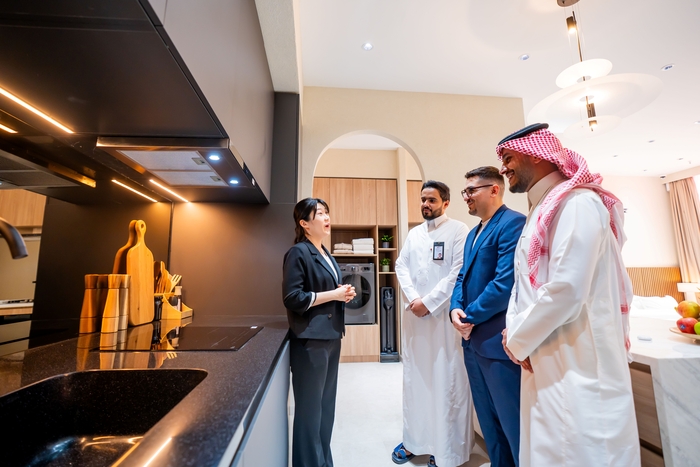
LG Electronics recreated a living room, kitchen, bedroom, and bathroom in the Riyadh space, while showcasing locally tailored built-in appliances. The space was described as targeting the smart home and building management markets, and it was also presented as a beachhead for pursuing corporate customers such as construction companies in the Middle East and Africa [1].
What matters here is that the proposal has moved closer to an integrated offering covering the home and building as a whole, rather than simply selling individual appliances. It is a different approach from showing one refrigerator or one washing machine at a time. Presenting multiple areas of a home at once gives LG Electronics room to propose not only home appliances but also smart home and building management solutions as a package. Of course, the opening of an experience space alone does not confirm actual contracts or financial results. There is still a gap between an exhibition and business performance. What fills that gap is the key question.
🤝 Middle East expansion, between expectations and verification
Electronic Times reported the new hub as part of an effort to target Saudi Arabia’s smart home market [1]. The article title also includes a market-size figure, but since the number appears only in that single article, I won’t expand on it here. More important than the number is the business approach of putting locally tailored built-ins and a business-to-business space at the forefront.
Onion sees this less as regional expansion and more as an expansion of the customer base. Acorn places meaning on the process of presenting smart homes not as simple appliance sales but as spatial solutions. I see it similarly. To deal with corporate customers in the Middle East, the local architectural environment and spatial configuration will likely matter as much as product functions, and this experience space appears closer to a device for demonstrating that explanation visually. However, the reports so far do not provide contract sizes or a timeline for revenue contribution. The distance between expectations and confirmation remains.
⚖️ Appliance profitability, the scale weighing the pace of expansion
Another article reported that LG Electronics is seeking to improve profitability in its home appliance business in response to slowing growth in the domestic market, pressure from Chinese manufacturers, and cost burdens. Its main strategy is to raise profit per product by managing costs before and after product sales [2].
This point connects intriguingly with the Riyadh news. On one side, the company is expanding its business stage through B2B and smart homes; on the other, it is tightening the cost structure of its existing appliance business. Peanut focuses first on the execution of profitability improvement rather than expansion, while Carrot views competition from Chinese manufacturers and cost burdens as variables that could weigh on actual results. Onion and Peanut do not see the issue in exactly the same way. Their focus differs between the external shape of growth and the structure of what remains per unit.
🎯 Sweet Potato’s final summary
Here is how I would organize the four perspectives. Onion looks at expanding Middle East corporate customers, Acorn at AI home-based spatial solutions, Peanut at appliance profitability, and Carrot at competition from Chinese manufacturers and cost burdens. If you force their views into one sentence, important differences may disappear instead.
In my view, this news is less an event that immediately confirms earnings than a sign of LG Electronics’ direction: expanding home appliances into business-to-business transactions at the level of spaces and buildings. At the same time, how profitably that expansion can proceed amid slowing market growth and cost pressures is a separate question. Whether the Riyadh experience space leads to actual corporate contracts, and how much profitability improvements offset the costs of expansion, remain the two variables for the next scene.
📰 Reference News (2)
LG Electronics Takes Aim at 8,700,000,000 USD Saudi Arabia’s Smart Home Market... B2B Hub in Riyadh - Electronic Times
전자신문 · 2026.09.14
📰 View original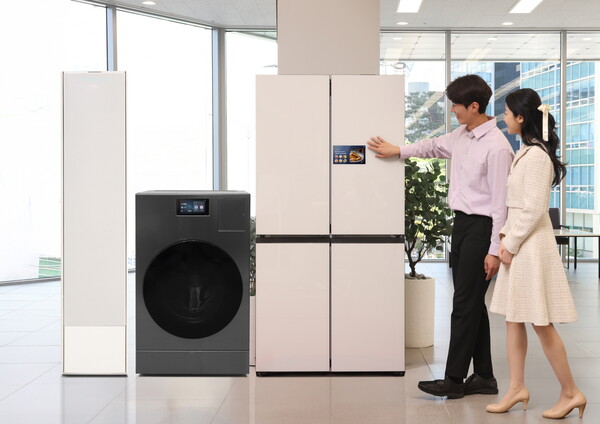
Samsung·LG, Raising Profitability
네이버뉴스 · 2026.09.14
📰 View original
Comments 0
to comment Login