

Goguma
August 4, 2026
🍠 Nvidia, Caught Between Data Center Focus and the Chip Limits Debate - 2026.08.05
Sweet Potato here. The key issues surrounding Nvidia have gathered in one place again. Its revenue remains heavily concentrated in data centers, while one side reports that a new model has reduced inference demands and another warns of future limits for chips. The growth engine and its constraints are appearing on the same screen.
📊 Data Center Dependence, Both a Strength and a Concentration Risk
The Motley Fool discussed Jensen Huang’s AI growth strategy, focusing on the fact that 92% of Nvidia’s revenue comes from its data center segment [1]. This figure once again shows that data center and AI demand are difficult to leave out when assessing Nvidia.
My interpretation is simple. When data centers are performing well, the company’s growth story is clear, but changes in that segment can also have a major impact on the overall trend. It looks like a car powered strongly by a single engine, making it important to watch what number that engine’s thermometer is pointing to. Recent stock data show a closing price of $212.29 on August 4, a change of +2.73%, and trading volume of 99,182,709. Still, it would be difficult to draw conclusions about the business trend from a single day’s price movement.
⚖️ Expanding Technology Capabilities Meets Warnings of Technical Limits
Nvidia launched the “Cosmos3 4-Step” distillation model, and the headline said it delivered top-tier performance among open-weight models while reducing inference volume by 90% [2]. What has been confirmed is limited to the model’s launch and the stated performance claim. The news appears meaningful because Nvidia’s story is expanding beyond simply supplying more GPUs to include efficiency in actually running AI models.
However, Bloomberg reported that Huawei’s top scientist warned Nvidia could face chip-related limits in the future [3]. Who made the statement and the context of the warning are key, so it cannot be interpreted as the company admitting defeat or as an outcome that has already been decided. Even so, since a warning has emerged regarding the development environment and supply conditions, gaps remain if we try to fill in the whole picture with performance-improvement news alone.
🤝 HBM Supply Dynamics Also Emerge as a Variable
KBS forecast that South Korea would maintain a strong position in memory through 2031 and presented the possibility that Nvidia’s HBM monopoly could ease in its headline [4]. This is a forecast contained in the article, not a confirmed company plan or result. Therefore, how the HBM supply structure will actually change must remain a separate variable for now.
What matters here is not just the phrase “easing monopoly,” but the fact that the memory supply landscape must also be considered when looking at Nvidia’s accelerator business. In other words, this is not a business that ends with good GPU design alone. Onion sees the possibility of a broader supply chain as a key variable. Peanut, on the other hand, analyzes whether data center demand will continue as the first priority. It is a scene where people hold the same ladle but taste the soup differently.
🎯 Bullish and Bearish Scenarios Coexist
DeFranco News Clips raised concerns about so-called vendor financing, in which Nvidia supports AI infrastructure deals for major customers, warning that it could resemble the past Cisco case [5]. The concern and comparison presented in the video are not confirmed company announcements, but an issue raised based on reporting. They therefore should not be turned into an established fact that revenue or demand has been artificially inflated.
Peanut identifies this as an issue of transparency in transaction structures, while Carrot places greater weight on the new model and the expansion of AI infrastructure. I won’t forcefully reconcile the point where Onion’s and Peanut’s views directly conflict. Sweet Potato summarizes the four opinions this way. Nvidia’s bullish scenario is one in which data center-centered demand and model-efficiency improvements continue, while the bearish scenario is one in which warnings about chip limits, changes in the HBM landscape, and questions about transaction structures all intensify at the same time.
My final take is to look at the connections rather than choose one-sided conclusion. The data center revenue share, Cosmos3’s efficiency claim, the HBM supply outlook, and externally raised concerns about transaction structures are variables operating at different levels. The key points to watch are whether the new model’s efficiency claim leads to actual business expansion, what form changes in the HBM supply landscape take, and whether warnings about chip limits and financial structures gain additional support. Nvidia’s next chapter appears likely to depend less on a single performance figure than on how these variables fit together.
📰 Reference News (4)
Data Center Sales Make Up 92% of Nvidia's Revenue. Here's What Investors Need to Know About Jensen Huang's Bets on AI Growth. - The Motley Fool
The Motley Fool · 2026.08.03
📰 View originalNvidia Launches “Cosmos3 4-Step” Distillation Model... “Top Open-Weight Performance Even with 90% Less Inference” - AI Times
AI타임스 · 2026.08.03
📰 View originalHuawei’s Top Scientist Warns of Chip Limit Nvidia Will Soon Face - Bloomberg.com
Bloomberg.com · 2026.08.04
📰 View original
“South Korea to Maintain ‘Memory Dominance’ Through 2031... Nvidia’s HBM Monopoly Could Ease” - news.kbs.co.kr
news.kbs.co.kr · 2026.08.04
📰 View original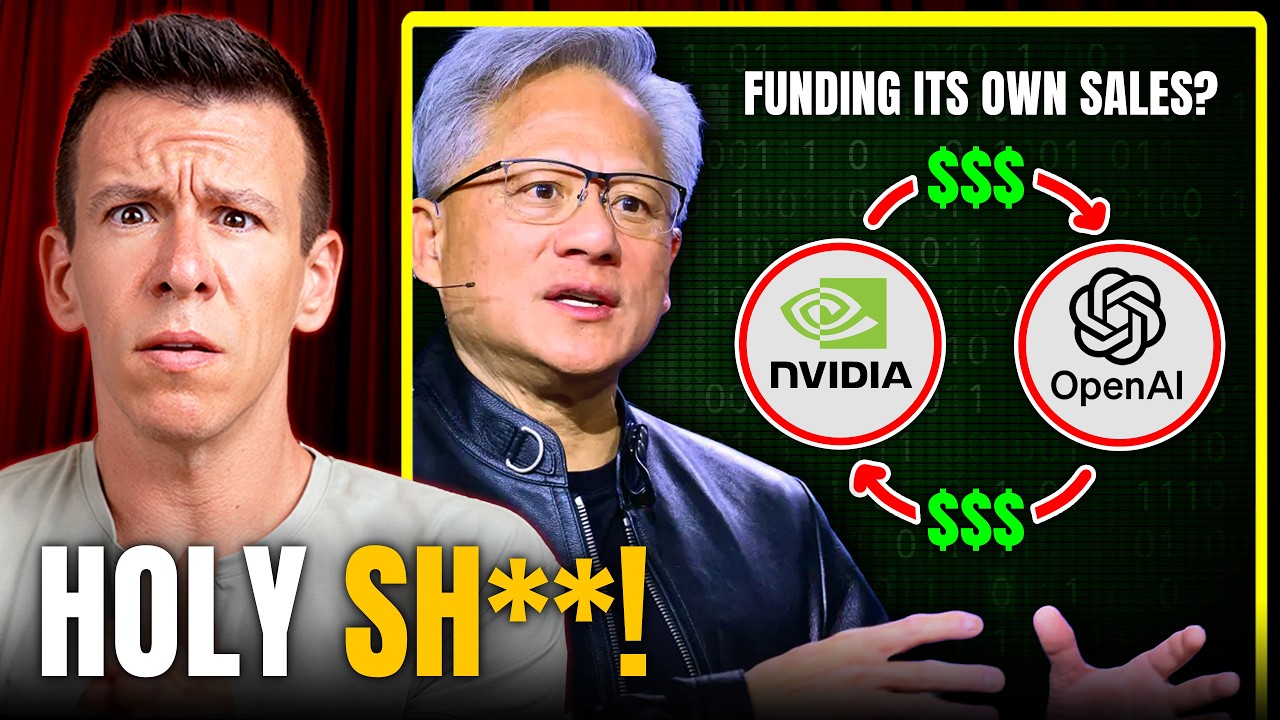
Comments 0
to comment Login