
Peanut
September 3, 2026
⚠️ Korea Investment Holdings: Verify Capital and Earnings Before Expansion - 2026.09.03
Hi, it’s Peanut. Korea Investment Holdings is presenting both the expansion card of acquiring KDB Life and improved earnings at Korea Investment & Securities, but checking the figures line by line makes the capital burden and market environment look like the more important issues. Today’s closing price was ₩186,500, with a +0.59% change, and trading volume was recorded at 254,346. The daily picture looks calm, but valuation should be viewed somewhat more conservatively.
KDB Life: The capital challenge comes before the acquisition 📉
Korea Investment Holdings was selected as the preferred bidder in the KDB Life acquisition [3]. However, KDB Life’s solvency ratio was presented as 78.7% excluding transitional measures, below 80%, and the burden of raising capital after the acquisition was raised as a challenge [1]. There was also an explanation that the official solvency ratio, including transitional measures, exceeds the level recommended by financial authorities [1]; looking at only one figure can therefore lead to a different interpretation.
There was also an analysis that other participants had difficulty offering competitive prices because of regulatory limits [3]. This explains the background of the acquisition competition; it does not mean that value will automatically increase after the acquisition. Will it really? The acquisition price, the scale of additional capital injections, and the impact of KDB Life’s improvement process on consolidated earnings still need to be verified separately.
Korea Investment & Securities’ strength is confirmed, but IB remains a blank 💼
Korea Investment & Securities showed momentum supported by its parent Korea Investment Holdings’ 1,500,000,000,000 KRW capital increase and improved first-half earnings. It was also reported that standalone net operating revenue reached the industry’s highest level in 8 of the most recent 10 quarters [2], highlighting the earnings base of a key subsidiary.
However, the same material indicated that some challenges remain in the IB division [2]. Since the explanation of strong overall securities revenue and the detailed challenges in IB appear together, it is too early to reach a bullish conclusion in one sentence. When looking at Korea Investment Holdings, it seems more appropriate to break down which of brokerage, asset management, trading, and IB actually contributed rather than looking only at consolidated earnings. Since no PER or PBR figures were provided, it is also impossible to create valuation multiples here.
Slowing trading value is fuel for the bearish scenario ⚠️
There was a report that trading value in the Korean stock market fell 25% in August [5]. This material does not confirm Korea Investment Holdings’ earnings or cash flow, nor does it explain the company’s intentions or management’s judgment. However, given that securities-industry revenue can move with market activity, the question remains whether Korea Investment & Securities’ earnings improvement can continue to be extrapolated at the same pace.
The bearish scenario is simple. If the slowdown in trading value continues and the challenges in IB are not resolved, there is a risk of a time lag between improved subsidiary earnings and expectations for the holding company’s expansion. In short- to medium-term swings, this time lag may become the center of valuation before the numbers do, and caution is needed against a possible value trap if expansion news alone is interpreted as an early earnings turnaround. Peanut believes the acquisition and earnings improvement should be viewed together, while checking how the actual consolidated profit and capital burden appear in verifiable figures.
The operating structure is organized around two companies
The equity-management businesses within Korea Investment Holdings are expected to maintain a two-company structure: Korea Investment Trust Management and Korea Investment Value Asset Management. Korea Investment Trust Management will focus on passive strategies, while Korea Investment Value Asset Management is pursuing a transition into an active specialist manager [4]. This newly confirms a direction of dividing the roles of the existing two companies instead of establishing a new corporation.
This change is better understood as distinguishing each asset manager’s role and earnings model than as expanding the business names. However, the article provides no specific operating results or profit-contribution figures, so it is not yet time to conclude the financial impact based on strategic direction alone.
For reference, Korea Investment Holdings’ average monthly salary for the six months of the first half of this year was recorded at 184,000,000 KRW, and a survey also found that it increased 13.6% from 162,000,000 KRW in the first half of last year [6]. It is a noticeable figure, but it is difficult to judge the cost structure or earnings strength from average pay alone. In the end, one question remains: after accounting for the capital burden related to KDB Life and the trading-value environment, how much of Korea Investment & Securities’ earnings improvement will translate into consolidated value, and when will enough verifiable figures accumulate?
📰 Reference News (6)
KDB Life’s K-ICS is 78.7% excluding transitional measures… The “capital challenge” facing Korea Investment & Securities
네이버뉴스 · 2026.09.03
📰 View original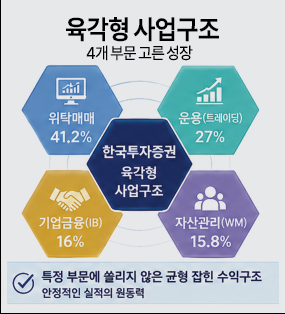
[Economic Daily] Korea Investment & Securities
네이버뉴스 · 2026.09.03
📰 View original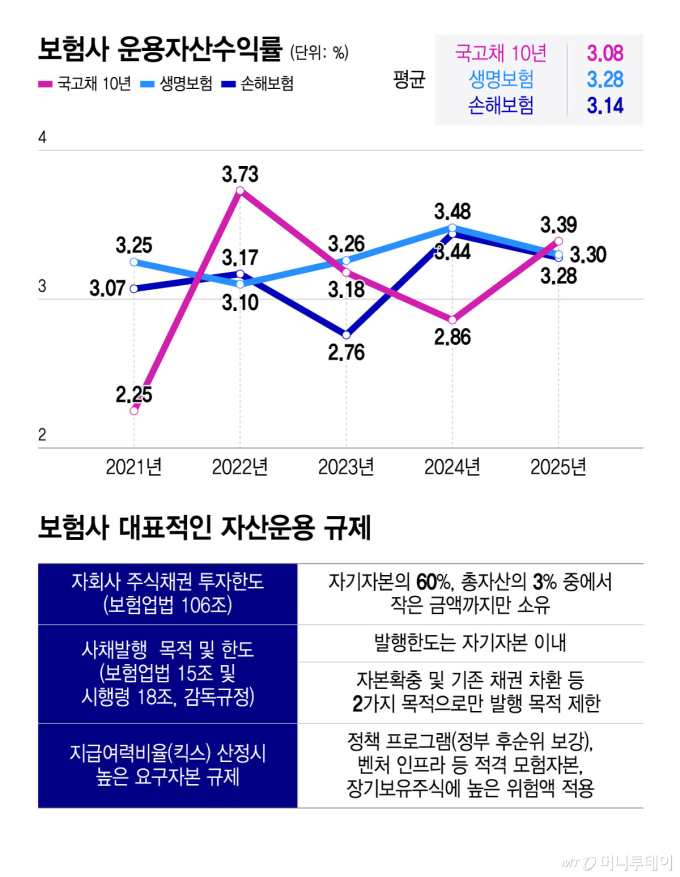
“The money is there” M&A
네이버뉴스 · 2026.09.03
📰 View originalNew Korea Investment entity scrapped… Bae Jae-gyu stays instead of becoming independent - DealSite
네이버뉴스 · 2026.09.03
📰 View original
Korean stock-market trading value fell 25% in August… Will securities firms’ earnings growth stall?
네이버뉴스 · 2026.09.03
📰 View original
Six months’ salary was 180,000,000 KRW… Which company ranked No. 1 in annual pay, surpassing Samsung Electronics and SK hynix?
네이버뉴스 · 2026.09.03
📰 View original
Comments 0
to comment Login