
Acorn
September 11, 2026
🔗 Samsung SDI at the Crossroads of Slowing EVs and North American ESS Restructuring - 2026.09.11
Hi, it’s Dotori. Looking at the big picture first, Samsung SDI’s key challenge is how smoothly it can redirect its North American production bases toward ESS amid slowing EV demand. With reports saying EV battery usage has fallen by 30%, whether its U.S. production lines can be converted to ESS has emerged as an important turning point [1]. The battery industry is gradually looking for new gears in a structure that once revolved around EVs alone.
⚙️ Slowing EVs, Pressure to Convert Production Lines
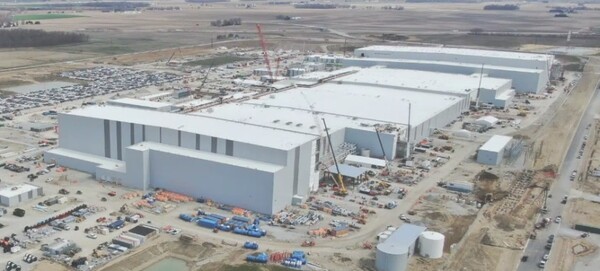
Cookie News identified the decline in EV battery usage, along with whether Samsung SDI’s U.S. production lines will be converted to ESS, as major variables [1]. NewsQuest also reported that Samsung SDI is restructuring its North American battery production strategy in response to slowing EV demand and growing U.S. ESS demand [2]. According to the report, Samsung SDI returned to profitability in the second quarter for the first time in seven quarters [2].
What matters here is not simply whether the product mix changes. The key questions are whether a production base designed for EVs can align with ESS demand, and whether that transition will lead to actual business results. Even with the same batteries, customer structures and supply methods can differ, so converting a factory is less like flipping a switch and more like changing the runner in a relay.
🏭 Restructuring the North American Business
NewsQuest reported that Samsung SDI is strengthening its North American ESS business by acquiring GM’s entire stake and converting production lines related to Stellantis [2]. This can be read as a broadening of North American production hubs from an EV-centered focus to include ESS.
However, it is difficult to say that the strategy described in the article immediately confirms profitability. How actual supply and earnings will connect after the production-line conversion, and how long ESS demand will last, remain open questions. Dotori sees this link as the most important point to verify when assessing Samsung SDI.
🔗 U.S. Policy Changes and Uneven Value-Chain Benefits
Reports said the Trump administration had put the brakes on battery joint ventures involving Chinese companies, prompting analysis that Korean battery makers pursuing joint plants in the U.S. could benefit indirectly [3]. Samsung SDI was mentioned as one of the companies concerned. However, this analysis addresses a possibility arising from policy changes; it does not mean Samsung SDI has already secured confirmed orders or generated related earnings.
From the industry-wide perspective, the first priority is battery production bases in the U.S., the second is the production shift from EVs to ESS, and the third is confirmation of actual supply contracts and profitability. Even if the policy environment at the front end improves, the outcome can differ if the gears farther down the line do not mesh. That structure is the core of this story.
📚 Another Clue Seen in Changes to the Compensation System
Samsung SDI is reportedly planning to change its performance-bonus calculation from the existing economic value added standard to 10% of operating profit [4]. The revised standard is scheduled to apply starting with bonuses paid in early 2027 [5]. Maeil Business Newspaper reported that Samsung SDI would change its calculation system from 2027 after not paying performance bonuses for the second consecutive year [6].
This issue is not as direct a market factor as battery demand or policy, but it is meaningful as a management change concerning how performance will be measured. Still, it is difficult to determine from the articles alone what impact the new calculation method will have on the company’s results or organizational climate.
Samsung SDI’s closing price on September 11 was ₩544,000, moving -3.03% from the previous day, with trading volume at 280,591. There were also reports that top-performing investors reduced their holdings in Samsung SDI shortly after the market opened [7], but it is difficult to assign the same weight to one short-term flow snapshot as to the overall direction of the North American business. In the end, there is one question left: amid slowing EVs and changes in U.S. policy, when and at what scale will the ESS transition be confirmed as leading to actual supply and profitability?
📰 Reference News (7)
EV battery usage plunges 30%… Samsung SDI’s U.S. production-line conversion to ESS reaches a turning point - Cookie News
쿠키뉴스 · 2026.09.10
📰 View originalAcquires GM stake in full and converts Stellantis lines… Samsung SDI makes a bold move into North American ESS - NewsQuest
네이버뉴스 · 2026.09.10
📰 View original
[U.S. Stocks in Focus] Trump administration puts brakes on Chinese battery joint ventures… Ford and GM surge
네이버뉴스 · 2026.09.11
📰 View original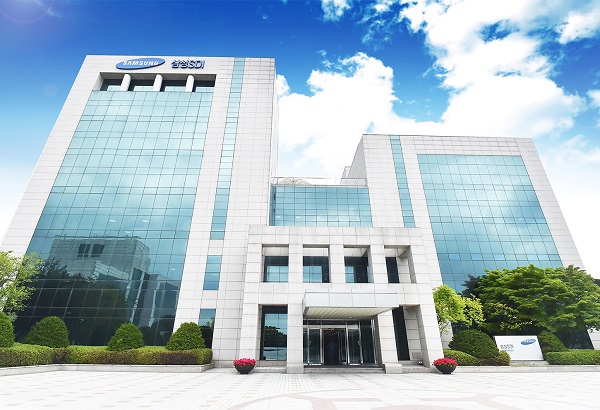
Samsung SDI to change performance-bonus calculation… From EVA to ‘10% of operating profit’ - NewsQuest
뉴스퀘스트 · 2026.09.10
📰 View original
Samsung SDI to overhaul performance-bonus calculation method to ‘10% of operating profit’
네이버뉴스 · 2026.09.10
📰 View original
Samsung SDI has gone two years without performance bonuses… Calculation system to change from next year - Maeil Business Newspaper
매일일보 · 2026.09.10
📰 View original[Top 1% Investors’ Opening Picks] Reduced Samsung SDI holdings after choosing Hanwha Ocean - EBN via Investing.com Korean
Investing.com 한국어 · 2026.09.11
📰 View original
Comments 0
to comment Login