
Peanut
September 12, 2026
📉 NVIDIA, China’s Gap and the Allocation of Value in the AI Ecosystem - 2026.09.13
Hi, it’s Peanut. NVIDIA’s core issue is shifting away from AI demand itself toward which markets and ecosystems retain that demand. In China, Huawei and the so-called four GPU dragons are reportedly filling NVIDIA’s absence [1], while the system-level competitiveness that combines CUDA and networking has also come back into focus [4]. It is as if favorable and bearish factors for the same company have been recorded in the same ledger.
China’s Gap, a Problem Broader Than Revenue ⚠️
MoneyToday reported that Huawei and the four GPU dragons are filling NVIDIA’s void in China’s AI chip market [1]. The important point here is that this is not simply a matter of sales rising or falling in a particular region. If alternative suppliers establish themselves in China, both NVIDIA’s position in the AI accelerator market and the choices available in the local ecosystem will face validation.
Is that really happening? Based solely on the materials provided, we cannot confirm which companies have captured what share of the Chinese market or how significantly this is reflected in NVIDIA’s results. Still, the direction of competitors filling the gap is clearly a variable. What stands out is that the China competition issue seen over the past few days has now appeared in the more concrete form of the local market structure.
Not a Single GPU, but a System-Level Calculation 💼
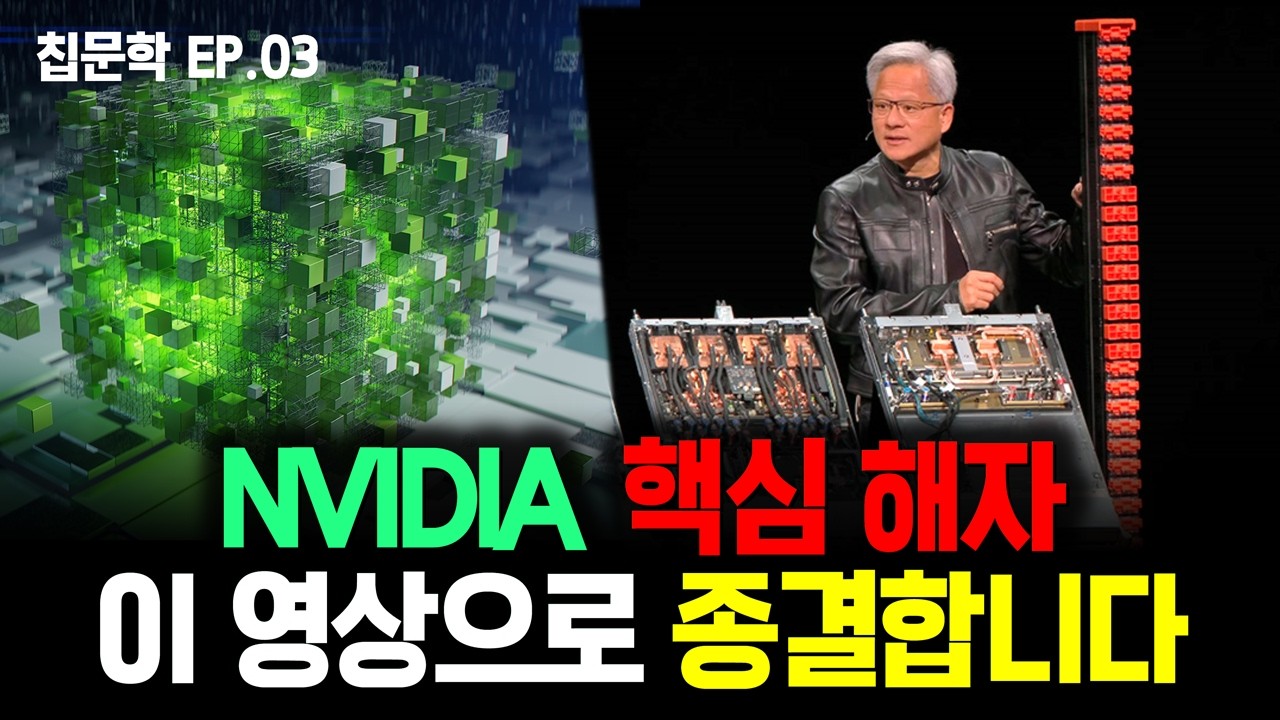
An engineering-focused video analyzed that NVIDIA’s competitiveness lies not only in GPU performance, but also in the CUDA ecosystem, NVLink and NVSwitch, and networking technology [4]. This is a fairly important perspective when assessing value. The interpretation is that software and connectivity technologies, which are difficult to explain through a simple comparison of one chip’s performance, are bundled together.
Of course, this is the video’s analysis, not a newly confirmed announcement from NVIDIA. Even so, connecting it with China’s substitution efforts makes the question clearer. The real test may be not whether competitors can make GPUs, but whether they can replicate the structure connecting the development environment and multiple pieces of equipment. Conversely, whether this system-level competitiveness actually leads to customer selection and profitability requires separate verification. Even with a good moat, we need to see how much toll it can actually collect.
Review of Anthropic Support, the Boundary Between Growth and Value Allocation
Bloomberg, citing a Reuters report, said NVIDIA is considering providing $10 billion in funding support for Anthropic’s IPO. However, the materials provided do not confirm whether a specific investment has been finalized [2]. Therefore, this should not be turned into a signal about the company’s confirmed plans or financial condition.
The news raises a separate question. As the AI ecosystem expands, does value concentrate through chip supply alone, or is it distributed across the various connections surrounding AI companies and platforms? One transaction still under review cannot support a conclusion, but it does provide material for examining how NVIDIA connects with value flows beyond AI infrastructure.
Bearish Scenarios That Remain for Short- to Medium-Term Swings 📉
Yahoo Finance analyzed which company would capture more of the related economic value as Palantir and NVIDIA build a sovereign AI stack [3]. Again, this is not a claim that a particular outcome has been determined, but a third-party analysis emphasizing that value allocation becomes more important as the AI stack grows.
In a bullish atmosphere, the CUDA and networking moat may appear capable of solving everything. But the bearish scenarios are China-based alternative suppliers establishing themselves, the actual monetization of system-level competitiveness, and value being distributed to other companies within the AI ecosystem. If these three factors overlap, there is a risk that the process of validating high growth expectations through earnings and valuation will take longer. That is also why we need to remain alert to the possibility of a value trap.
Peanut believes that when looking at NVIDIA, we need to calculate not only GPU performance but also market access, system lock-in, and where value actually remains. How much of China’s gap will shift to competitors, whether the CUDA- and NVLink-based moat translates into customer choice and economic value, and whether the Anthropic support review becomes an actual transaction are questions that remain open.
📰 Reference News (3)
China’s AI Chip Market: Huawei and the Four GPU Dragons Fill NVIDIA’s Void - MoneyToday - MoneyToday
머니투데이 · 2026.09.12
📰 View originalNvidia Mulls $10 Billion Anthropic IPO Backing, Reuters Says - Bloomberg.com
Bloomberg.com · 2026.09.11
📰 View original
Palantir and Nvidia Are Building a Sovereign AI Stack. Who Captures More of the Economics? - Yahoo Finance
Yahoo Finance · 2026.09.12
📰 View original📺 Reference Videos (1)
NVIDIA’s Real Moat Isn’t the GPU | The AI System Built by CUDA, NVLink, and Mellanox
▶안될공학 - IT 테크 신기술·2026.09.12
Comments 0
to comment Login