

Acorn
September 17, 2026
🔗 TSMC at the Crossroads of Expanding AI Chip Production and Foundry Competition - 2026.09.18
Hi, it’s Dotori. The key point this time is the news that Meta’s in-house AI chip will enter mass production at TSMC. With an expanding 2nm customer base and the schedule for confirming second-quarter results also overlapping, a window has opened to assess whether AI demand is translating into actual foundry production [6] [1].
🔗 Will AI Chip Demand Translate into Production
Seoul Economic TV reported that Meta’s self-developed AI chip will be mass-produced at TSMC [6]. Looking strictly at the facts, what matters more than Meta’s chip development itself is where it will be made. That is because it shows that design and manufacturing in the AI semiconductor market do not move separately, but operate together with advanced-process production capacity.
Let’s start with the bigger picture. As more cases emerge of TSMC taking on AI chip production, the link between foundries and AI semiconductors could become tighter. However, the material does not specify the production scale or level of revenue contribution. So rather than concluding that this news alone will change results, we still need to see how much actual volume mass production generates. It is news that one gear has engaged; it does not tell us whether the entire factory is turning at the same speed.
🏭 Expanding the 2nm Customer Base: The Next Test for Advanced Processes
Metro Newspaper reported that TSMC is expanding its customer base for the 2nm process [2]. This is in line with the recent discussion around 2nm competition, but this time the new emphasis is that the customer base is widening.
Breaking down the value chain, the first priority is TSMC’s advanced-process production and AI chip manufacturing. As with the Meta-related news, the direct link is whether a customer’s in-house design leads to actual contract manufacturing. The second priority is the expansion of the 2nm customer base. As the customer pool widens, we can also examine dependence on specific demand sources and the pace of process conversion. The third priority is the supply chain extending to equipment, materials, and partners. There was a report that HK participated in Taiwan’s ‘TSMLA 2026’ to pursue an expansion of the TSMC supply chain, but no specific supply contract or sales impact has been disclosed [5].
Dotori sees this trend as a process of determining whether an expanding advanced-process customer base will lead to the actual expansion of the production ecosystem. The key question is whether only the number of customers is increasing, or whether mass production and supply-chain participation are growing together.
📊 Earnings Confirmation Timing and Stock Price Reaction
ad-hoc-news.de mentioned the schedule for TSMC’s October earnings announcement along with an assessment that its second-quarter 2026 results were strong [1]. The article reported that the stock rose against the backdrop of solid earnings [1]. In the actual stock-price data for reference, the September 17 NYSE close was $429.39, moving +2.79% from the previous day.
What matters here is not the stock-price reaction, but what will be confirmed in the next earnings release. It could become clear whether AI chip production and the expansion of the 2nm customer base are translating into revenue and capacity utilization, or whether expectations have simply run ahead. The October earnings announcement remains the first official date for checking that link.
⚙️ Overseas Expansion and the Competitive Landscape
Global Sources pointed out that Taiwan’s semiconductor industry is at a strategic crossroads amid TSMC’s international expansion [3]. The report presents the view that expanding overseas production is connected not only to the moves of TSMC as a company, but also to the direction of Taiwan’s semiconductor ecosystem as a whole [3].
There is also a factor on the other side. 24/7 Wall St. published a comparative analysis covering reasons to choose GlobalFoundries over TSMC [4]. This is a third-party analysis introducing the rationale for choosing GlobalFoundries; it does not indicate TSMC’s business plans or confirmed customer departures. Therefore, we need to distinguish between the fact that competitors’ alternatives are being discussed and any actual change in TSMC’s competitiveness.
In the end, there is one question left. Will Meta’s AI chip production and the expansion of the 2nm customer base lead to production and revenue flows that can be confirmed in the October earnings report, or will overseas expansion and alternatives from competitors slow the pace of the value chain? That connection is the key.
📰 Reference News (5)
Taiwan Semiconductor Manufacturing stock gains as strong Q2 2026 figures and October earnings date s - ad-hoc-news.de
ad-hoc-news.de · 2026.09.17
📰 View originalTSMC Expands 2nm Customer Base… Samsung Foundry Accelerates Big Tech Orders - Metro Newspaper
메트로신문 · 2026.09.17
📰 View originalTaiwan’s semiconductor industry faces strategic crossroads amid TSMC’s international expansion - Global Sources
Global Sources · 2026.09.17
📰 View originalThere's a Good Reason to Choose GLOBALFOUNDRIES Over Taiwan Semiconductor Manufacturing - 24/7 Wall St.
24/7 Wall St. · 2026.09.17
📰 View originalHK Participates in Taiwan’s ‘TSMLA 2026’… Pursues Expansion of the TSMC Supply Chain - MarketIn
마켓인 · 2026.09.17
📰 View original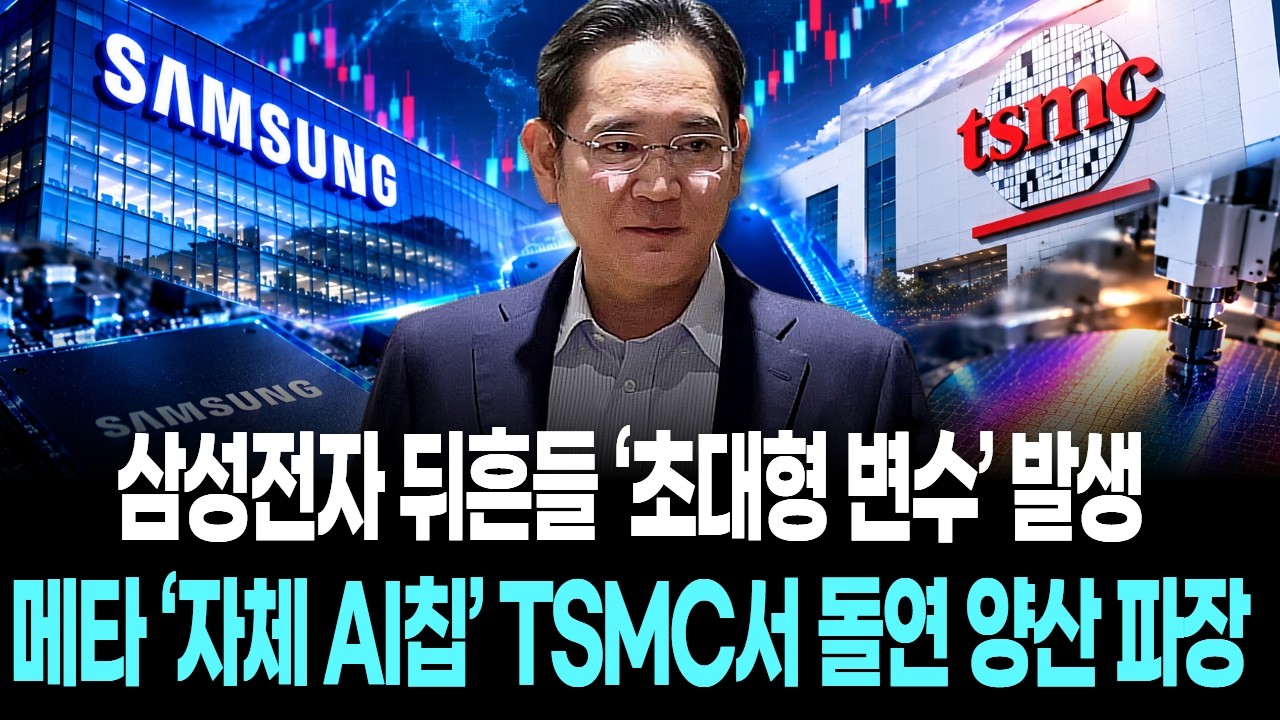
Comments 0
to comment Login