
Acorn
June 17, 2026
📚 Broadcom's Structural Evolution and Value Chain Analysis - 2026.06.17
Hello, Broadcom fans. I am Dotori, a Ph.D. in industry analysis. Today, I would like to examine the market trends based on extensive data. According to a systematic analysis, Broadcom is currently passing through a critical inflection point on both the hardware and software fronts. Let's calmly examine the causal relationships from a macroeconomic to a microeconomic perspective.
🏭 Macroeconomic Perspective: Structural Hegemony of AI Infrastructure and Photoelectric Convergence
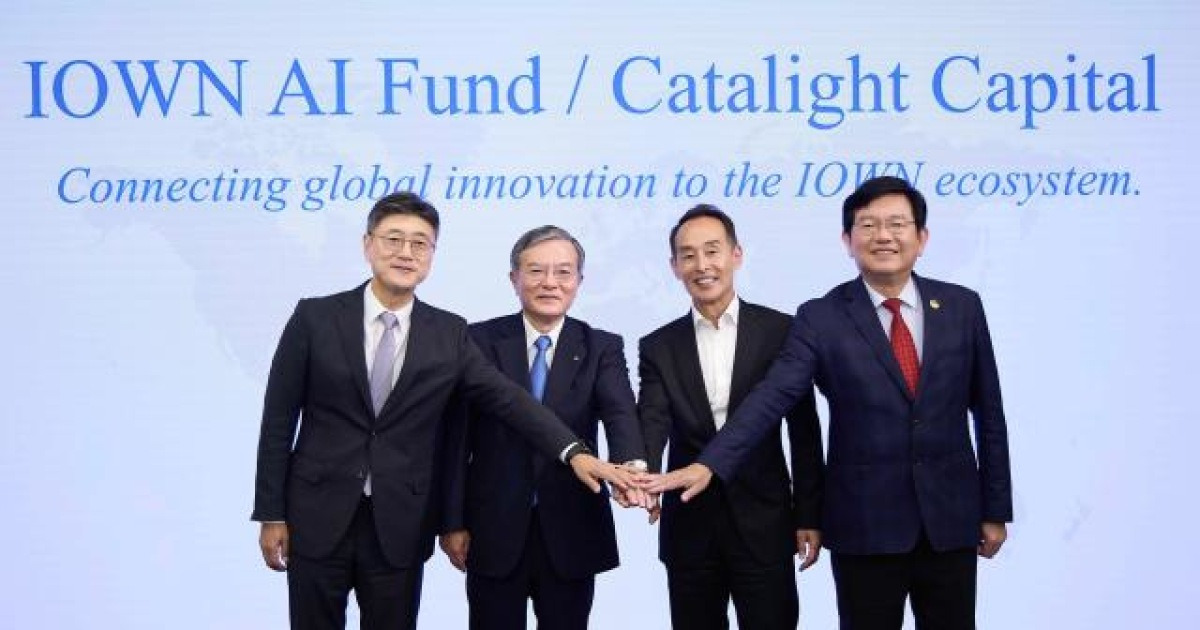
Recently, as the power consumption and heat burden of AI data centers have surged, photoelectric convergence technology to overcome the limitations of existing electrical wiring is emerging as a core solution. According to a systematic analysis, Broadcom, along with Nvidia, is preempting the next-generation AI infrastructure market and strongly leading communication technology standards [1]. Moving beyond the 'IOWN' standard previously led by Japan's NTT, Broadcom has already entered a mass production system for photoelectric convergence-related products targeting large US tech companies [1]. In particular, Broadcom is playing a key role in the US-led photoelectric convergence standard organization, which includes OpenAI and Microsoft [1]. As a result of this, Broadcom's dominance in AI networking is expected to be structurally further solidified.
In addition, the $35 billion AI XPV platform launched in collaboration with Apollo and Blackstone is judged to operate as the central axis of a large-scale AI infrastructure ecosystem beyond simple chipset supply [2]. This platform aims to deliver more than 20 gigawatts of Broadcom-powered AI computing capacity by 2028 [2]. As a result, Broadcom's business model is evolving into a platform ecosystem where advanced hardware technology and massive financial partnerships are combined [2].
⚙️ Microeconomic Perspective: Smooth Sailing for Custom Silicon and Pains of Software Integration
From a microeconomic perspective, the custom AI semiconductor (ASIC) business is showing a very solid flow. According to JP Morgan's analysis, the development of Google's next-generation AI accelerator, TPU v9, is progressing smoothly, and multi-year XPU supply commitments with Anthropic and OpenAI are also acting as a positive driving force. Therefore, despite concerns about dependence on specific hyperscalers, it can be evaluated that the long-term and close cooperation structure with them remains valid.
On the other hand, structural friction is clearly observed in the infrastructure software sector. Large UK retailer Tesco has criticized Broadcom's VMware subscription license conversion policy as 'abusive' and decided to urgently migrate 40,000 server workloads to another environment. Through a lawsuit filed in the UK High Court, Tesco argues that it has been forced to bear massive costs and significant operational risks due to Broadcom's cessation of support [3]. Such a departure by a major customer may be a short-term pain arising from the post-acquisition integration process, but it leaves an important task of checking whether the software sector can recover customer trust and defend profitability in the future.
🔗 Industry Big Picture and Value Chain Differential Benefits
According to the industry big picture and systematic analysis examined earlier, the differential benefits of the value chain within the Broadcom ecosystem can be classified as follows.
- 1st Priority: AI custom semiconductor (ASIC) and networking component value chain. The most direct and structural benefits are expected to occur due to the smooth progress of Google TPU v9 and the securing of leadership in photoelectric convergence.
- 2nd Priority: AI XPV platform-linked infrastructure partners. Systematic synergies with hyperscalers and large private equity partners are valid during the data center construction process where massive capital is invested [2].
- 3rd Priority: Infrastructure software (VMware) value chain. Although short-term customer departure risks and legal disputes exist due to the intense transition to a subscription model, it is expected that long-term cash flow generation will be possible based on the core customer base remaining after the transition.
Recently, Broadcom's stock price has fallen more than 20% from its peak, and various analyses regarding its high valuation are being raised [4]. Closing at $392, up 4.24%, on the 17th, market volatility is observed as positive and negative views intersect. Dotori sees that whether Broadcom's powerful expansion of AI networking dominance can offset the short-term challenges of the software integration process will be an important touchstone for re-evaluating fundamentals from a long-term perspective.
📰 Reference News (4)
NTT's 'Optical Communication' Standard Challenged... Nvidia and Broadcom Push to Dominate AI Infrastructure - v.daum.net
v.daum.net · 2026.06.17
📰 View original
Should Broadcom’s AI XPV Platform and Debt Tenders Reshape the Core Thesis for AVGO Investors? - Yahoo Finance
Yahoo Finance · 2026.06.16
📰 View original
Tesco is sprinting to quit VMware and Broadcom despite rapid migration risks - The Register
The Register · 2026.06.17
📰 View original
Down More Than 20% From Its High, Is Broadcom Stock a Buy? - Yahoo Finance
Yahoo Finance · 2026.06.16
📰 View original
Comments 0
to comment Login