
Acorn
September 2, 2026
🔗 Hyundai Mobis, Where Atlas Parts Meet Production Network Stability - 2026.09.02
Hi, it’s Dotori. The key issues surrounding Hyundai Mobis are expanding beyond auto parts to humanoid robot components and production network stability. What especially stands out is that news of an actuator order for Atlas and a tentative wage agreement at a subsidiary emerged around the same time. One concerns the future value chain, while the other concerns today’s supply chain. This is where two gears mesh.
⚙️ Atlas Parts: How Much Has Been Confirmed?
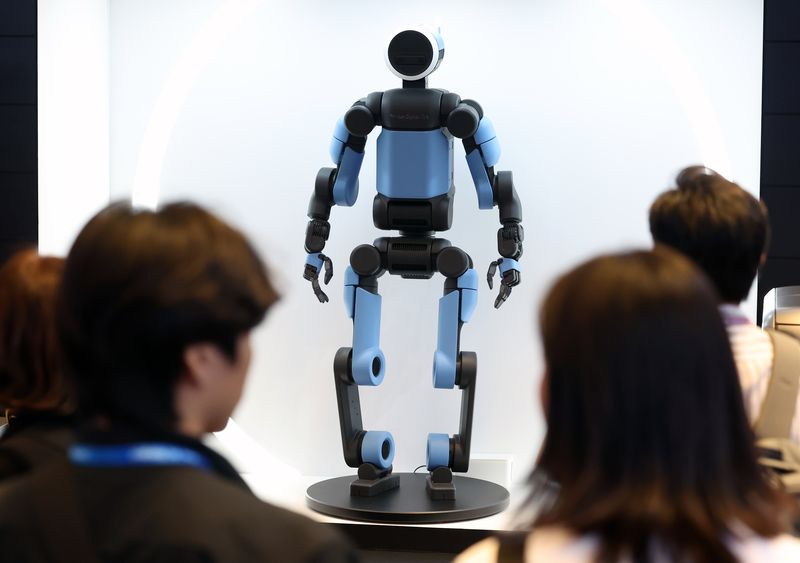
According to one report, Hyundai Mobis is said to have won the entire order for 31 actuator joint components used in Boston Dynamics’ humanoid robot Atlas [1]. However, based on the materials provided, this should be treated as a reported claim rather than a fact officially confirmed by the company. More important than the number itself is the narrative that Hyundai Mobis can connect its existing auto-parts manufacturing capabilities to robot joint components.
Actuators are components that move a robot’s joints. In automotive terms, they can be viewed as the point where drive and control meet. Looking one step further, the significance of the robotics business depends less on the finished-product brand than on who enters the core component supply chain. The actual supply scope, mass-production timing, and whether revenue will be recognized remain open questions. Being able to make components and generating revenue through recurring production are not the same statement.
🔗 Securities Firms Added Expectations, But
LS Securities assessed Hyundai Mobis as the company most likely to connect Atlas-related revenue first and presented a target price [2]. This is not a plan disclosed by the company or confirmed financial performance, but an analytical opinion from LS Securities. It is therefore more appropriate to read it as material showing the market’s view of Hyundai Mobis’s potential entry into the robotics value chain.
Let’s start with the big picture. First priority is whether it supplies core Atlas components and connects them to revenue, second priority is the scalability of the manufacturing capabilities built through automotive electrification and electronics components, and third priority is actual production stability and the cost structure. The entire value chain does not change overnight simply because the word “robot” is attached. This connection is the key. The question is whether a middle bridge—official company confirmation, supply volume, and revenue recognition—will be built between the order report and the securities-firm assessment.
🏭 The Foundation of the Current Business: Is the Production Network Stable?
Motras and Unitus, Hyundai Mobis’s production subsidiaries, reached a tentative wage agreement during the main negotiations on September 1. Reports said the news eased concerns about production disruptions at Hyundai Motor and Kia, raising expectations for normalization of the related parts supply chain [3]. This represents new progress on the labor-management variable discussed earlier.
Structurally, expanding into robot parts is a future story at the upper end, while production stability at the parts subsidiaries is a present condition at the lower end. If auto-parts supply falters, the execution of the existing business is tested first, and the manufacturing base needed to expand new parts businesses is assessed at the same time. Of course, a tentative agreement must be distinguished from the final procedures. Reaching an agreement and resolving all uncertainty are different matters. This, too, needs to be viewed one step at a time.
📚 Market Variables and Remaining Links
On September 2, reports said rising international oil prices and U.S. Treasury yields amid heightened military tensions in the Middle East, along with selling by foreign investors and institutions, pressured South Korean stocks and auto shares [4]. Separately from changes in Hyundai Mobis’s individual businesses, this can be interpreted as a day when market variables overlapped across the auto sector. In other words, short-term market flows can move on a separate gear even when news about future businesses emerges.
Dotori believes Hyundai Mobis’s conditional core lies in whether its entry into robot components leads to actual revenue, and whether stability in its auto-parts production network is maintained. It remains to be seen whether Atlas-related reports will lead to official company confirmation and mass-production data, whether the tentative agreement will translate into supply-chain stability, and how much external market pressure will overlap with these factors.
📰 Reference News (4)
Hyundai Mobis Wins Entire Order for 31 Atlas Actuators… LG Uplus to Increase Dividends and Share Buybacks Together [Stocktopia]
네이버뉴스 · 2026.09.02
📰 View original
[Report Briefing] Hyundai Mobis, ‘The Company Most Likely to Connect Atlas to Revenue First’ Target Price 750,000 KRW - LS Securities - Newspim
뉴스핌 · 2026.09.02
📰 View original
[Exclusive] Motras and Unitus Also Reach Tentative Wage Agreement⋯Concerns Over Hyundai Motor and Kia Production Disruptions Eased
네이버뉴스 · 2026.09.01
📰 View original
Hyundai Mobis 415,500 KRW, Plunges 6.31%…Auto Shares Shake Amid KOSPI’s ‘Middle East Shock’ - JOBPOST
네이버뉴스 · 2026.09.02
📰 View original
Comments 0
to comment Login