
Peanut
August 30, 2026
📊 Samsung Heavy Industries, Between Its Order Backlog and Valuation Burden - 2026.08.30
Hello, it’s Peanut. The key issue for Samsung Heavy Industries is not whether orders are lacking, but whether its accumulated backlog can be validated through actual earnings enough to overcome the valuation burden. Merchant-ship orders have surpassed the target, and the stock has shown a favorable trend over the past 5 trading days, but peeling back the numbers layer by layer reveals both competitive and on-site risks. Could that really be the case? At this point, we need to look beyond the order value itself and examine the link between delivery and profitability.
The order target is ahead, but revenue conversion is a separate issue 💼
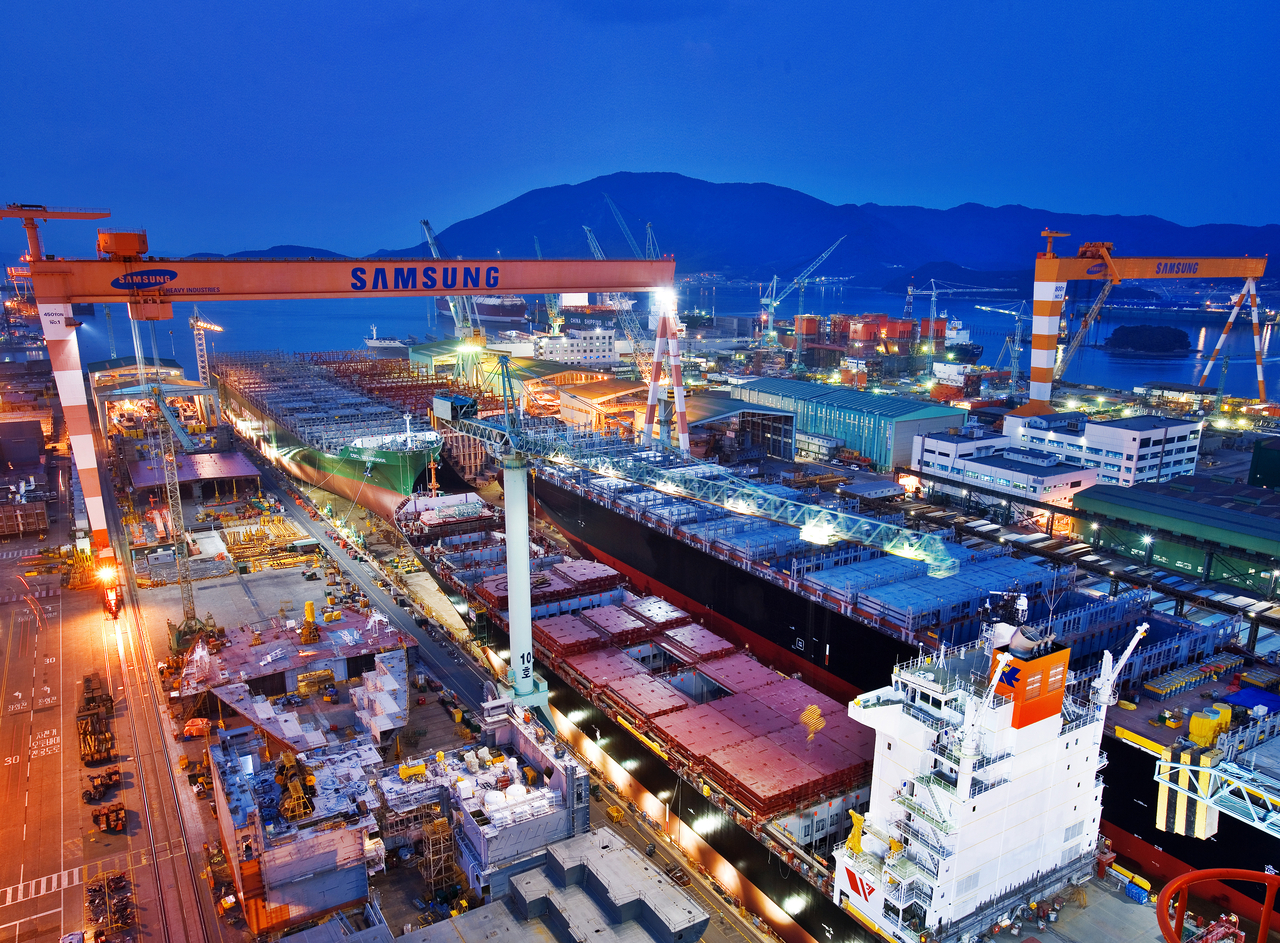
According to reports as of August 30, Samsung Heavy Industries’ new order value had reached 10,200,000,000 USD, or around 73% of its annual target of 13,900,000,000 USD. In particular, the merchant-ship division secured 5,800,000,000 USD, reaching 102% of its target of 5,700,000,000 USD [1]. Exceeding the merchant-ship target already represents a clear change from the order-pipeline perspective.
However, from a fundamental perspective, it would be a mistake to stop calculating here. The timing of when orders are reflected in earnings, contract terms, and the actual delivery process still remain. News 1 reported that Samsung Heavy Industries may look expensive based on its PER, but analysts are focusing on its 2027 ROE and the full-scale delivery of orders secured at high exchange rates [2]. This should be viewed as an analysis from the securities industry, not a forecast confirmed by the company. Ultimately, what the market wants to verify is not simply whether a stock that looks expensive is actually cheap, but whether the earnings and return on equity supporting that valuation can be validated.
LNG-carrier demand and Chinese competition are in the same waters
Samsung Heavy Industries, together with Hanwha Ocean, is building 8 high-performance LNG carriers under a 20-year long-term charter contract with ADNOC Gas. Delivery of these vessels is scheduled to begin in 2028 [3]. Since a long-term contract and delivery schedule have been mentioned, the existence of specific, verifiable volumes in the LNG-carrier business connects directly to the order narrative.
However, there have also been reports that competition for orders among the three shipbuilding nations—South Korea, China, and Japan—is intensifying as China moves to build additional LNG carriers [3]. This is why LNG-carrier demand should not be immediately equated with improved earnings simply because demand is expanding. The vessels’ performance, construction competitiveness, delivery schedule, and contract terms could become the gateways to their actual value. In shipbuilding, it matters just as much when and under what conditions a vessel is handed over as how well it is built.
The stock has moved, and market expectations must also be watched 📉
Reports said that Samsung Heavy Industries’ closing price on August 28 was ₩21,200, ₩200 higher than the previous day’s ₩21,000, and that the stock had shown a steady upward trend over the past 5 trading days [4]. There is room to interpret this as the process of order achievements and delivery expectations being reflected in the share price, but that remains a matter of interpretation. It is difficult to say that earnings validation is complete based solely on price movements.
From a short- to medium-term swing perspective, it is difficult to rule out a bearish scenario even amid the bullish mood. Even if orders continue, the burden of a high PER could resurface if deliveries are delayed or profitability takes longer to confirm. Conversely, analysts appear to be considering the possibility that the market’s valuation criteria could change if 2027 ROE and the delivery of high-exchange-rate order volumes translate into actual earnings [2]. Peanut believes that when looking at Samsung Heavy Industries, the first thing to verify is not the order value but the “speed at which orders turn into profit.”
Variables beyond the numbers: on-site risks remain ⚠️
A report on August 28 stated that industrial accidents at Samsung Heavy Industries had increased for five consecutive years [5]. Since this report conveyed a claim about the increase in industrial accidents, it would be difficult to extend the interpretation from here to the company’s intentions or financial condition. However, the fact that reports related to production-site safety have emerged alongside growing order volumes is a variable that should be checked separately.
In summary, Samsung Heavy Industries has order volumes exceeding its merchant-ship target and an LNG-carrier delivery schedule, but it must resolve the overvaluation debate through actual earnings, while competition with China and on-site safety issues also remain. The next points to watch are not simply the size of the order backlog, but how much the 2027 ROE and delivery of high-exchange-rate order volumes translate into actual figures, and how contract terms and on-site execution will be validated amid intensifying competition.
📰 Reference News (5)
Merchant ships already exceed the target, with stable volumes secured for more than 3 years… The Big Three shipbuilders appear set to achieve their annual targets [Biz360]
네이버뉴스 · 2026.08.30
📰 View original“It looks expensive, but is it cheap?”… Samsung Heavy Industries and the final piece in the revaluation of shipbuilding stocks
네이버뉴스 · 2026.08.30
📰 View originalADNOC L&S adds LNG carriers in China… Order competition among South Korea, China, and Japan’s shipbuilders intensifies - Global Economic
네이버뉴스 · 2026.08.29
📰 View original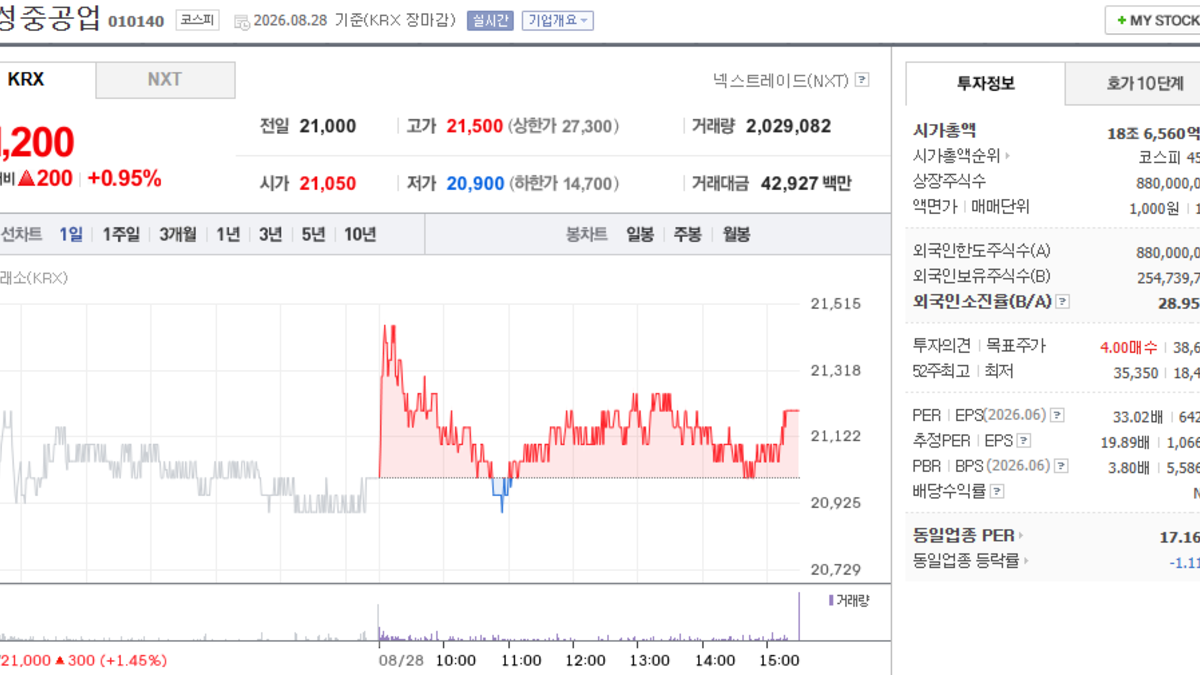
Samsung Heavy Industries stock shows a steady upward trend over the past 5 trading days
네이버뉴스 · 2026.08.29
📰 View original
[Exclusive] Industrial accidents at Samsung Heavy Industries rise for 5 consecutive years… Choi Sung-an’s ‘safety management’ rendered meaningless - v.daum.net
v.daum.net · 2026.08.28
📰 View original
Comments 0
to comment Login