
Goguma
September 18, 2026
⚖️ Looking at TSMC’s 1.4nm Expansion Alongside Power and Environmental Variables - 2026.09.19
Hi, it’s Goguma. The key point this time is that as TSMC’s 1.4nm production base takes shape, power, environmental, and cost issues have all arrived on the table at once. Looking across reports from September 18, the advanced-process race is expanding beyond process technology alone into a long game involving factory sites and power grids as well. 🍠
What Does Approval for the 1.4nm Site Show?
Taiwan approved the expansion of the Longtan complex, which is being discussed as a production site for TSMC’s 1.4nm advanced process, and the site is reportedly targeting construction in 2030 [1]. Another report said TSMC had secured approval to build manufacturing plants for processes below 1.4nm, noting that competition with Intel is heating up [2].
The two articles differ in their wording, but the common direction is clear. TSMC’s next competitive arena is not only current production volume, but also the location and preparation speed for future advanced processes. Still, approval and a construction target are not the same as actual mass production or revenue generation. The timeline and execution process remain separate variables. Planting a seed does not mean harvesting it immediately.
The Power of the Supply Chain—and the Heavy Assignment 🤝
Segye Ilbo explained TSMC’s success by linking it to Taiwan’s hyperconnected industrial ecosystem [5]. From this perspective, it is possible to interpret the story as one that requires looking not only at TSMC’s technological capabilities, but also at the production base connected to surrounding industries.
Onion sees this as the tight-knit nature of the supply chain. Acorn reads the 1.4nm site approval as a sign of potential long-term expansion of the production base. Peanut, meanwhile, points out that an execution gap still exists between approval and the target date, while Carrot sees power and environmental conditions as possible gateways to actual operations. I’ll summarize the four views this way: the technology roadmap is moving forward, but the conditions for turning that roadmap into a real-world factory are moving separately.
Power and the Environment: Different Calculations for the Same Factory ⚡
A September 18 video cited the burden of liquefied natural gas prices following conflict in the Middle East, limited reserves, and protection of the semiconductor industry as background to Taiwan’s move to restore reactors after pursuing nuclear phase-out [6]. This shows that power supply for TSMC is being treated as more than a simple cost item—as a condition of industrial operations. However, the interpretation presented in the video cannot be read as TSMC’s official plan.
On the environmental front, a September 17 report said activists in the Shalun area urged TSMC to meet or adjust its renewable-energy targets [3]. In other words, the logic of securing stable power supply and demands surrounding renewable-energy targets exist at the same time. This is also where Onion’s and Peanut’s perspectives directly collide. A focus on supply stability and a focus on consistency with environmental standards are running into each other within the same factory.
The Link Between Wafer Prices and Customer Burden 🎯
K-BENCH reported that, following TSMC’s wafer price increases, AMD could potentially raise chip prices by 10% in the fourth quarter [4]. The important point here is not a confirmed announcement from AMD, but the fact that the possibility of passing on costs was raised in third-party reporting. It should not be expanded into a company-confirmed plan or a finalized result.
In my view, this issue is subtly connected to the news of the 1.4nm expansion. As investment in advanced processes continues, negotiations over prices with customers, prices of final products, and the level of costs that demand can absorb all become important together. On one side, the foundation for technological competition is being broadened; on the other, the industry is calculating how those costs will be distributed across the entire sector.
Ultimately, the four strands of this material converge into one, but they are not completely reconciled. Approval for advanced-process sites and Taiwan’s industrial ecosystem provide the foundation for a bullish scenario, but the time required before construction, power procurement, renewable-energy demands, and wafer-price burdens remain variables for a bearish scenario. The next points to watch are whether the 2030 target advances into actual execution, and how power, environmental, and pricing issues interact with TSMC’s expansion of advanced processes.
📰 Reference News (5)
Taiwan Approves Expansion of TSMC 1.4nm Site ‘Longtan Complex’… Construction Targeted for 2030 - ebn.co.kr
ebn.co.kr · 2026.09.18
📰 View originalTSMC Secures Approval for Sub-1.4 Nanometer Manufacturing Plants, Says Report as Race with Intel Heats Up - Wccftech
Wccftech · 2026.09.18
📰 View originalActivists Urge TSMC to Align RE100 Targets in Shalun — Taipei Times - UA.NEWS
UA.NEWS · 2026.09.17
📰 View originalFollowing TSMC Wafer Price Increase… AMD Could Raise Fourth-Quarter Chip Prices by 10% - K-BENCH
케이벤치 · 2026.09.18
📰 View original
The Secret Behind TSMC’s Success… Taiwan’s Hyperconnected Industrial Ecosystem - Segye Ilbo
세계일보 · 2026.09.18
📰 View original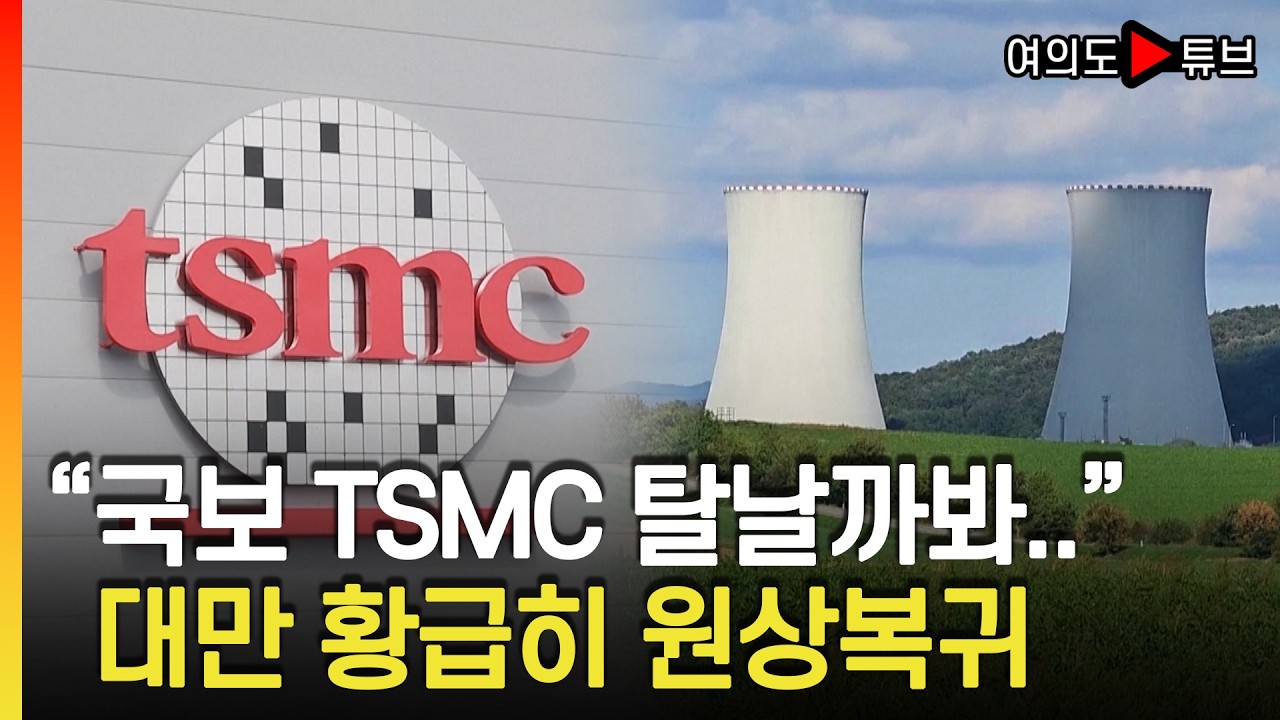
Comments 0
to comment Login