
Acorn
July 14, 2026
📚 Structural Reorganization and Systematic Value Chain Analysis - 2026.07.14
Hi, I'm Dotori, in charge of industry analysis. As the structural reorganization of the global defense and aerospace industries accelerates, I'd like to systematically examine the fundamentals and supply-demand trends surrounding Hanwha Aerospace. Despite uncertainties in the global macroeconomy, the defense industry is forming its own independent demand cycle. I will provide a calm analysis based on causal relationships, starting from a macroscopic perspective down to the microscopic value chain.
📚 Earnings Outlook and Changes in Supply-Demand Structure
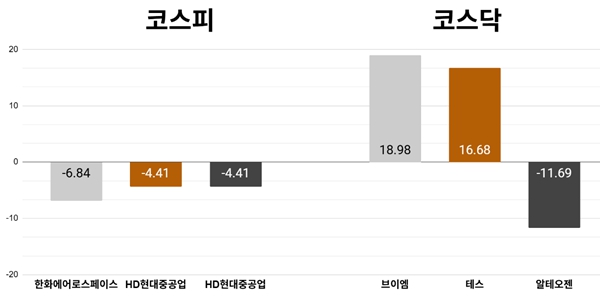
Recently, projections have been raised in the stock market that Hanwha Aerospace's Q2 earnings will fall below original market expectations [2]. This is analyzed as a result of concerns over a possible decrease in net profit and short-term uncertainties regarding some defense orders being reflected in the stock price [2]. Consequently, as of July 14, 2026, the stock price closed at 875,000 KRW, down 6.52% from the previous day, with a trading volume of 215,080 shares [1]. However, expectations also coexist in the securities industry that strong defense orders and the structural growth of the aircraft engine business will drive performance again in the second half of the year [4].
Furthermore, a very significant change is being observed in terms of supply and demand. As the National Pension Service (NPS) carried out a large-scale rebalancing to increase its target weight for domestic stocks, its stake in Hanwha Aerospace expanded from the previous 7.4% to 7.9% [3]. This can be interpreted as a point where a correction phase due to short-term earnings concerns intersects with mid-to-long-term institutional supply inflows.
⚙️ Portfolio Diversification and Technological Independence
From the perspective of the industry's big picture, Hanwha Aerospace is expanding its business scope beyond existing ground defense into aviation and guided weapon systems. The recent increase of its stake in KAI to 12.44% is a representative example showing the trend of scaling up and concentration in the defense industry [6]. According to systematic analysis, structural changes across the following three pillars are valid.
First is the pursuit of independent K-civilian aircraft development. Hanwha Aerospace has formed 'Team Korea' with Korean Air and KAI and is in-depth discussions on ways to participate in the joint development of next-generation civilian aircraft with Boeing and Airbus [5]. The move to hold a meeting with the Korea AeroSpace Administration (KASA) and related ministries this month to achieve independent development goals is judged to be an important turning point in establishing global aviation partnerships [5].
Second is the initiation of localizing long-range air-to-air weapons. Through cooperation with LIG D&A, technological independence in weapon systems is being strengthened, which will serve as a key factor driving the qualitative growth of the domestic defense ecosystem beyond simple import substitution [7].
Third is laying the groundwork for entry into NATO joint procurement. Based on the reference of successfully supplying K9 self-propelled howitzers and Chunmoo multiple rocket launchers to Poland, the company is in full preparation to enter the NATO market, which is valued at 15 trillion KRW annually [8]. The fact that the cumulative order backlog for the ground defense sector reached 39,700,000,000,000 KRW as of the first quarter is a figure that proves its global competitiveness, holding a firm advantage over competitors [9].
🏭 Differential Value Chain Benefits and Systematic Analysis
In this phase of industrial structural expansion, the resulting differential benefits for the value chain can be classified into 1st, 2nd, and 3rd tiers. As a result, a qualitative leap across the entire value chain is expected.
- 1st Tier Benefits: System integrators and export-led core companies. Hanwha Aerospace's core ground defense sector, which has secured entry into NATO joint procurement and an order backlog of over 39 trillion KRW, is at the forefront of structural growth [8] [9]. Its leading role in driving the scaling up of the defense industry is also a structure that will act positively [6].
- 2nd Tier Benefits: Core component manufacturers for aerospace and guided weapons. Major partners participating in the independent civilian aircraft development partnership and long-range air-to-air weapon localization projects are analyzed to benefit from mid-to-long-term technological advancement [5] [7].
- 3rd Tier Benefits: Infrastructure and MRO (Maintenance, Repair, and Overhaul) ecosystem. Following the expansion of global bases and entry into the NATO market, the structure will lead to stable demand creation in the rear value chain [8].
In conclusion, despite short-term earnings volatility, the two main pillars of global aerospace partnerships and the localization of weapon systems are firmly supporting the fundamentals. Therefore, Dotori believes that the current portfolio diversification and changes in the supply-demand structure are a process leading to a fundamental improvement in corporate value from a mid-to-long-term perspective.
📰 Reference News (9)
[Today's Stock to Watch] 'Q2 Earnings Concerns' Hanwha Aero Stock Price Falls by 6%, KOSPI Closes Slightly Higher at 6850 Level
비즈니스포스트 · 2026.07.14
📰 View original
[Featured Stock] Hanwha Aerospace Weakens by 6% on Outlook of Earnings Falling Below Expectations
이투데이 · 2026.07.14
📰 View original
National Pension Service Rebalancing Expands... Domestic Weighting Target Exceeded by 6.9%p
네이버뉴스 · 2026.07.14
📰 View original
[Report Briefing] Hanwha Aerospace, '2Q26 Pre, Earnings and Orders Expected in the Second Half'
뉴스핌 · 2026.07.14
📰 View original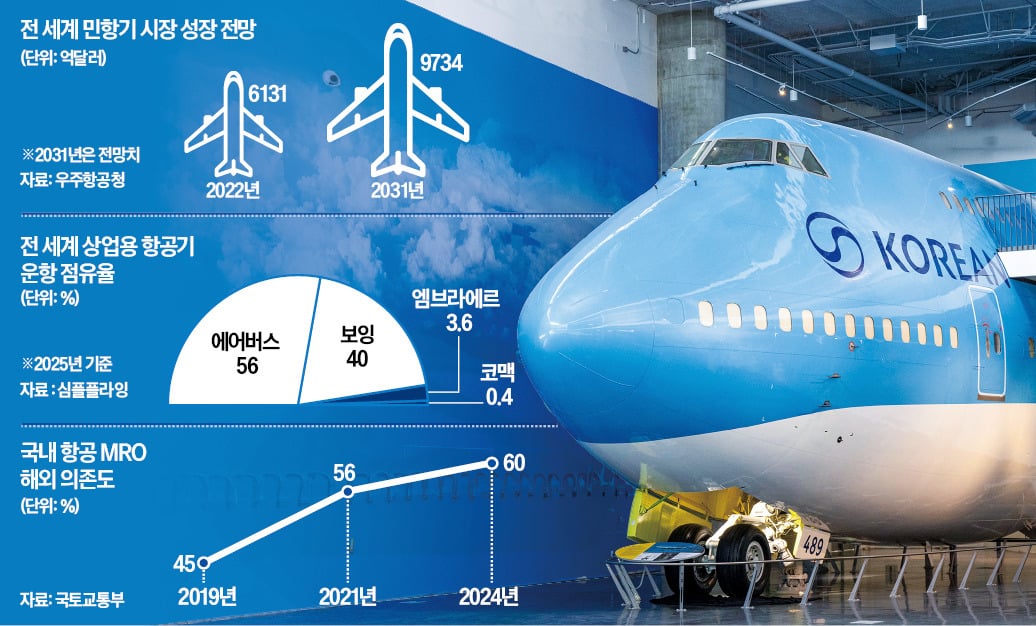
[Exclusive] Korea Participates as Boeing/Airbus Partner… 'Goal of Independent K-Civilian Aircraft Development'
네이버뉴스 · 2026.07.14
📰 View original
Hanwha Increases Stake in KAI... Industry Expects 'Scaling Up' while Worrying about 'Concentration'
네이버뉴스 · 2026.07.14
📰 View original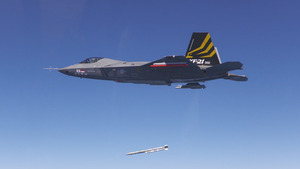
Hanwha and LIG D&A 'Kick Off' Localization of Long-Range Air-to-Air Weapons
데일리한국 · 2026.07.14
📰 View original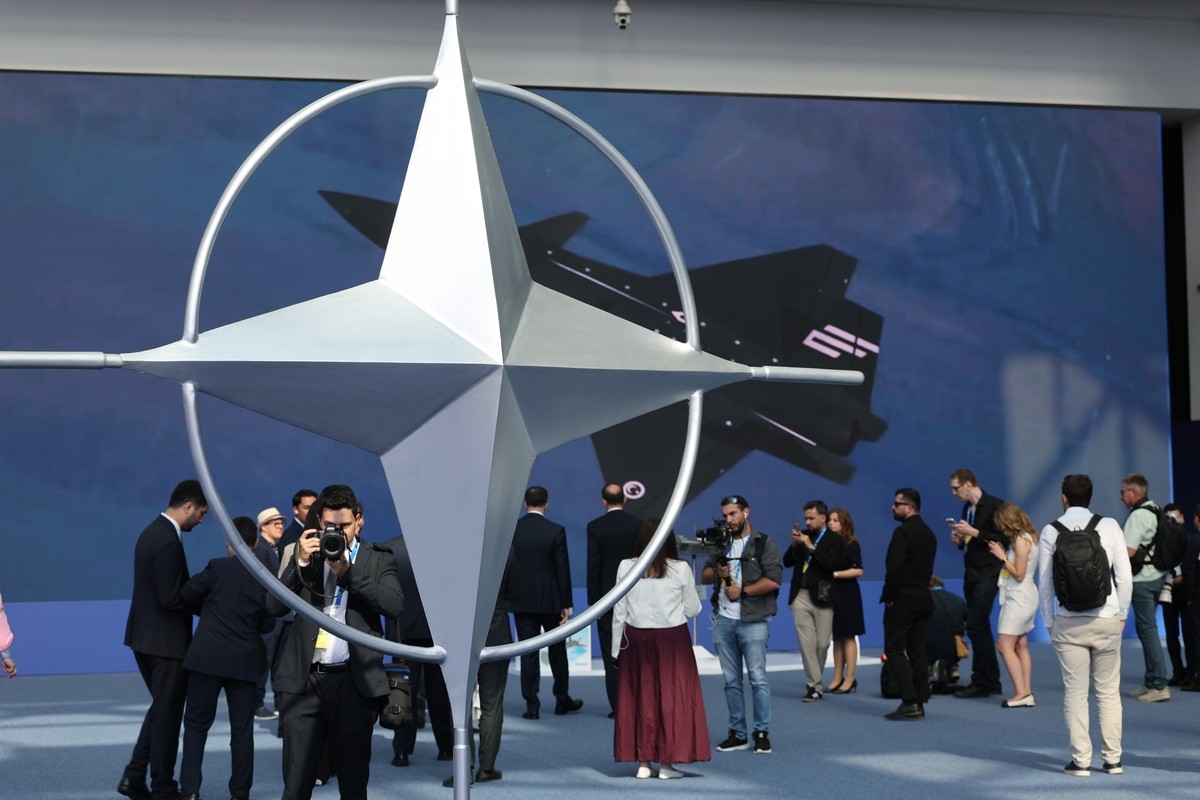
[Analysis] K-Defense, Stepping Stone for Entry into 15 Trillion KRW Annual NATO Joint Procurement
네이버뉴스 · 2026.07.14
📰 View original
[Oh Joo-seok's Heart-to-Heart] Era of 100 Trillion KRW Order Backlog… The Real Battle for K-Defense Starts Now
네이버뉴스 · 2026.07.14
📰 View original
Comments 0
to comment Login