

Peanut
September 1, 2026
⚠️ Hyundai Mobis: Labor Variables Ahead of Investment Funding and In-House Automotive Electronics - 2026.09.01
Hi, it’s Peanut. The key issue for Hyundai Mobis is that the push to restructure its business and expand investment has collided with labor variables surrounding the funding for that investment. A September 1 article also covered the “sale→investment” flow while leaving a question mark over how labor-management conflict could affect securing investment funds [1]. Could that really happen? When assessing value, the first thing to examine is the path of money flowing in and out, rather than growth slogans.
⚠️ Investment After the Sale: Funding Verification Comes First
Daily Korea highlighted the connection between Hyundai Mobis’s business sale and investment. However, the provided material does not specify the assets to be sold, the investment size, or a finalized funding plan. Therefore, we should not conclude here that the company has secured investment funds. The verifiable fact extends only to the discussion of a “sale→investment” flow and labor-management conflict being raised as a variable in that process [1].
From a fundamental perspective, this point is quite important. We need to separately verify whether the sale will lead to actual cash inflows, how the conflict will affect production and costs, and whether investment spending will translate into added value. A picture of money leaving one pocket and entering another does not automatically improve corporate value. The possibility of a value trap can also arise when these links are broken.
💼 Automotive Electronics Competitiveness: Semiconductor Internalization on Trial
Heungkuk Securities identified semiconductor internalization as the next task for Hyundai Mobis’s automotive electronics competitiveness [2]. The boundary here is clear. This is Heungkuk Securities’ analytical view, not something that can be read as a confirmed plan or achievement announced by Hyundai Mobis.
Another analysis provided a forecast that, during the transition toward software-centered vehicles, Hyundai Mobis would increase the added value of integrated control units and strengthen the internalization of power and system semiconductors [5]. However, this material is also labeled as a forecast rather than a confirmed company fact. Ultimately, the verifiable questions are what added value integrated control units will actually create and what results internalization will produce for costs and supply stability. Margins do not change immediately just because the word “semiconductor” has been added. Before applying PER or PBR, we need evidence that the earnings structure is changing.
🛑 Production Disruptions and Employee Departures: Variables on the Other Side of Earnings
Hyundai Mobis’s production subsidiaries Motras and Unitus carried out partial strikes on August 26 and 28. Reports said that, as a result, operating rates at Hyundai Motor’s Ulsan plant production lines fell and some lines stopped. The article also raised concerns about lower sales and delays in new-vehicle launches in the second half [3]. The new variable is that the previously reported labor issue may not remain merely a negotiation story but could connect directly to production flows.
In addition, LeadersFact mentioned Hyundai Mobis as a major example while covering employee departures and age demographics at large companies in 2025 [4]. However, the provided summary does not include detailed figures confirming the scale of departures, their causes, or the breakdown by job category, so it is appropriate to exclude precise numbers. Employee departures could plausibly be linked to execution capabilities in high-value areas such as automotive electronics and software, but this material alone does not justify saying that they have actually affected business performance.
📉 What Remains in the Short- to Medium-Term Swing Calculation
Based on the latest market data provided, Hyundai Mobis’s September 1 closing price was ₩443,000,, the change rate was -2.32%, and trading volume was 235,560. It is difficult to conclude the business value from this price movement alone. The bullish thesis rests on automotive electronics competitiveness and semiconductor internalization, while the bearish scenario involves delays in executing the sale and investment funding, production disruptions, and employee departures occurring at the same time.
Peanut believes that, when looking at Hyundai Mobis, we should first check whether cash investment in growth businesses actually leads to earnings and added value, rather than focusing on the names of those businesses. Even in a short- to medium-term swing, one question remains: amid labor variables, can business restructuring and automotive electronics internalization be validated through actual improvements in profits and losses?
📰 Reference News (5)
“Sale→Investment” Hyundai Mobis: Question Mark Over Securing Ammunition Amid Labor-Management Conflict - Daily Korea
데일리한국 · 2026.09.01
📰 View original
[Report Briefing] Hyundai Mobis, “Next Task for Automotive Electronics Competitiveness: Semiconductor Internalization,” Target Price 750,000 KRW - Heungkuk Securities - Newspim
뉴스핌 · 2026.09.01
📰 View original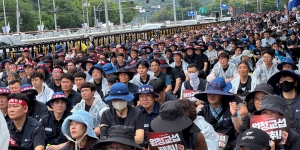
Will Production Disruptions Continue Due to Parts Supplier Strikes Despite Hyundai Motor and Kia Wage Negotiation Settlements? Concerns Over Lower Second-Half Sales and Delayed New-Vehicle Launches
네이버뉴스 · 2026.09.01
📰 View original
[Large Companies’ Generational Map ④] Hyundai Mobis Saw the Most Employees Leave Last Year… 77.3% of SK Networks Employees Were Aged 29 or Younger - LeadersFact
리더스팩트 · 2026.09.01
📰 View original
Hyundai Mobis to Expand Integrated Control Unit Added Value Amid SDV Transition and Strengthen Power and System Semiconductor Internalization
네이버뉴스 · 2026.09.01
📰 View original
Comments 0
to comment Login