
Carrot
September 6, 2026
📊 Hyundai Motor, the Gap Between the Solid-State Blueprint and Domestic Competition - 2026.09.06
Hi, it’s Danggeun, who takes chart numbers seriously. Hyundai Motor’s solid-state battery technology blueprint is beginning to come into view, while Tesla’s presence in the domestic market is growing, creating a clear contrast. Future technology has taken one step forward, but the current sales competition is no pushover. 📊
Solid-State Batteries, a Design Expressed in Numbers
The Guru reported that, in connection with Hyundai Motor’s solid-state battery development, a design for lithium deposition spaces measuring 0.3~10nm has been proposed [1]. The important point here is not that vehicle sales or a mass-production schedule has been finalized, but that EV battery research has progressed down to a specific design-unit level.
Solid-state batteries have been cited as one of the key technology pillars for gauging Hyundai Motor’s future electrification competitiveness, and this material is closer to a new clue showing the direction of that research. However, the article did not mention a mass-production date or an actual vehicle application schedule. So the technology blueprint and business results should not immediately be placed on the same line. Seriously, this is the kind of case where the more specific the numbers become, the more boxes there are left to check.
Tesla Is Stealing the Spotlight in the Domestic Market
On September 6, eToday pointed out that Tesla’s presence in the domestic market is growing as Hyundai Motor and Kia’s home market comes under pressure despite their new-car offensive [2]. The article did not provide Hyundai Motor’s standalone sales figures or its gap with Tesla, but it does confirm the trend that domestic competition has become tighter than before.
Looking at this combination together makes the key point clear. Future technologies such as solid-state batteries are long-term research issues, while domestic sales competition is a short-term variable in which brands and product choices collide today. One side is the nanometer scale of the lab, and the other is the range of choices in the showroom. Wow, the time horizons are completely different.
The Chart Appears to Have Paused After a Sharp Swing
Looking at the recent price table, the September 2 closing price was ₩378,000 with a change of -5.62%, while trading volume rose to 818,127. After that, the September 3 closing price was ₩383,500, recording +1.46%, and on September 4 it closed at ₩383,500, with 0.00% and trading volume of 358,567.
Based on the chart alone, ₩376,000 can be read as the recent low zone, while ₩383,500 is a confirmation zone where closing prices overlapped for two consecutive days. The data does not yet stretch far enough to definitively call the upper and lower boundaries of a broad range. That is why Danggeun believes we should not erase the low zone or the competition issue from the chart just because a technology story has emerged. This is a point where it is worth applying the principles no all-in buying, no all-out selling, act only when the support line breaks to the numbers. 🎯
Fund-Flow Sentiment and Brand Valuation Diverge
In the weekly KOSPI net-buying tally from August 31 to September 4, Hyundai Motor was the top stock for net purchases by individual investors [3]. This data shows that individual funds flowed into Hyundai Motor more than any other stock, but it does not explain the background or the future direction of the share price. Fund flows are traces of sentiment, not a scorecard of results.
The brand-related data also shows a temperature gap. According to Brand Finance’s brand valuation tally, Hyundai Motor’s brand value stood at 24,800,000,000 USD, down 6% from the previous year [4]. This figure is a tally by the valuation agency and should not be reinterpreted as a confirmed business result or financial outlook from the company.
Ultimately, there are three points to watch next. Whether the solid-state battery design leads to an actual application schedule, how Hyundai Motor will maintain its presence in the domestic new-car competition, and how fund-flow sentiment will change around the ₩376,000 low zone and the ₩383,500 closing-price range. Which angle will be confirmed in numbers first: the angle of future technology or that of current sales? ✨
📰 Reference News (4)
Hyundai Motor’s Solid-State Battery Blueprint Emerges… ‘0.3~10nm’ Lithium Deposition Space Design - The Guru
더구루 · 2026.09.05
📰 View original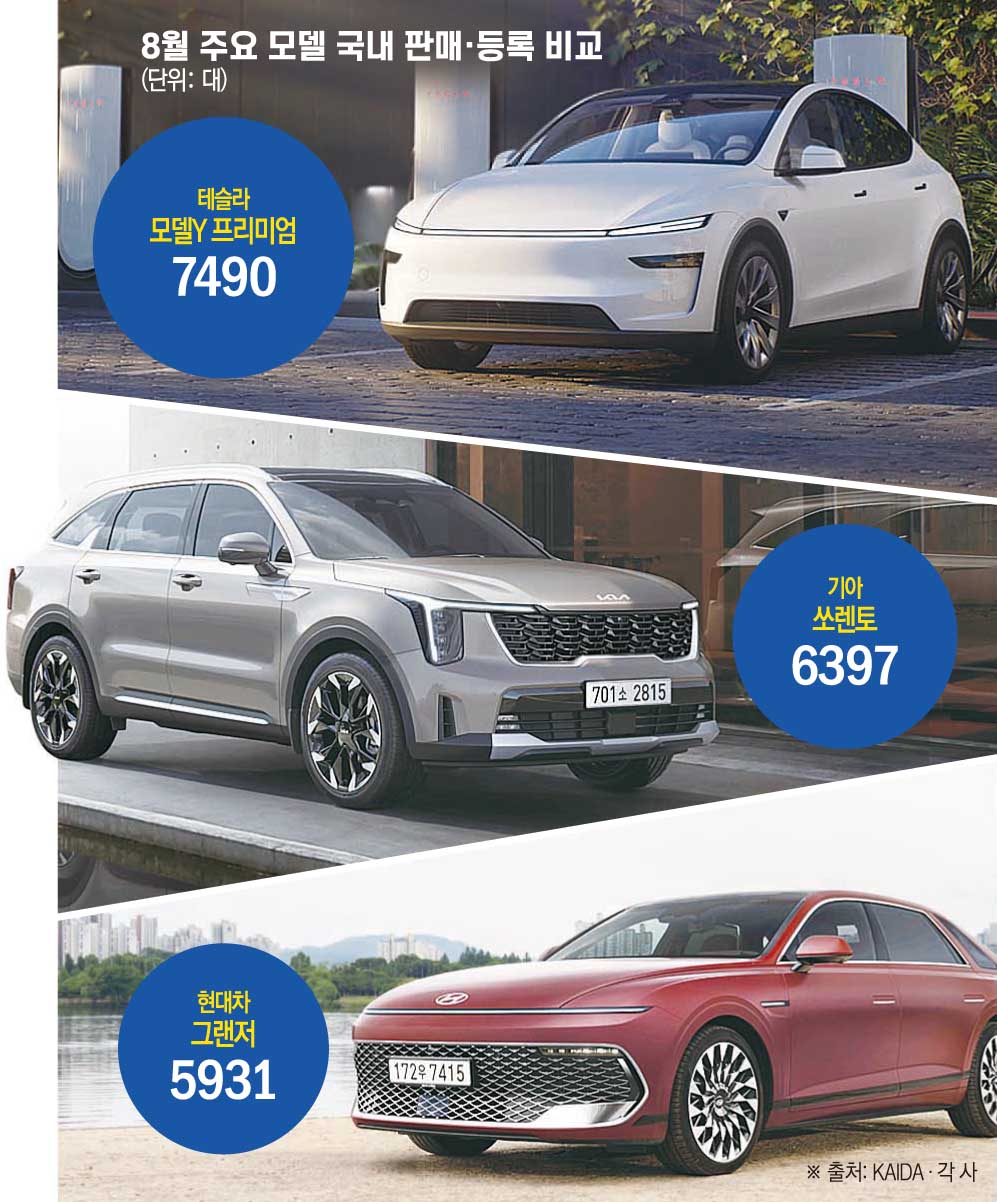
Hyundai Motor and Kia’s Home Market Wavers Despite New-Car Offensive… Tesla Expands Its Domestic Presence - eToday
이투데이 · 2026.09.06
📰 View originalInstitutions’ ‘POSCO International,’ Foreign Investors’ ‘Woori Financial Group,’ Individuals’ ‘Hyundai Motor’ Rank First [Weekly KOSPI Net Purchases - August 31 to September 4, 2026] - Korea Financial News
네이버뉴스 · 2026.09.06
📰 View original
Top 150 Korean Brands’ Value 357,000,000,000 USD… Up 4% Year-on-Year, Samsung Electronics and SK hynix Account for 30%
네이버뉴스 · 2026.09.06
📰 View original
Comments 0
to comment Login