
Acorn
July 29, 2026
🏭 POSCO Holdings, a Tug-of-War Between Market Slowdown and Cost Reduction - 2026.07.29
Hello, I'm Dotori, here to break down the skeletons of industries and their value chains as if drawing them on a chalkboard. Looking at the trend for POSCO Holdings today, it closed down at ₩286,000 as of the closing price on the 29th, reflecting the market's deepening concerns [3]. As we pass through the earnings release season, expectations and concerns are intersecting; let's break down the variables currently intertwined from a structural perspective.
📚 Let's Look at the Big Picture: Conflicting Interpretations of Costs
The market is currently digesting the second-quarter report cards of major companies and macroeconomic events simultaneously [4]. POSCO Holdings is also being coldly evaluated on the current status of the steel industry along with its performance. Digging a layer deeper, there is quite a bit of disagreement within the market regarding how to view the cost burden.
On one side, there is a bleak analysis that stock price recovery is limited as the steel industry slowdown, persistent cost burdens, and stock market volatility converge [2]. Since demand from front-line industries hasn't seen a strong rebound, doubts about the company's fundamental strength haven't completely cleared.
⚙️ This Connection is Key: Falling Raw Material Prices
However, the other side is finding positive connections. As the prices of major imported raw materials like iron ore and metallurgical coal fall, expectations for manufacturing cost reductions are being highlighted [1]. Just like oiling a stiff gear, the view is that a decline in raw material procurement costs across the non-ferrous metal and steel sectors could help defend profitability [1]. Even if forward demand slows down slightly, if costs fall faster, the margin spread can widen again.
🏭 Checking Value Chain Benefits
If so, we need to look at how these conflicting cost variables will act on the group's internal value chain by ranking them 1st, 2nd, and 3rd.
- 1st Priority: The steel business itself. Whether the drop in raw material prices like iron ore, combined with product price defense, actually leads to improved manufacturing margins is the most immediate and important point [1].
- 2nd Priority: The trade and infrastructure division responsible for raw material procurement and distribution. The key is whether they can flexibly adjust their profit structure while riding the trend of easing raw material burdens [1].
- 3rd Priority: New business divisions such as secondary battery materials. If the core steel business can reliably defend cash flow, the company can secure the stamina to continue investing in future materials without delay, even amidst market volatility [2].
As a result, we are currently in a phase where concerns over a sluggish industry and expectations for cost reduction are in a tight tug-of-war. I, Dotori, believe the market's rigorous scrutiny will continue until the cost-saving effects of the steel business are clearly proven through actual margin improvements in the second half. Ultimately, how well the lower raw material prices are translated into book profits will be the key question to track moving forward.
📰 Reference News (4)
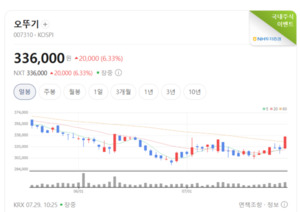
Cost reduction effects highlighted... CJ CheilJedang and Ottogi stock prices reflect eased import raw material burdens
네이버뉴스 · 2026.07.29
📰 View original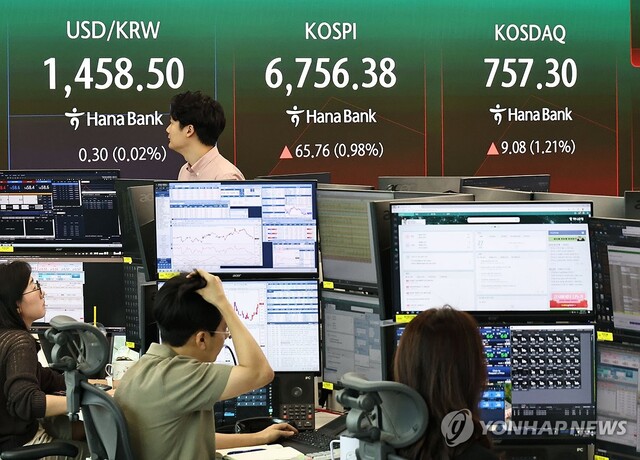
KOSPI remains stagnant... Market cap recovery for TK-listed companies moves further away
네이버뉴스 · 2026.07.27
📰 View original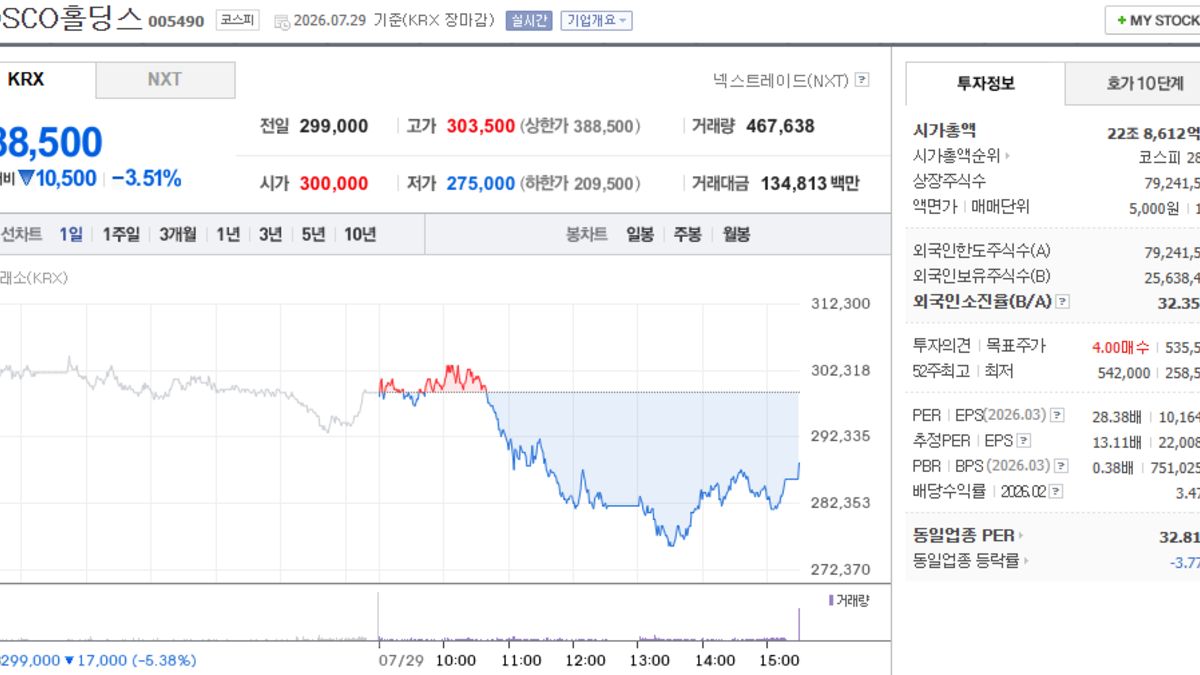
POSCO Holdings stock price closes down 3.50% at 288,500 KRW on July 29 - Top Star News
톱스타뉴스 · 2026.07.29
📰 View original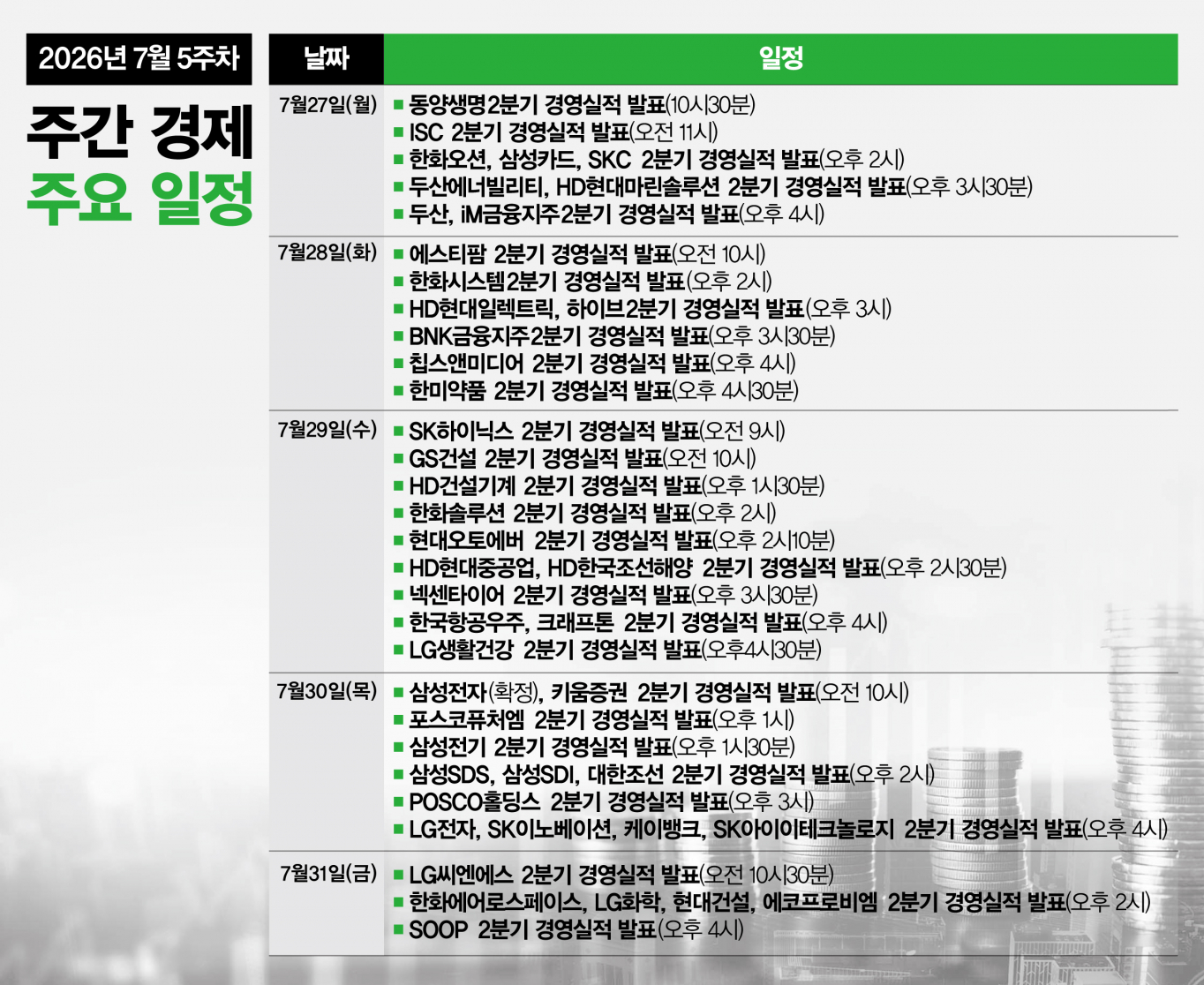
[Weekly Economic Outlook] Samsung Electronics and SK Hynix, Q2 report cards to be released
네이버뉴스 · 2026.07.27
📰 View original
Comments 0
to comment Login