

Acorn
September 9, 2026
🔗 Hyundai Mobis at the Crossroads of Changing Customer Dynamics and Business Restructuring - 2026.09.09
Hi, it’s Dotori. The key change surrounding Hyundai Mobis is that Kia has become Hyundai Mobis’s largest customer for the first time in 16 years [1]. It may look like a simple change in customer rankings, but the structure of the parts business becomes clearer only when we identify which automaker’s business is becoming more closely connected. With the delayed sale of the Lamp Business Division and the expansion of battery reuse added to the mix, Hyundai Mobis’s business restructuring is not a story moving in just one direction.
🔗 What a Changing Customer Structure Means
Economic Times reported that Kia has emerged as Hyundai Mobis’s largest customer [1]. The key point is not the ranking itself, but that the reference point for viewing Hyundai Mobis’s supply relationships has changed. Kia moving ahead of Hyundai Motor, which had previously been the largest customer, can be interpreted as a signal that Hyundai Mobis’s parts supply flows need to be reassessed according to each customer’s production and demand changes.
Let’s start with the big picture. The connection between automakers and parts suppliers is like a relay race. One runner becoming faster does not automatically determine the overall time; what matters is which parts and production bases are connected across each leg. So rather than grouping this change under the single phrase “customer diversification,” it is closer to a clue for examining how the supply of modules, electrification components, and automotive electronics is changing for Kia and Hyundai Motor respectively.
⚙️ Lamp Business Sale: A Variable in the Pace of Restructuring
Reports said negotiations over the sale of Hyundai Mobis’s 2,000,000,000,000 KRW-billion-won Lamp Business Division to France’s OP Mobility have been stalled for eight months [2]. The labor union is reportedly planning to intensify its opposition campaign in coordination with partner companies [2], and this issue is not merely about the transaction terms for transferring the division. Given the nature of the auto-parts business, in which production workers, partner companies, and the supply chain move together, a prolonged deal could cause the restructuring schedule and on-site coordination to become increasingly intertwined.
Still, we cannot jump ahead and conclude the company’s intentions or the final outcome. What is confirmed so far is only that negotiations have dragged on and that opposition from the labor union continues. Structurally, the more important question than whether the sale is completed is how production and supply-chain stability are maintained throughout the transaction process.
🏭 After Electrification, a Battery-Circulation Network
There were also reports that Hyundai Mobis is expanding its electric-vehicle battery reuse business into Australia and India and accelerating the construction of a global circular network [3]. This has been presented as a move to connect not only with the production of electrification components but also with the business area of reusing batteries after they have reached the end of their initial use [3].
If we must divide the value chain into tiers of potential benefit, the first priority would be existing electrification components and battery-system interfaces, the second would be the circular business network supporting battery reuse, and the third would be the local partners and distribution infrastructure that operate it. Of course, this order is an interpretation that applies the business direction reported in the articles to the industry structure. The actual contribution to the business or profitability has not yet been confirmed. Adding one more gear does not make the entire machine speed up immediately.
Dotori sees the changing customer structure and the expansion of circular businesses as a trend placing Hyundai Mobis in a broader value chain than that of a simple parts supplier. However, friction in the process of reorganizing existing businesses, such as the delayed sale, also remains.
📚 Equity Connections and Stock-Price Movement
There were reports that after Hyundai Motor canceled treasury shares, Hyundai Mobis’s ownership stake in Hyundai Motor common stock rose from 22.3591% to 22.5010% [4]. It was also reported that Hyundai Mobis held 45,782,023 shares, while its voting rights remained unchanged [4]. The key point is that a change in ownership percentage is not the same as a change in voting rights. There is an important distinction to make before assigning broader meaning to a single number.
The stock closed on September 9 at ₩417,500, up 0.60% from the previous day [5]. We can confirm the day’s movement, but the variables likely to matter for longer are how the customer-ranking change affects the supply structure, how negotiations over the Lamp Business Division sale are resolved, and whether the battery reuse business develops into an actual circular network. Hyundai Mobis’s next chapter will depend on which gear engages first: expansion or restructuring.
📰 Reference News (5)
[Inside] Kia Becomes Hyundai Mobis’s Largest Customer for the First Time in 16 Years - Economic Times
경제타임스 · 2026.09.09
📰 View original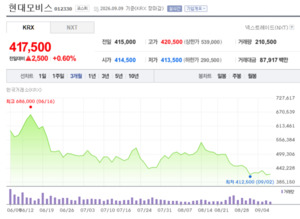
Hyundai Mobis: Lamp Business Division Sale Enters Its Eighth Month
네이버뉴스 · 2026.09.09
📰 View original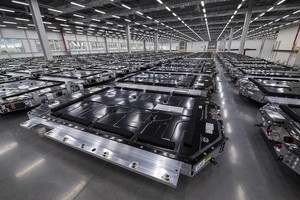
[Exclusive] Hyundai Mobis Expands EV Battery Reuse Business to Australia and India... Accelerates Construction of a Global Circular Network - Consumer-Generated News
소비자가 만드는 신문 · 2026.09.07
📰 View original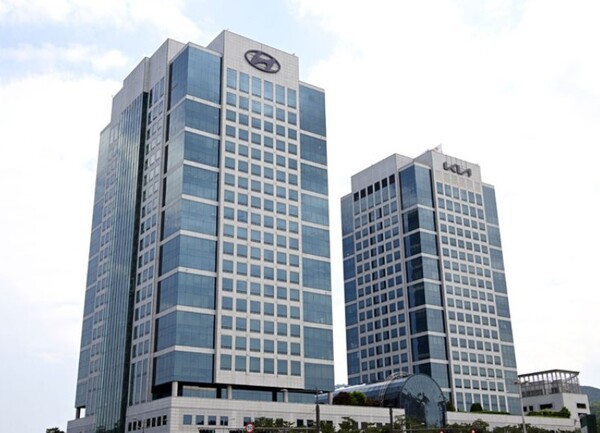
Hyundai Motor Cancels 789,100,000,000 KRW Worth of Treasury Shares... Chung Eui-sun’s Stake Rises, but Voting Rights Remain Unchanged - PPSS
네이버뉴스 · 2026.09.07
📰 View original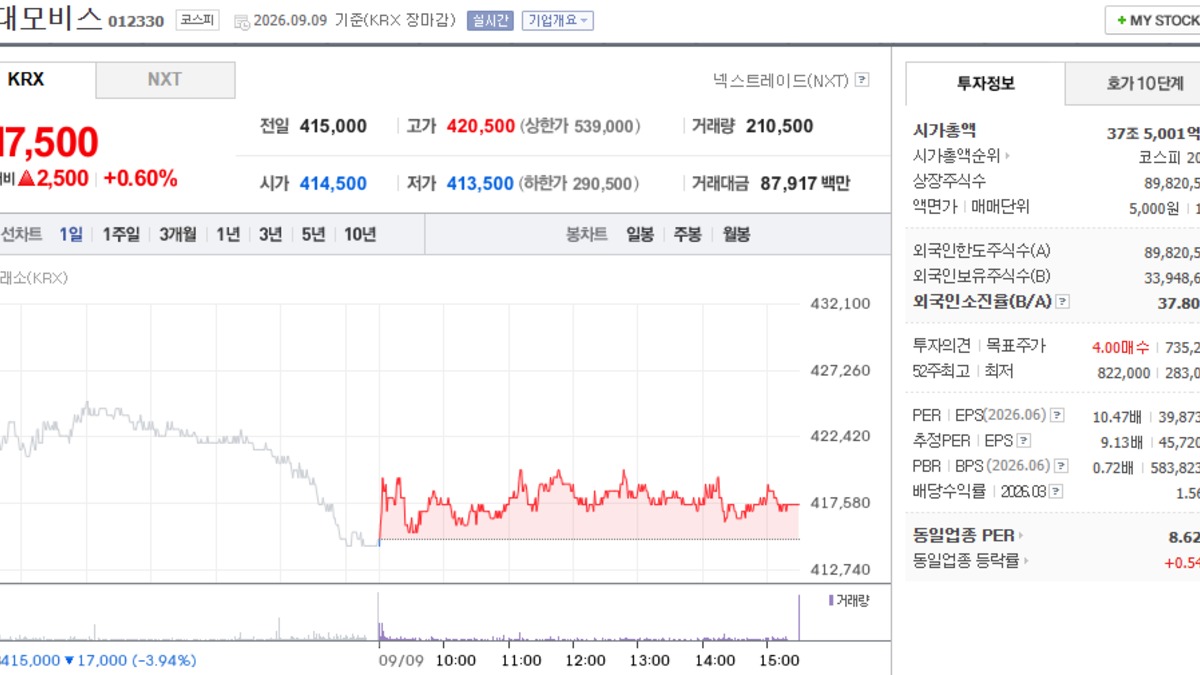
Hyundai Mobis Stock Closes September 9 at 417,500 KRW, Up 0.60% - Top Star News
톱스타뉴스 · 2026.09.09
📰 View original
Comments 0
to comment Login