
Acorn
September 3, 2026
🔗 Tesla, Hopes for Unified Autonomous Driving Regulations and the Challenge of Product Validation - 2026.09.04
Hi, it’s Dotori. The core of this Tesla issue is less about the Cybercab itself and more about whether autonomous driving can pass both regulatory requirements across multiple regions and real-world product validation at the same time. In the U.S., discussions of federal standards have emerged, while in Europe, developments surrounding supervised FSD have been reported, but neither has yet progressed to a confirmed timeline or regulatory decision. The gears of expectation have started turning, but they have not all meshed yet.
🔗 Could U.S. Regulations Lower the Barrier to Expansion?
Reports indicate that U.S. Transportation Secretary Duffy expressed support for establishing a single federal standard instead of having different autonomous vehicle rules in each state [1]. The video explains that such regulatory unification could lower the barriers preventing the Cybercab from expanding across the United States.
The important point is that this is not Tesla’s confirmed business plan or regulatory approval. Still, an autonomous driving business does not end with vehicles and software alone. Different approval standards and operating rules in each region can affect deployment speed, while clearer standards could simplify applying the same technology across multiple areas. Looking one step deeper, the regulatory framework has become one pillar of the value chain alongside technological competition.
⚙️ European FSD Between Disclosure and Decision
In Europe, claims have emerged that Tesla pressured the European Union regarding supervised FSD and disclosed related information [2]. However, the material provided contains no specific regulatory decision or implementation timeline.
That makes it difficult to conclusively place the U.S. federal standards discussion and the European situation on the same footing. In the U.S., a stated position in favor of creating a single standard was introduced, while in Europe, the reported developments have reached the stage of Tesla’s response and disclosure claims. Structurally, this means the pace of regulatory reform may differ by region. When assessing the Cybercab’s business expansion potential, the question of where and under what conditions it will be allowed to operate remains just as important as technical performance.
Dotori sees this connection as still being in a phase that requires both the possibility of regulatory reform and validation of actual operations. If drawn on a blackboard, it looks like smaller circles labeled the U.S., Europe, and safety standards placed separately beneath the large circle of autonomous driving.
🏭 The First Differentiating Variables in the Value Chain
Looking at the broader industry picture, the order of differentiated benefits in this material can be divided into 1st, the regulatory foundation; 2nd, the application of autonomous driving software; and 3rd, the mass-deployment capabilities of robots and vehicles. This is not a stock-price forecast, but an industry interpretation of which links need to be validated first.
First is the regulatory foundation. It has not yet been confirmed whether discussions of U.S. federal standards will lead to actual institutional change, but as the video points out, the possibility of lowering regional barriers has been raised [1]. Second is FSD application. Claims of disclosure and pressure surrounding supervised FSD have emerged in Europe, but no implementation date was provided [2]. Ultimately, software scalability must be assessed together with the technical explanation and the scope of actual permission.
Third is mass-deployment capability. Material covering the competition between Optimus and Hyundai Motor’s Atlas presented price, data, and mass deployment as the decisive factors [3]. While it provided no specific price or production and sales figures, it offers the perspective that the robotics business is not simply about demonstration videos, but about repeatable production and accumulating field data. In relay terms, if the first runner is technology, the next runners are production and deployment. Even a brilliant start is unlikely to become a record if the baton is dropped.
📚 The Real-World Variable of Vehicle Quality Validation
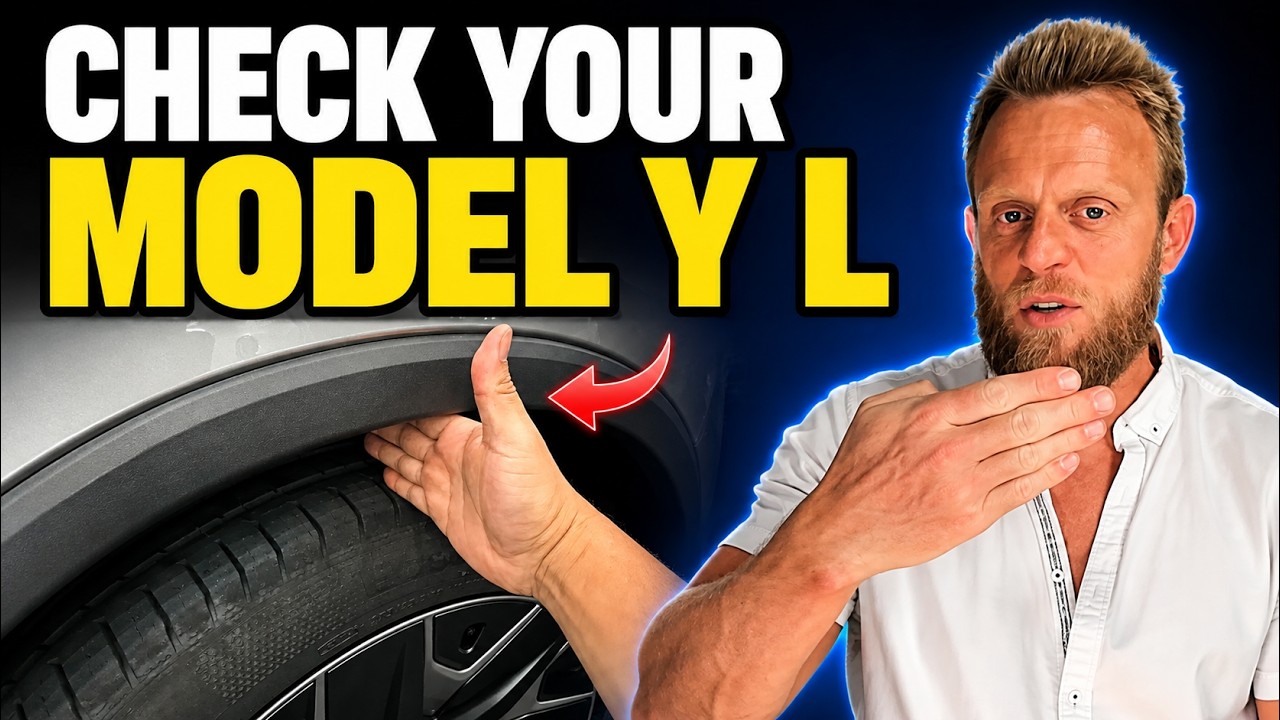
There are also reports that Tesla Model Y L owners in China observed the rear suspension sagging significantly after carrying heavy loads or driving long distances [4]. Some owners reportedly used a self-inspection method of checking the gap between the tire and body with their fingers, and the explanation provided contained no official recall announcement [4].
This case alone cannot establish conclusions about all vehicles or the company’s response. However, as expectations for future businesses such as autonomous driving and robotics grow, the quality of currently sold vehicles and after-sales response remain separate pillars of product trust. When viewing Tesla across the entire industrial value chain, the key is whether software regulation, robot deployment, and vehicle quality operate independently or fit together. Whether the U.S. regulatory discussion leads to actual standards, whether a specific decision emerges on European FSD, and whether vehicle-related reports lead to official inspections or action remain the next points to verify.
📺 Reference Videos (4)
Tesla Just put PRESSURE on the EU & “Opened the Book” on FSD Supervised in Europe!
▶BestInTESLA·2026.09.02

Tesla Model Y L Owners Are Finding the Rear Suspension Sagging — Here's How to Check Yours
▶The Electric Viking·2026.09.02
Comments 0
to comment Login