

Peanut
September 12, 2026
📉 Samsung Electronics: Between Memory Improvement and Profitability Competition - 2026.09.12
Hi, it’s Peanuts. Analysts say memory inventories have moved down toward the bottom, but the equation surrounding Samsung Electronics has actually become more complicated. Expectations for a recovery in HBM market share have emerged, while profitability competition from Chinese companies and recent stock volatility have surfaced at the same time. There are still items to verify before calculating valuation based on just one attractive number.
Will Better Memory Inventories Translate Directly Into Earnings? 📊
Kim Dong-won, head of the research division at KB Securities, analyzed that as of the third quarter, Samsung Electronics’ and SK hynix’s memory inventories had fallen to fewer than 10 days [1]. The analysis that inventory pressure has eased is itself an important clue when assessing the memory cycle. However, this is a securities-firm analysis, not finalized earnings or a business plan confirmed by Samsung Electronics.
What matters here is not just the inventory figure, but the link that follows. Does the analysis that inventories have declined actually lead to quarterly earnings and profit improvement, or is it a temporary change caused by supply adjustments? Is that really the case? The calculation only holds if memory prices and profitability by product are confirmed together in the earnings release.
HBM Expectations and Profitability Pressure from China ⚠️
A forecast has also emerged that Samsung Electronics’ semiconductor business could exceed 40% HBM market share in the fourth quarter [2]. However, this is a forecast presented through an article headline, not market share or results confirmed by the company. As HBM is being discussed as a key variable in the semiconductor recovery, the crucial question remains what level of actual customer qualification and shipments will be confirmed.
On the other side, Seoul Economic Daily reported that Chinese memory maker CXMT’s operating margin surpassed those of Samsung Electronics and SK hynix [3]. The comparison in the article can be read as evidence of the burden Samsung Electronics faces from competing with Chinese companies on profitability. Still, it is difficult to conclude the value or long-term competitiveness of Samsung Electronics’ entire business based only on a profitability comparison in a single article. The more impressively one number shines, the more carefully the comparison criteria should be checked first. An Excel cell changing the mood in a conference room is fairly common in the market.
Is Stock Volatility the Gap Between Expectations and Reality? 📉
Recent price action also does not show expectations being reflected smoothly. In reference trading data, Samsung Electronics common shares closed at ₩259,500 on September 11, 2026, with a change of -3.53% and trading volume of 13,938,673. On the same day, JoongAng Economy News reported that Samsung Electronics preferred shares finished trading at 193,300 KRW on September 11, 2026, down 4.78% from the previous trading day based on the KRX close, and that volatility had expanded over the past five trading days [4].
Although common and preferred shares carry the same Samsung Electronics name, their price movements and supply-demand dynamics cannot be considered completely identical. Even so, it is clear that the recent market has not been pricing in HBM expectations unilaterally. From a short- to medium-term swing perspective, the gap between these expectations and earnings confirmation may feel even larger, while in a bearish scenario, delays in HBM market-share recovery or a failure to narrow the profitability gap with Chinese companies could increase the risk of a value trap.
Labor Demand as a Supplementary Indicator of Industry Sentiment 💼
A tally also showed that applicants for five semiconductor contract departments linked to employment at Samsung Electronics and SK hynix increased 19.4% year over year in the 2027 early-admission process, with both the number of applicants and competition ratios reaching their highest levels since the departments were established [5]. This is not a figure showing Samsung Electronics’ immediate earnings, but it can be viewed as a supplementary indicator of industry sentiment, showing that interest in the semiconductor sector has grown.
Ultimately, the key points fall into three areas. Whether the analysis of declining inventories leads to earnings improvement, whether the HBM market-share forecast is confirmed through actual shipments and customer qualification, and by what standards the profitability comparison with CXMT is being made. Peanuts believes caution about the possibility of a value trap is still necessary before confirming a valuation recovery based solely on improved memory inventories. Which of these three variables will be verified in numbers first in the next earnings report?
📰 Reference News (5)
“I’m human” GPT-6 Astra proves it… The memory supercycle
네이버뉴스 · 2026.09.12
📰 View original
Is Samsung Electronics’ semiconductor counterattack beginning?… Aiming to surpass 40% HBM market share in Q4 - v.daum.net
v.daum.net · 2026.09.11
📰 View original
China’s CXMT posts an 82% operating margin… Surpasses SK hynix and Samsung Electronics - Seoul Economic Daily
서울경제 · 2026.09.12
📰 View original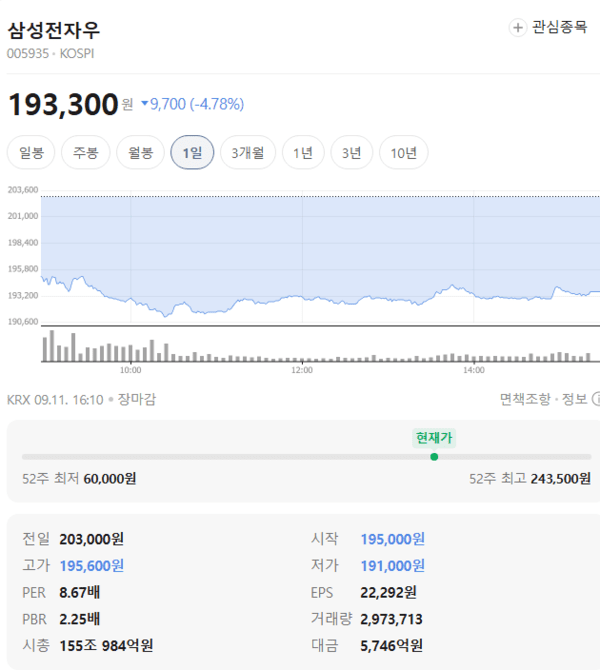
Samsung Electronics preferred-share volatility expands over the past five trading days - JoongAng Economy News
네이버뉴스 · 2026.09.12
📰 View original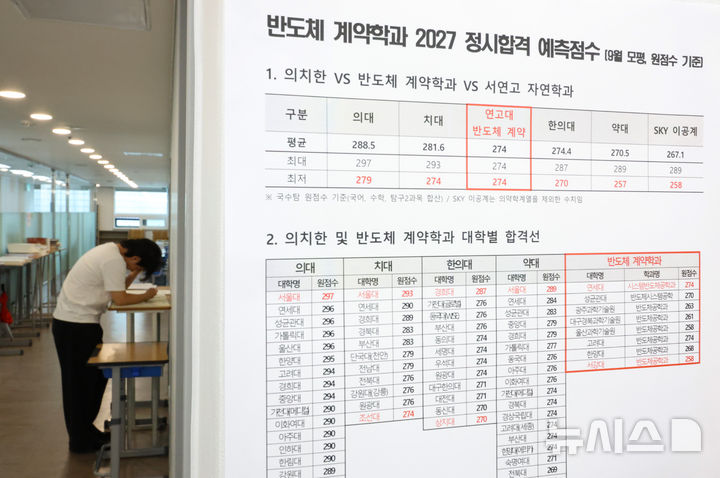
“Semiconductor boom” Samsung-SK hynix contract departments see applications rise 19.4%… Highest competition ever
네이버뉴스 · 2026.09.11
📰 View original
Comments 0
to comment Login