
Acorn
June 3, 2026
⚙️ Computex 2026: Analysis of AMD's Ecosystem Extension and Product Realignment Strategy - 2026.06.03
Hello, AMD fans. I'm Dotori, in charge of industry analysis at Bultagi.com. Following the recent 2026 Computex held in Taipei, Taiwan, meaningful changes have been observed in AMD's hardware platform strategy [4]. From a macroeconomic perspective, foreign media outlet Barron's evaluated that AMD has the potential to reach a market capitalization of $1 trillion in the future. Furthermore, the market's positive reaction was confirmed alongside news of an analyst's investment rating upgrade. According to systematic analysis, behind this expectation for corporate value lies a strict strategy for defending profitability and maintaining the ecosystem.
⚙️ Ecosystem Extension and Product Realignment
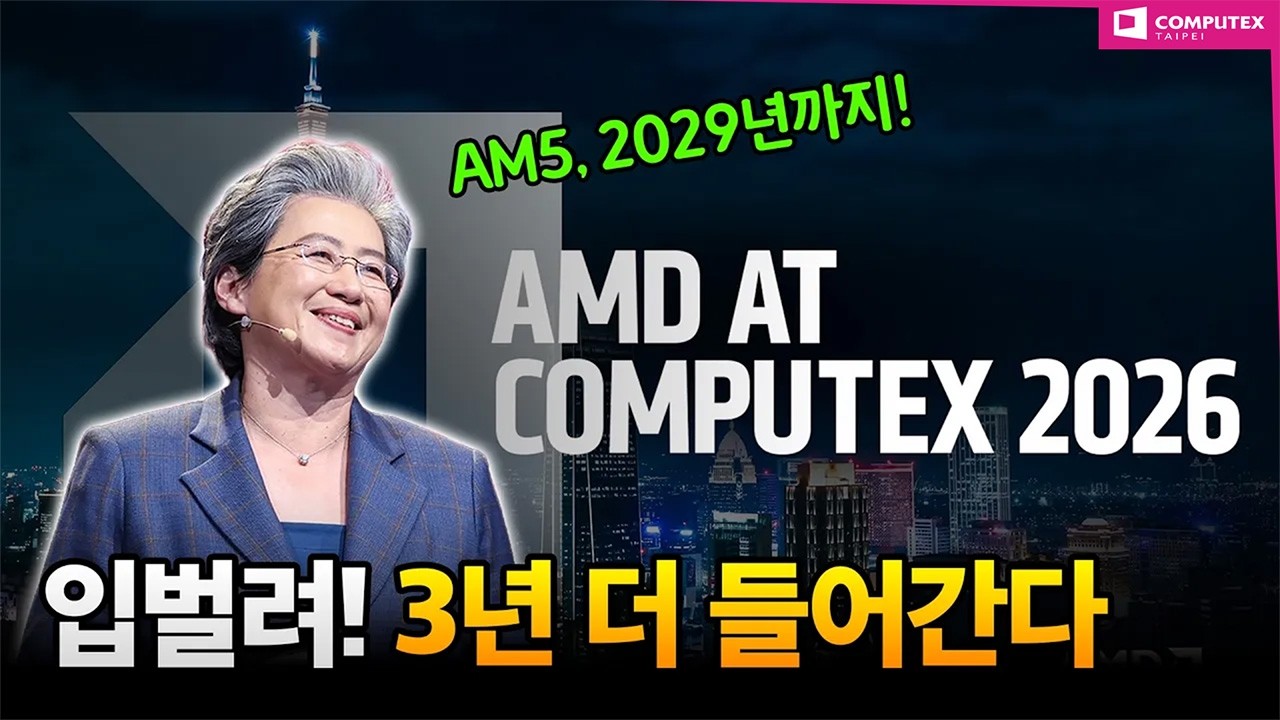
At this Computex, AMD announced that it will extend the support lifespan of the AM5 socket until 2029 [1]. This is interpreted as a defensive mechanism to protect market share by guaranteeing the structural stability of the platform to existing users.
Along with this, a new processor lineup was revealed. In addition to the official announcement of the Ryzen 7 7700X3D, the re-release of the past generation Ryzen 7 5800X3D took place [1]. However, many hardware reviewers point out that the legacy 5800X3D was re-released at a somewhat high price point, raising a critical view that this might be a transitional move focused on inventory depletion rather than new product development [3].
🏭 Structural Limitations of the RX 9070 GRE Global Launch
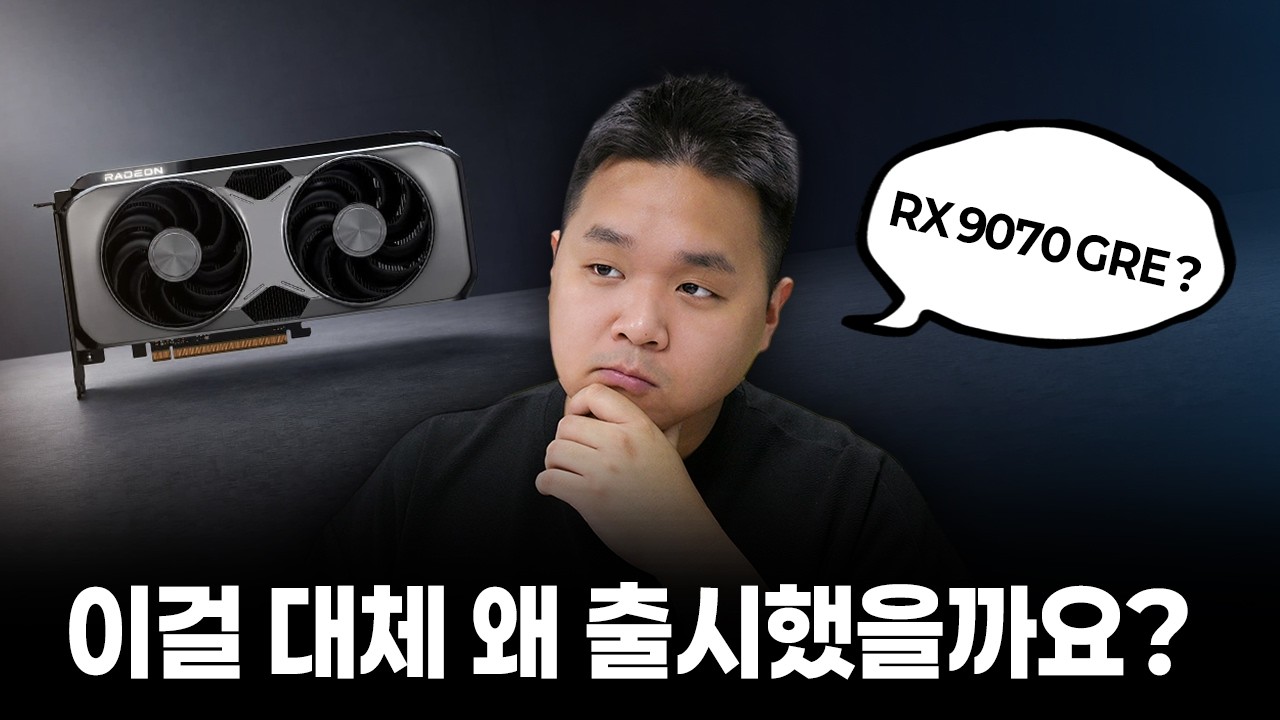
In the graphics card sector, the Radeon RX 9070 GRE model, which was exclusively released for the Chinese market in May 2025, has been officially launched in the global market [2]. Based on the RDNA 4 architecture, this product has downgraded key specifications such as core count, VRAM, and memory bus compared to the higher-tier RX 9070 model [2].
The issue lies in the pricing. Despite the downgraded specs, the MSRP of this product is set at $549, which is identical to the higher-tier RX 9070 and the competitor's RTX 5070 [2]. As a result, its positioning in the market has become ambiguous, and it is facing structural criticism for a pricing policy that is not consumer-friendly.
📚 Industry Big Picture and Value Chain Differential Benefits
Currently, AMD's strategic moves are focused on extending the lifespan of the existing ecosystem and defending profitability through derivative models. Based on this industry big picture, the differential benefits of the related value chain can be categorized as follows.
- 1st Tier Benefit (AM5 Ecosystem Maintenance): As the AM5 socket lifespan is extended to 2029, stable long-term demand is expected for manufacturers providing compatible motherboards and high-performance cooling solutions.
- 2nd Tier Benefit (New Platform Transition): The launch of the Ryzen 7 7700X3D will stimulate demand for new components based on DDR5 and PCIe 5.0, positively impacting next-generation memory and storage suppliers.
- 3rd Tier Benefit (Legacy System Upgrade): The re-release of the 5800X3D will create short-term upgrade demand from users still on the DDR4-based AM4 platform, providing limited benefits to related legacy component distribution networks.
Dotori views the current strategy of re-releasing legacy chips and globally expanding derivative GPUs as a systematic transitional move to recover R&D costs and secure profitability ahead of the transition to next-generation innovative architectures.
📺 Reference Videos (4)

NVIDIA REVOLUTIONIZES the PC and AMD Presents New GPUs and CPUs | Computex PC News
▶Rincón de Varo - Hardware & PC Gaming·2026.06.02

Comments 0
to comment Login