
Carrot
September 6, 2026
Samsung SDI: Checking the Numbers Between the ESS Growth Engine and Earnings Rebound 📊 - 2026.09.06
Hi, it’s Carrot, starting with the numbers. Samsung SDI posted operating profit of 203,800,000,000 KRW in the second quarter this year, marking a return to profitability [2], while it is also converting some U.S. production lines from EV batteries to ESS batteries [1]. Earnings and the business transition seem to be pointing in the same direction, but one key question remains: how much will this momentum actually carry through to orders, mass production, and the next earnings report? 📊
Second-quarter profit: the ESS effect showed up in the numbers
Yonhap News’ Monthly Midas reported that Samsung SDI posted 203,800,000,000 KRW in operating profit in the second quarter this year, and that the three domestic battery makers, including LG Energy Solution and SK On, simultaneously recorded profits for the first time in seven quarters. The ESS effect was cited as a major background factor [2], meaning the ESS narrative that has appeared repeatedly is now linked to a quarterly operating-profit figure.
Still, it is too early to draw a conclusion about the entire earnings trend. What has been confirmed in the article is the second-quarter operating profit and the explanation involving the ESS effect. How much ESS will contribute in the next figures, and how much it can fill the gap left by the EV battery business, remain open questions. Wow, expectations are sprinting ahead while the numbers follow from behind.
U.S. production shift: the real test begins in the fourth quarter 🎯
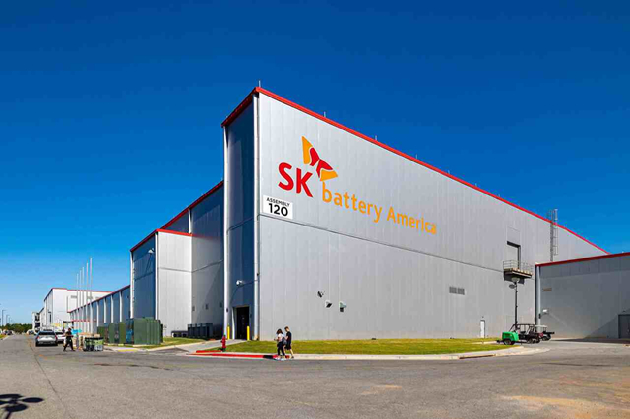
Samsung SDI is converting part of the production lines at StarPlus Energy in Indiana, U.S., from EV batteries to ESS batteries. Reports say it plans to begin mass-producing LFP-based ESS batteries locally in the fourth quarter of this year, along with an explanation that it invested more than 2,000,000,000,000 KRW in the U.S. last December [1].
The important point is that both the current fact of “being converted” and the schedule of “planned mass production” are present. Whether the production-line changes lead to actual product shipments and profits is the next checkpoint. The picture of ESS filling the space left by slower EV demand sounds plausible, but there is always one more step between the picture and the earnings table. For real, this is the key stretch.
Order expectations are growing, but there is no confirmed table yet 💡
Reports say the third domestic ESS bidding process is approaching, with the project size potentially expanding to 2,000,000,000,000 KRW [3]. However, this material does not announce a contract confirmed by the company; it raises the possibility that the scale of the bidding process could expand. Therefore, it should not be read as Samsung SDI’s confirmed orders or revenue.
With both the U.S. ESS production shift and the possibility of domestic bidding being discussed, market interest in ESS as a growth engine continues. However, the outcome of the bidding process, supply timing, and actual earnings contribution require separate confirmation. Possibilities should remain possibilities, and confirmed earnings should remain confirmed earnings; keeping them separate prevents the numbers from getting tangled.
The stock-price range is still swinging widely 📉
In recent trading-day data, Samsung SDI’s closing price fell from ₩569,000 on August 27 to ₩538,000 on September 2, before closing at ₩548,000 on September 4. The September 4 change was +1.67%, with volume at 259,044, while September 2 recorded -5.45%. An article covering the stock’s first-week-of-September trend also listed the September 4 closing price as ₩548,000 [4].
Looking only at recent closing prices, the areas around ₩538,000 and ₩548,000 stand out as short-term sentiment benchmarks, while from August 27 to September 4, the high was ₩577,000, and the low was ₩538,000. Still, I won’t connect this to a price forecast in any particular direction. The chart appears to be reflecting ESS expectations while waiting for earnings confirmation.
Carrot sees the confirmed numbers—the ESS production shift and second-quarter profit—as a more important standard than the possibility of new orders. No all-in buying, no all-in selling; act only when support breaks. Going forward, watch the actual outcome of the third domestic ESS bidding process and the fourth-quarter mass production of LFP-based ESS batteries. How quickly will expectations turn into contracts, shipments, and profits? ✨
📰 Reference News (4)
EV battery gap filled by ESS…Three K-battery makers secure a new growth engine in the U.S.
네이버뉴스 · 2026.09.06
📰 View original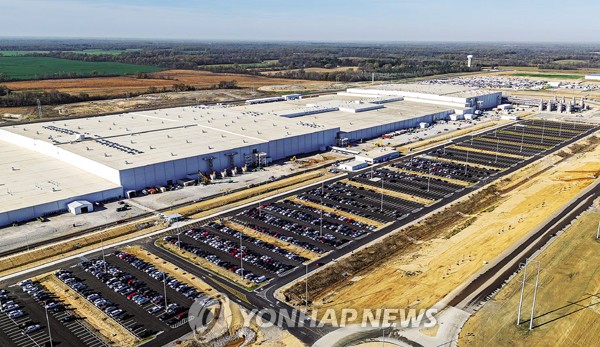
Three K-battery makers rebound to profitability…ESS effect - Yonhap News Monthly Midas
네이버뉴스 · 2026.09.04
📰 View original
Third domestic ESS bidding process approaches…Project size likely to grow to 2,000,000,000,000 KRW
네이버뉴스 · 2026.09.06
📰 View original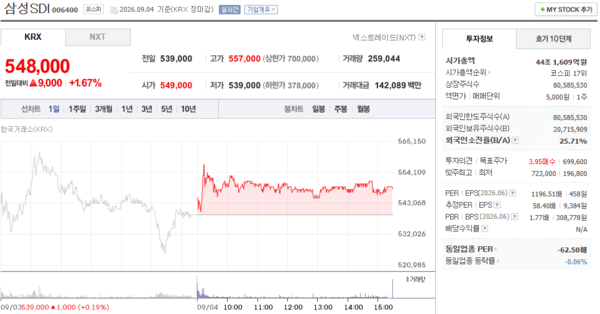
Samsung SDI stock ends September’s first week in decline - JoongAng Economy News
네이버뉴스 · 2026.09.05
📰 View original
Comments 0
to comment Login