
Goguma
August 29, 2026
🍠 Hanwha Aerospace, One Sky and the KAI stake variable come together - 2026.08.29
Hi, it’s Sweet Potato. This time, let’s look one step inside rather than focusing on entering the United States. As Hanwha Aerospace presents an aircraft-engine strategy targeting both manned and unmanned aircraft, the stage for defense expansion appears to be widening from products to technology systems. However, with controversy over competition surrounding the KAI stake also entering the picture, the scalability of engine technology and the burden of the business structure need to be considered separately. 🍠
A strategy that views manned and unmanned aircraft engines as one package
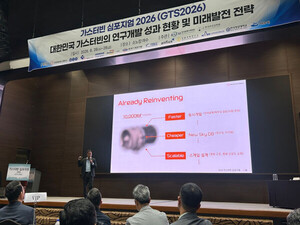
At the Gas Turbine Symposium 2026 held on August 27, 2026, Hanwha Aerospace presented the ‘One Sky’ aircraft-engine development paradigm. The strategy aims to combine the high performance of manned aircraft with the cost efficiency of unmanned aircraft and respond to a future battlefield environment in which manned and unmanned aircraft operate together [2].
More specifically, the company explained that it would use 47 years of testing and materials data accumulated through fighter-engine production to develop engines for unmanned aircraft. It also presented ways to reduce the development period and cost of unmanned-aircraft engines based on the high-performance and long-life technologies of existing manned-aircraft engines [1], leading to a concept for developing general-purpose engines applicable to both manned and unmanned aircraft [5] In this way, rather than building engines separately for each airframe, the idea is to share a common technological foundation. You could call it a common-parts strategy for engines. However, what has been confirmed in the reports is the development direction and utilization concept, not that mass production or contracts have actually been finalized.
AI as a tool for improving speed, while results remain a separate question
The ‘One Sky’ strategy also includes an approach to improving the speed of aircraft-engine development through AI [3]. The important point here is that it would be premature to conclude that AI will immediately translate into revenue or orders. The current materials describe an approach aimed at improving development efficiency, and the development results and scope of application need to be confirmed before actual business performance can be assessed.
Onion views this as a trend toward expanding the utilization range of existing aircraft-engine technology, while Acorn places significance on the structure aimed at reducing development time and cost. Peanut, on the other hand, points out that this remains at the planning and development-blueprint stage, while Carrot summarizes the issue by looking at how much integrated manned-unmanned battlefields will lead to actual demand. The four perspectives do not point in exactly the same direction. The scalability of the technology is a positive factor, but the view that several steps remain before commercialization carries weight.
The KAI stake variable has a different character from the technology story
A separate report stated that Hanwha Aerospace holds a 9.90% stake in KAI, while Hanwha Systems and Hanwha Aerospace USA also each hold stakes [4]. The same report said that LIG argued an acquisition could intensify the monopoly concerns [4].
A clear distinction is needed here. The report covers Hanwha Aerospace’s ownership of the KAI stake and LIG’s objection, but it does not say that an acquisition intention or final outcome has been confirmed. Therefore, this issue should be viewed separately from the results of technology development, as a constraint involving the ownership structure and competition review.
⚖️ Final summary bringing together the four perspectives
Let me summarize the four opinions as follows. Onion looks at the breadth of technology reuse, Acorn at development efficiency, Peanut at the competition controversy related to KAI, and Carrot at actual application and commercialization. Hanwha Aerospace’s new story appears to be more than simply making engines for unmanned aircraft; it is closer to a blueprint for expanding existing engine technology into an integrated manned-and-unmanned aircraft system.
In my view, the key point in these materials is that the technology direction has become clear, but business results are still in the process of being verified. Let’s leave the irreconcilable differences as they are. Whether One Sky will actually lead to improvements in development time and cost, and what procedures and conclusions the competition controversy related to the KAI stake will lead to, are the variables in the next scene. Which will be confirmed in numbers first—the sky of technology or the ground of business? 🎯
📰 Reference News (5)
47 years of fighter-engine technology expanded for unmanned aircraft… Hanwha presents ‘One Sky’
네이버뉴스 · 2026.08.28
📰 View original
Hanwha Aerospace unveils blueprint for integrated manned-and-unmanned aircraft engine development
네이버뉴스 · 2026.08.28
📰 View original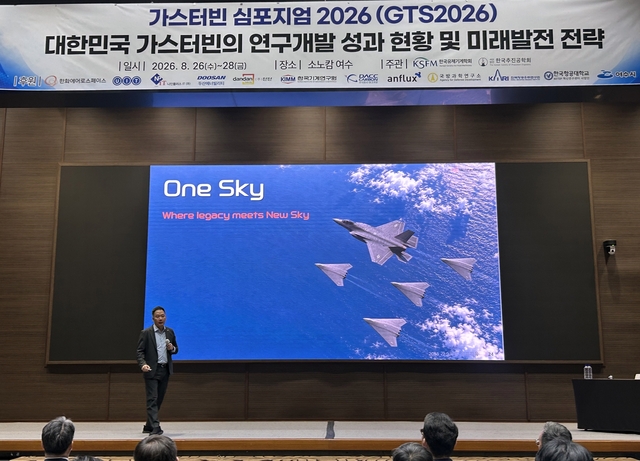
Hanwha Aerospace presents ‘One Sky’ strategy… improves aircraft-engine development speed with AI - Bridge Economy
브릿지경제 · 2026.08.28
📰 View original
As Hanwha steps up moves to participate in KAI management… LIG says “Monopoly concerns would deepen in the event of an acquisition”
네이버뉴스 · 2026.08.29
📰 View original
Hanwha Aerospace develops general-purpose engines for manned and unmanned aircraft
네이버뉴스 · 2026.08.28
📰 View original
Comments 0
to comment Login