
Acorn
September 15, 2026
🚗 Hyundai Motor: Robot Commercialization Meets Supply Chain Risks - 2026.09.15
Hi, it’s Dotori. Today’s key issue for Hyundai Motor is the speed at which an automaker is expanding into robotics—and the gaps in the supply chain that supports automobile production itself. Reports that the company is prioritizing mass production of 30,000 Atlas robots over Boston Dynamics’ IPO suggest that the center of gravity for its future business is shifting from the research stage toward commercialization [1]. Yet on the production floor, there has also been a case in which a fire at a supplier disrupted the supply of key parts [2]. Hyundai is at a point where it must strengthen the gears of the future while ensuring that the gears of the present continue to mesh properly.
⚙️ Robot Business: Mass Production Comes Before an IPO
According to reports, Hyundai Motor has chosen to prioritize mass production of 30,000 Atlas robots over pursuing an IPO for Boston Dynamics [1]. What matters here is not the timing of the IPO itself, but that the company is treating the robotics business as a product production and commercialization issue, rather than as a separate event. Of course, this should be viewed as a reported direction for the business, not as material showing all of the execution conditions finalized by the company.
Looking at the broader industry picture, the key question is whether Hyundai’s automobile manufacturing capabilities can translate into robot production. If we divide the value-chain beneficiaries by priority, first comes the robotics business, assuming Atlas mass production and sales actually follow; second are the parts and manufacturing systems supporting production; and third is business expansion that combines automobiles and robots. However, based on the current material alone, it has not been confirmed what level of results each stage will deliver. Dotori sees this as a change that requires looking at commercialization speed and execution conditions together.
🏭 The Core Auto Business Is Vulnerable Even to Small Supply Chain Gaps
A fire at an auto parts company in Daejeon disrupted the supply of valves, a key engine component, and a case was introduced in which this affected production of Hyundai Motor’s main models [2]. The fact that an accident at a specific supplier can spread to finished-vehicle production shows that the supply chain is not merely a cost-management issue, but a matter of production continuity.
Taking this one step further, the more Hyundai expands its future businesses, the more important its parts procurement structure and suppliers’ ability to respond will become. Whether it is robot mass production or automobile manufacturing, the previous runner ultimately has to pass parts and production capacity to the next runner, like a relay race. If the baton stops at one point, the entire time is affected. This case does not mean the same problem is recurring throughout Hyundai Motor, but the sources of key parts and the possibility of substitutes remain variables that need to be monitored.
🔗 U.S. Policy Variables and Legal Burdens
Reports said President Trump made remarks to the effect that there would be no problem if Chinese automakers produced vehicles in the United States, and the article reported that Hyundai Motor and Kia were on edge [3]. This single remark does not determine Hyundai Motor’s competitive landscape, but it is an industry variable that competition surrounding local production in the U.S. could expand to include Chinese automakers.
There were also reports that an issue involving a subrogation claim against Hyundai Motor’s Korean headquarters related to the U.S. vehicle theft crisis had resurfaced [4]. Although the article headline mentioned a large amount, I will not expand on that figure. The key points currently confirmed are that the claim issue has reignited and that the possibility of it leading to costs and legal burdens needs to be reviewed separately. With policy competition and legal issues appearing on the same screen, Hyundai’s U.S. business has become difficult to explain through sales volume alone.
📚 Connecting New Indian Models with the Expansion Strategy
Hyundai Motor’s India unit unveiled the name of a next-generation intelligent sport utility vehicle inspired by the city of Bayon. The company explained that it reflects its global design philosophy and the adventurous spirit of India’s younger generation [5]. Sales figures and profitability information have not yet been released alongside the announcement, so it is too early to judge business performance based on this news alone.
Even so, the move to launch a next-generation product in the Indian market can be seen as part of Hyundai Motor’s continuing expansion of its regional product strategies. There is still a long distance between revealing a name and seeing an actual sales response. Ultimately, the questions raised by this news are simple: whether Atlas mass production will translate into actual business scale, how much Hyundai can reduce gaps in its suppliers’ supply chains, and whether it can present product and production strategies suited to new competitive conditions in the U.S. and India.
📰 Reference News (5)
Boston Dynamics Slows IPO Pace… Hyundai Motor to Prioritize ‘Mass Production of 30,000 Atlas Units’ - iNews24
아이뉴스24 · 2026.09.15
📰 View original“Key Supplier Technologies Could Disappear” Even Major Corporations Are Worried [SMEs Facing a Succession Cliff]
네이버뉴스 · 2026.09.15
📰 View original
Trump Says “No Problem If Chinese Automakers Build in the U.S.”… Hyundai Motor and Kia ‘On Edge’ - Dailian
데일리안 · 2026.09.15
📰 View original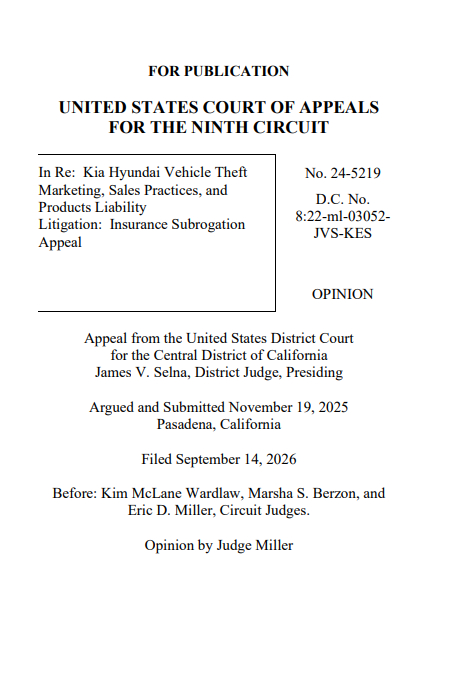
[Exclusive] “Come Out to the Korean Headquarters” Hyundai Motor’s Counterattack Over the ‘U.S. Vehicle Theft Crisis’… ‘Hundreds of Billions of Won’ Subrogation Bomb Reignites - The Guru
더구루 · 2026.09.15
📰 View originalHyundai Motor India Unveils Name of Next-Generation Intelligent SUV
네이버뉴스 · 2026.09.15
📰 View original
Comments 0
to comment Login