

Peanut
August 29, 2026
📉 Hyundai Motor: The Tug-of-War Between the Physical AI Shift and Earnings·Valuation Validation - 2026.08.29
Hi, it’s Peanut. Hyundai Motor’s new focus is a shift beyond automobiles toward becoming a physical AI company, but the market seems more interested in checking whether that strategy actually translates into profits than in admiring a grand blueprint. At its 2026 CEO Investor Day, Hyundai Motor Group presented a strategy to transform into a physical AI company that produces and deploys robots and robotaxis [1]. The buzzwords sound impressive, but will it really happen?
🚗 From Automaker to Physical AI Company
This strategy emerged alongside moves to accelerate the mass production of humanoid robots. The article highlighted Hyundai Motor Group’s push to produce and deploy robots and robotaxis amid an onslaught of Chinese capital [1]. What matters here is not the direction itself but the execution stage of mass production and deployment. Whether this remains a research-and-development story or develops into a business of meaningful scale is still an unresolved variable.
From a fundamental perspective, the priority is whether cash flow and profits generated by the existing auto business can support the new ventures. Even if physical AI adds to the growth narrative, a shaky automotive business will inevitably make the valuation story more complicated. Peanut thinks Hyundai Motor should currently be viewed less as a growth-story stock and more as a test of execution and valuation.
📊 Earnings Still Speak in Numbers
Hyundai Motor’s second-quarter operating profit fell 21% year over year, but its full-year earnings guidance was maintained [2]. Meanwhile, second-quarter sales in the U.S. market rose 4%, while hybrid sales increased 71% [2]. On one side, declining profit; on the other, growth in U.S. sales and hybrids. Different signals are flashing simultaneously within the same company.
The key question is whether the product mix in the U.S. will lead to a recovery in profitability, or whether cost pressures will persist despite higher sales. It is too early to turn optimistic based solely on sales volume when the opposing figure—a decline in operating profit—remains clear. That is why even in a bullish atmosphere, the bearish scenario cannot be ignored. Even if growth rates look strong, the possibility of a value trap still needs to be watched if a transition to profits has not been verified.
🔌 2027 U.S. EREV: A Test for the Middle Ground
Hyundai Motor plans to launch the midsize SUV Santa Fe EREV in the U.S. market in 2027, while Genesis also plans to introduce the midsize SUV GV70 EREV [3]. The U.S. has strong demand for long-distance driving and uneven charging infrastructure, making it a market attracting attention for EREV launches [3].
How well this middle ground between electric vehicles and internal-combustion engines will be accepted by American consumers, and whether expanded sales will translate into margins, remain open questions. The fact that a product is launched and the fact that it generates sufficient profit are two different calculations. Even for short- to medium-term swings, these new-model catalysts appear to call for greater attention to launch timing, sales mix, and profitability confirmation than to expectations alone.
🌎 North American Positioning and Stock Volatility
Hyundai Motor Group, consisting of Hyundai Motor, Kia, and Genesis, maintained fourth place in North America with sales of 923,083 vehicles and narrowed the gap with third-place Ford·Lincoln based on its first-half sales growth [4]. Strengthening its position in North America is clearly a positive business signal. However, market rankings do not automatically mean an increase in per-share value. The key is whether sales volume, product mix, and operating profit can be verified as forming one connected line.
Looking at the stock price, Hyundai Motor closed at ₩399,500 on August 28, with a daily change of +0.38% and trading volume of 438,365. There was also reporting that the past five trading days showed an overall weakening trend and expanding volatility [5]. On the business side, new cards in the form of physical AI and EREV have appeared, but the market is calculating them alongside the second-quarter profit decline and execution costs.
Ultimately, the remaining question is clear. Can the physical AI transition and U.S. EREVs offset declining profits in the core auto business, or will they become cards that add new investment burdens? Hyundai Motor’s valuation story can only be validated another step once it is confirmed that North American sales growth and expanding hybrid sales are translating into actual profitability.
📰 Reference News (5)
"Physical AI Shift" Hyundai Motor Accelerates Humanoid Mass Production Amid Chinese Capital Offensive
네이버뉴스 · 2026.08.29
📰 View original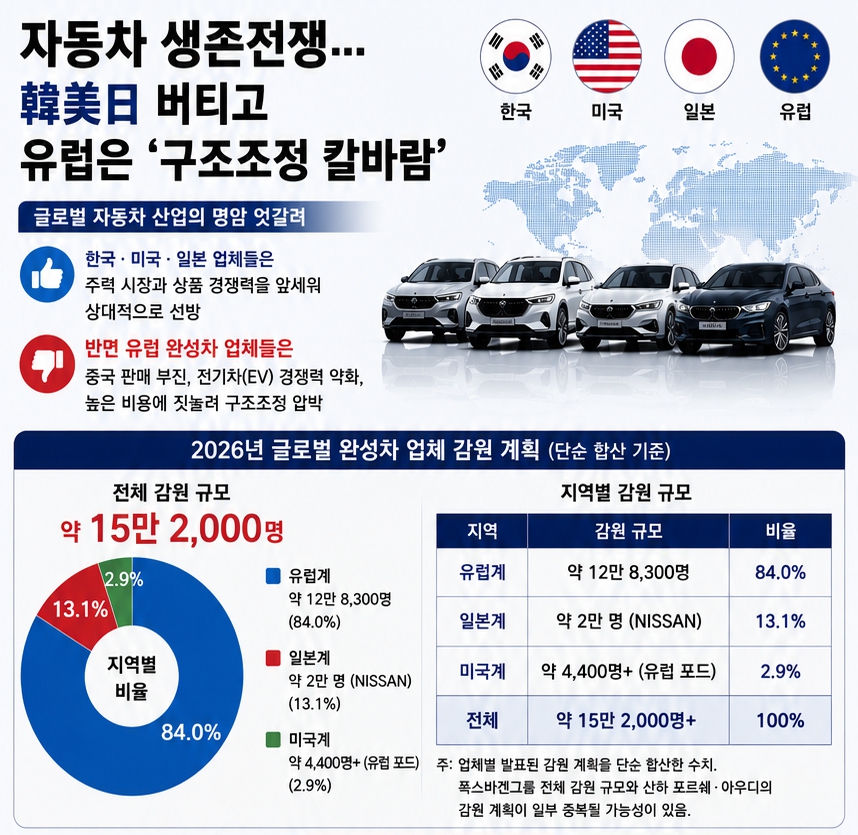
Global Automakers’ Survival War⋯ Korean, U.S., and Japanese Firms Hold On While European Brands Face a ‘Cold Wind’
네이버뉴스 · 2026.08.29
📰 View original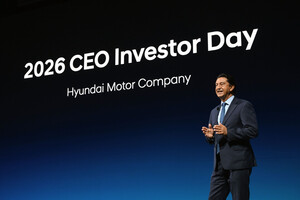
Why Is Hyundai Motor Heading to the U.S.…and That Too
네이버뉴스 · 2026.08.29
📰 View original
“Toyota Targets GM’s No. 1 Spot, While Hyundai Motor Group Challenges Ford” - Korea Times Los Angeles
네이버뉴스 · 2026.08.28
📰 View original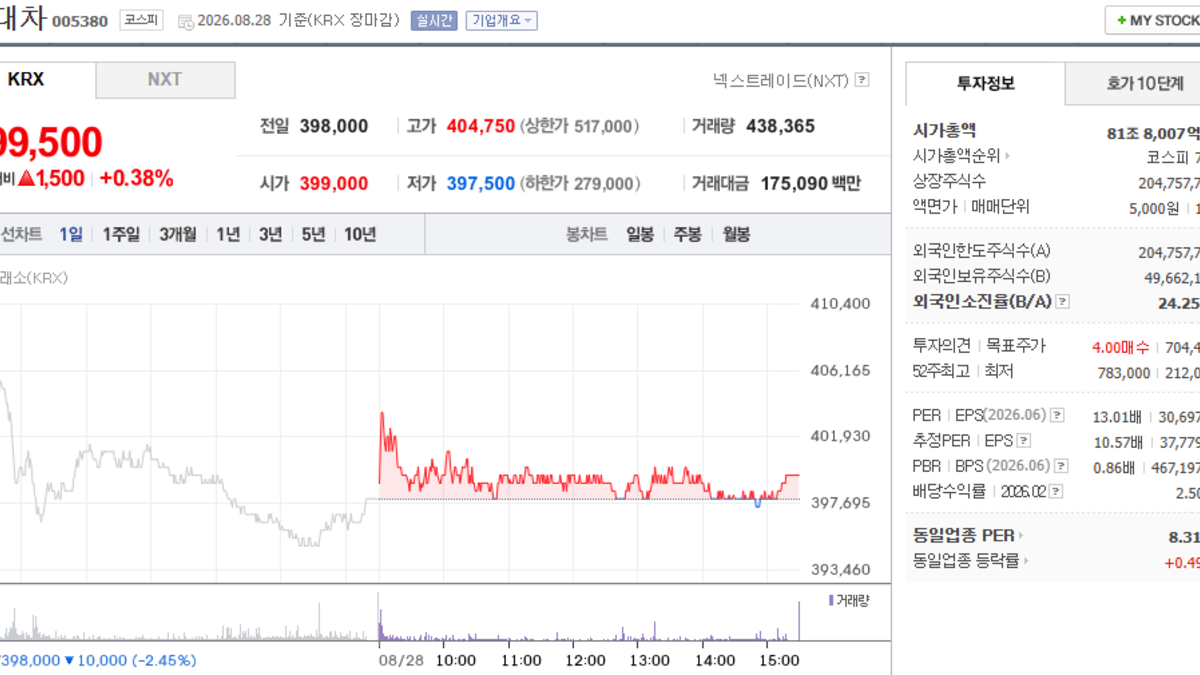
Hyundai Motor Stock Closes in the 390,000 KRW Range on August 28 as Volatility Expands
네이버뉴스 · 2026.08.29
📰 View original
Comments 0
to comment Login