
Goguma
September 8, 2026
⚖️ Samsung Heavy Industries: FLNG Boom and a Test of Gas Carrier Design Capabilities - 2026.09.08
Hi, it’s Goguma. On September 8, the key issue for Samsung Heavy Industries centered on whether the FLNG boom and design cooperation on ultra-large gas carriers can translate into real business competitiveness. Offshore plants and gas carriers both came into focus, but it is still too early to end the story with order news alone, as execution remains a challenge. 🍠
Attention Turns to Samsung Heavy Industries Amid the FLNG Boom
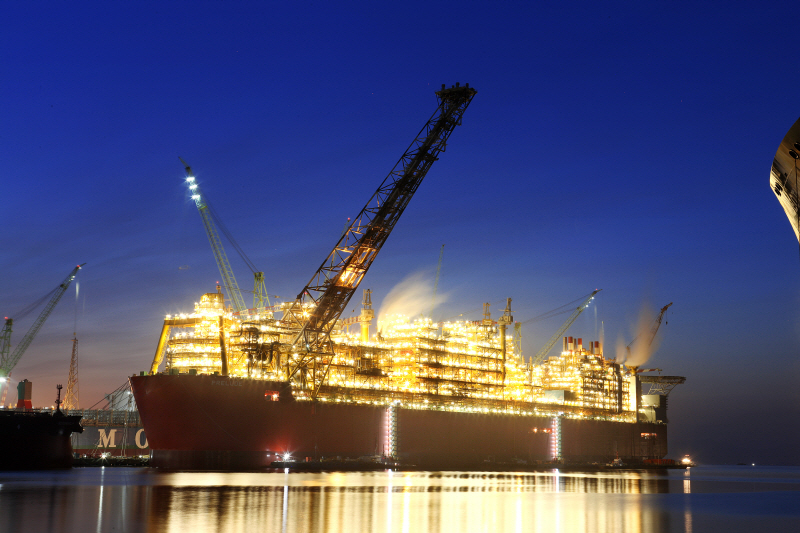
As Samsung Heavy Industries’ FLNG business enjoys a boom, industry reports say HD Hyundai and Hanwha Ocean are struggling to secure new work in offshore plants [1]. The key point here is not so much the competitors’ concerns as the fact that Samsung Heavy Industries has emerged as a relatively prominent player in offshore plants.
Onions will view this as evidence of a broader order environment, while Dotoris will place greater importance on execution in businesses like FLNG, where design and construction are both required. My interpretation is that the next question is less whether the market is favorable and more how steadily that opportunity can be converted into project results. Even when favorable winds blow, it is ultimately design and production that determine the ship’s course.
Ultra-Large Gas Carriers Gain Design Cooperation
Samsung Heavy Industries is building four ultra-large gas carriers equipped with Babcock LGE designs, and the vessels are scheduled for delivery in 2029 [2]. A separate report said the vessels are in the 88,000㎥ class and will apply Babcock LGE’s cargo-handling design [3].
What matters here is not simply the number of vessels, but the combination of external engineering design with gas-carrier construction. Since Samsung Heavy Industries’ gas-carrier business and design capabilities are being discussed together, the focus is not only on the ability to build the product but also on how complex cargo-handling designs are integrated into the project.
Peanuts will frame this cooperation as an issue of design completeness, while Carrots will focus on the long timeline leading to delivery in 2029. Where these perspectives meet is clear: even after the contract and design are disclosed, schedule and quality must be maintained through actual delivery. Since the outcome has not yet been confirmed, it is appropriate to distinguish between the possibilities and the challenges here.
Share-Price Trends Demand Both Expectations and Confirmation
On September 8, Samsung Heavy Industries’ share price was reported to have risen to ₩22,150 early in the session before falling to ₩21,300 late in the day [4]. Based on the reference price, the closing price that day was ₩21,250,, with a -0.70% change and trading volume of 2,527,844. Based on recent trading days, the September 3 close was ₩21,650 with a gain of +8.58%, followed by ₩21,400 on September 4, down -1.16%, and a close at ₩21,250 on September 8.
These figures show that expectations and confirmation diverged even within a single day. With order and market-condition news drawing attention, the share price fluctuated between its intraday high and closing price, suggesting that the market is watching not only the positive news itself but also whether it leads to earnings and delivery results. This does not mean that a price direction can be stated definitively; rather, news and share-price reactions do not always move to the same rhythm. Sometimes the stock market sets sail before the ship. ⚖️
Looking at All Four Perspectives Together
Goguma will summarize the four opinions as follows. Onions focus on the FLNG market and business opportunities, Dotoris on the technical meaning of the gas-carrier design cooperation, Peanuts on the execution burden from design through delivery, and Carrots on the gap between the intraday movement and closing price.
There is no need to force these four perspectives into a single sentence. The views of Onions and Peanuts collide head-on. One sees the expansion of opportunity, while the other looks at the process of turning that opportunity into a finished product. My final view is that bullish and bearish scenarios coexist. The FLNG market and gas-carrier design cooperation are clearly new business catalysts, but in practice, schedule adherence, quality, and execution after the order will need to be continually confirmed.
The remaining question is simple yet weighty. How far can the FLNG boom and ultra-large gas-carrier cooperation prove Samsung Heavy Industries’ design and construction capabilities? The long project timeline leading to delivery in 2029 will gradually provide the answer.
📰 Reference News (4)
Samsung Heavy Industries’ FLNG Business Is “Booming”… HD Hyundai and Hanwha Ocean Struggle to Find New Offshore-Plant Work - asiatoday.co.kr
asiatoday.co.kr · 2026.09.08
📰 View original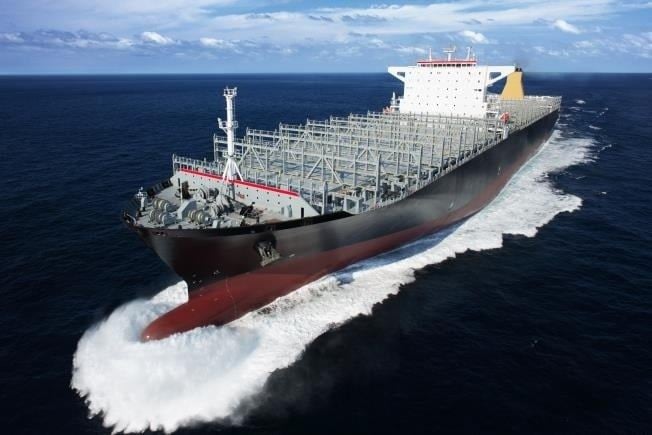
Samsung Heavy Industries Builds Four Ultra-Large Gas Carriers with Babcock LGE Designs… Delivery in 2029 - Korea Economic Daily
한국정경신문 · 2026.09.08
📰 View originalSamsung Heavy Industries Incorporates British Engineering to Open a Route for 88,000㎥ Gas Carriers - Global Economic
네이버뉴스 · 2026.09.08
📰 View original
Samsung Heavy Industries 22,150 KRW and Reverses Lower… Falls to 21,300 KRW Late in the Session - JOBPOST
네이버뉴스 · 2026.09.08
📰 View original
Comments 0
to comment Login