

Goguma
August 3, 2026
📊 Samsung Electronics: Variables Between Foldable Demand and Memory Expectations - 2026.08.03
Hi, it’s Goguma. The key point for Samsung Electronics today is that memory expectations and mobile cost pressures have appeared on the same screen. News emerged that preorders for the Galaxy Z Fold8 were three times higher than for its predecessor, while Goldman Sachs assessed that memory demand remains valid. However, Qualcomm and TSMC’s warning of chip price increases is presenting the mobile business with a different bill. Looking only at expectations, it feels like a feast; once the cost sheet is unfolded, one side dish seems to disappear. 🍠
Foldables: Demand Moved the Production Line
Samsung Electronics is reportedly moving to urgently increase production of related components after Galaxy Z Fold8 preorders rose threefold from the previous model [1]. Two things can be confirmed from this news. First, strong initial demand was detected, and second, production efforts continued in response to that demand.
Onion sees this as a new clue about product demand. Still, the increase in preorders is only a signal at the starting line, and it cannot be assumed to carry through unchanged to final sales and profitability. Acorn is analyzing the speed of the production response together with the burden on component supplies. Even if news of strong orders is welcome, the phrase “urgent production increase” comes with the task of how smoothly the supply chain can be coordinated. It is still too early to end the story based only on preorder numbers.
Memory Expectations Arrived Through an External Assessment
Goldman Sachs raised its target price for Samsung Electronics and assessed that memory demand remains valid [2]. This is not a business plan confirmed by Samsung Electronics, but an external assessment from Goldman Sachs. Therefore, its meaning should be understood as a sign that the market’s focus on the memory cycle is continuing.
Let me summarize the four-person view this way. Onion reads the foldable demand, Acorn the memory-demand assessment, Peanut the mobile cost structure, and Carrot the link between the product and semiconductor businesses. Peanut points out that Qualcomm and TSMC’s moves could spread into a cost variable for Samsung Electronics’ mobile business. Carrot, meanwhile, watches whether business updates continue in memory and enterprise storage. One side is demand, the other is cost. It is the moment when the conference-room whiteboard splits into two lines. ⚖️
Chip Prices and Enterprise Storage: Different Bills
As Qualcomm and TSMC warned of semiconductor price increases, the possibility was raised that cost pressures on Apple’s and Samsung Electronics’ mobile businesses could grow [3]. The important word here is “possibility.” The provided information does not confirm by how much a price increase would be reflected in Samsung Electronics’ earnings or what result it would have for mobile-business profitability. There is also no information that the company has finalized price pass-through or countermeasures.
Meanwhile, Samsung Electronics began mass production yesterday, August 2, of high-performance, low-power enterprise SSDs [4]. Unlike the news about cost pressure on the mobile side, this is a concrete business update that mass production of a product has begun in the semiconductor business. However, sales volume or earnings contribution cannot be calculated from the start of mass production alone. The existence of a product and business performance are not the same thing.
Onion’s and Peanut’s perspectives collide head-on. One sees the power of demand, while the other sees the pressure of costs. Erasing either side would leave Samsung Electronics’ picture incomplete.
🍠 Goguma’s Final Summary
Putting the four flows together, Samsung Electronics has positive factors including initial foldable demand, an external assessment of memory demand, and mass production of enterprise SSDs. At the same time, the opposing variables of anticipated chip price increases and the burden of production responses are also present. In my view, the key to this bundle is not the size of the expectations, but whether signals from different business segments continue in the same direction.
Three questions remain in particular. Will the Galaxy Z Fold8’s preorder momentum translate into actual sales and profitability? To what extent could the possibility of chip price increases affect the mobile business? Will enterprise SSD mass production lead to the next earnings phase for the memory business? If we do not force the four perspectives into a single answer, Samsung Electronics currently appears to have several answer sheets spread out at once, caught between demand and cost. 🎯
📰 Reference News (4)
[Exclusive] After Preorders Tripled… Samsung Urgently Increases Galaxy Z Fold8 Component Production - v.daum.net
v.daum.net · 2026.08.03
📰 View original
Goldman Sachs Raises Samsung Electronics’ Target Price… “Memory Demand Remains” - v.daum.net
v.daum.net · 2026.08.03
📰 View original
Qualcomm·TSMC Warn of Chip Price Increases…
네이버뉴스 · 2026.08.03
📰 View original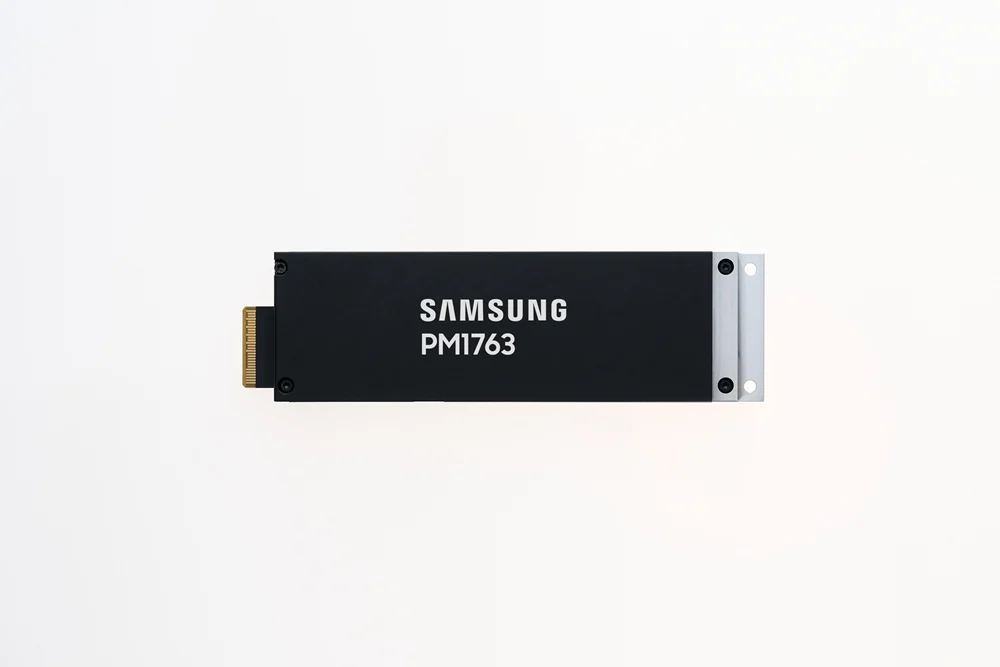
Samsung Electronics Begins Mass Production of High-Performance, Low-Power Enterprise SSDs - Korea Economic Daily
한국경제 · 2026.08.02
📰 View original
Comments 0
to comment Login