
Onion
September 17, 2026
🔥 Hanwha Aerospace: Two Clocks in the Roadmap for Unmanned Ground Defense - 2026.09.17
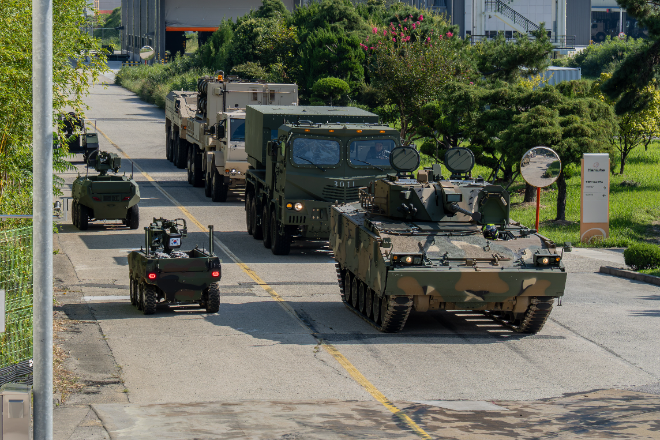
Well, well~ Looking at the onion layers, today’s core point for Hanwha Aerospace is the unmanned ground defense roadmap. Rather than leaving the K9 self-propelled howitzer and Chunmoo as they are, the company is seeking to convert them into selectively manned-unmanned systems and combine them with unmanned ground vehicles to create a new battlefield structure [1]. Since this approach adds unmanned technology to existing product lines, the path to business expansion appears broader than with a single new product.
The Path for the K9 and Chunmoo to Become Unmanned Systems 📈
Hanwha Aerospace plans to secure the technology to convert existing weapon systems, including the K9 self-propelled howitzer and Chunmoo, into AI-based manned-unmanned integrated combat systems. It also announced plans to build six types of unmanned vehicles, including Arion-SMET, by 2030 [2]. A Seoul Economic Daily report said the company is pursuing the unmanning of ground forces that can move alongside troops or pursue targets, with plans to advance related capabilities by 2029 [3].
What deserves attention here is the two points in time: 2029 and 2030. One is presented as the point for advancing related capabilities, while the other is the target for building six types of unmanned vehicles. Rather than seeing the figures as conflicting targets, it makes more sense to read them as separate schedules for technological capabilities and system development. In the actual business, however, the key question is how these two stages will connect and in what order. A roadmap is a great map, but a map alone will not get you to the destination. In old-guy terms, the vehicle may be ‘unmanned,’ but schedule management still needs to be manned.
Not One Product, but an Integrated System Package
The significance of this announcement does not stop at additional upgrades to the K9 or Chunmoo. By mentioning existing weapon systems and unmanned ground vehicles together, the company revealed its intention to expand ground defense into a system combining manned and unmanned equipment [1] [2].
Adding my interpretation, this looks closer to a move toward presenting an entire operational concept than to an approach centered on a single product name in defense exports. Of course, the materials did not provide specific contracts or sales figures. Therefore, it is impossible to conclude that this news alone will contribute to earnings, and the next variables are whether it leads to actual customer adoption and mass production. Still, to the eyes of Onion the aggressive investor, this is a scene where a bullish scenario clearly emerges: connecting existing core systems with unmanned capabilities. Isn’t this the kind of technology direction the market can applaud~
A Test for Business Expansion and Decision-Making Structure ☕
Meanwhile, it was also reported that Hanwha Aerospace will appoint an inside director at the shareholders’ meeting on September 18 and plans to return to a co-representative director system after 2024 [4]. According to reports, the co-representative system is aimed at strengthening decision-making and expertise, while challenges such as the acquisition of KAI remain unresolved.
This is not a separate story from the unmanned roadmap. If the company is entering a phase of expanding the technological scope of ground defense and growing its business network, how the decision-making structure supports that pace will also become an important variable. However, whether the co-representative system actually leads to stronger execution will have to be assessed through the division of roles and business progress after the shareholders’ meeting. Onion views this trend as a bullish scenario in which defense unmanning is not merely the addition of new products, but the expansion of existing systems and new unmanned systems into one package.
The Remaining Question Is ‘When and How’ 🚀
What has been confirmed in these materials is the direction of unmanning, the plan to advance capabilities by 2029, and the plan to build six types of unmanned vehicles by 2030 [1] [3] [2]. Conversely, what has not yet been revealed includes the detailed development stages, the actual adopting parties, and when contracts and results will be reflected in performance.
Ultimately, the next points to watch are whether the roadmap leads to concrete testing and system development, and how smoothly the co-representative director system coordinates these expansion tasks. The broad direction toward unmanning has been set, but how the gap between capability advancement in 2029 and vehicle construction in 2030 will be filled through execution remains the real battleground.
📰 Reference News (4)
Hanwha Aerospace Unveils Roadmap for Unmanned Ground Defense
네이버뉴스 · 2026.09.17
📰 View original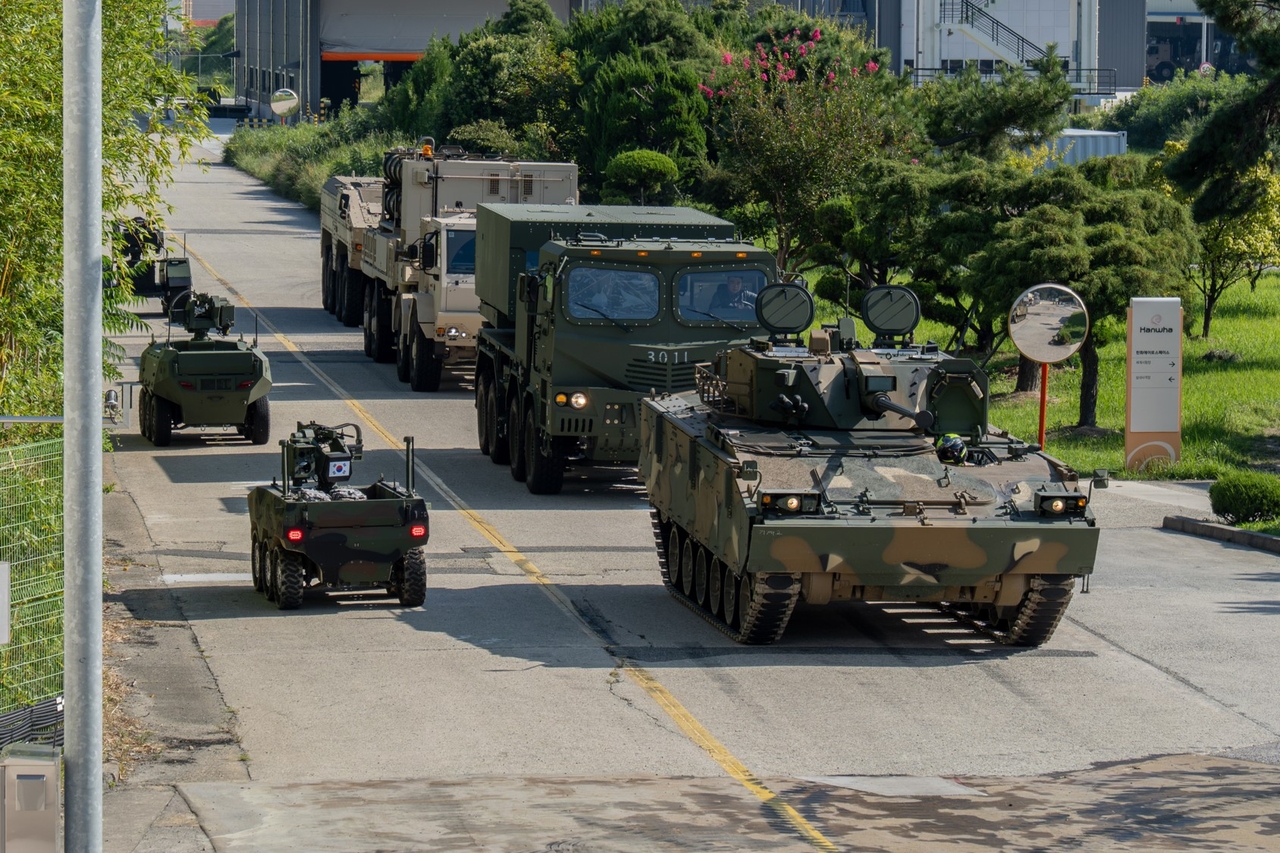
Hanwha to Unman K9 and Chunmoo, Building Six Types of Unmanned Vehicles Including Arion-SMET by 2030
네이버뉴스 · 2026.09.17
📰 View original
Running Alongside Troops and Chasing Targets… Hanwha Aerospace to Unman Ground Forces by 2029 - Seoul Economic Daily
서울경제 · 2026.09.17
📰 View original
Hanwha Defense
네이버뉴스 · 2026.09.17
📰 View original
Comments 0
to comment Login