
Acorn
August 1, 2026
🔗 Samsung Heavy Industries: The Challenge Between FLNG Expansion and Currency Hedging - 2026.08.01
Hi, it’s Dotori. The key point this time is that as Samsung Heavy Industries expands the uses of offshore platforms from FLNG to floating data centers, currency hedging has emerged as a variable affecting profitability. On one side is the broad picture of business expansion; on the other is a financial strategy that differentiates earnings even within the same shipbuilding industry. This is a phase where looking at just one gear does not reveal the entire machine.
🔗 The Big Picture Is Offshore Platform Expansion
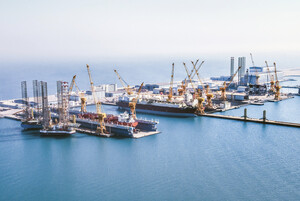
Samsung Heavy Industries is strengthening its offshore plant competitiveness centered on FLNG while broadening the scope of its technology applications through its floating data center business. Although the two businesses serve different purposes, they reportedly share technology for designing and building large floating platforms [1].
The important point here is not that floating data centers will immediately guarantee earnings, but that existing offshore plant technology can extend into other industries. The key question is whether a shipyard’s role can expand beyond shipbuilding into platform businesses that establish large facilities at sea.
🏭 First Priority: FLNG, Second: Platform Applications, Third: Links to Surrounding Industries
When the value chain is divided, the currently confirmed business foundation can be viewed as FLNG as the first priority, followed by platform applications such as floating data centers, and finally links to surrounding industries involving related equipment and supply chains. Of course, this order may change depending on how much each business actually translates into revenue and profitability.
In FLNG, Samsung Heavy Industries is reported to have taken on the Delfin FLNG1 project, being built off the coast of Louisiana in the United States, together with Black&Veatch. The project has a total cost of approximately $5 billion and is described as having annual LNG production capacity of 4.4 million tons [2]. This is where experience in executing large offshore plant projects connects again with the story of platform expansion. In relay terms, FLNG is the first runner, followed by new floating facilities.
⚙️ The Profitability Variable: Currency Hedging
There is, however, a variable that can be easy to miss when looking only at the outward scale of the business. Although all three major shipbuilders recorded double-digit operating profit margins in the second quarter, ChosunBiz analyzed that profitability gaps were determined by currency-hedging strategies and that Samsung Heavy Industries was unable to fully benefit from the high exchange rate [3]. In other words, even under similar exchange-rate conditions within the same industry, contracts and hedging structures can produce different profit and loss results.
This does not mean that the company’s cash flow is good or bad. Taking the analysis presented in the report as it stands, it more closely means that how exchange rates flow through to profit and loss has become as important as order volume going forward. When assessing shipbuilding earnings, looking only at revenue and operating profit is like seeing only half the blackboard.
📚 Stock Price Trends and Remaining Questions
There was a report that Samsung Heavy Industries’ stock price rebounded in the final week of July after declining during the week [4]. In the referenced price movements, the closing price fell from ₩20,700 on July 28 to ₩19,400 on July 29, before closing at ₩20,550 on July 30 and ₩21,350 on July 31. The change on July 31 was +3.89%, and trading volume was 4,806,652.
However, short-term stock movements and changes in the business structure do not move at the same speed. FLNG project execution capabilities, technological expansion into floating data centers, and the currency-hedging structure must mesh like different gears. Dotori believes that when looking at Samsung Heavy Industries, we need to consider both the broad picture of offshore platform expansion and the path through which currency effects translate into actual profitability. There is one remaining question: how far will the currency-hedging variable influence the process of turning expanded platform technology into business performance?
📰 Reference News (4)
Samsung Heavy Industries Expands Offshore Platform Technology from FLNG to Floating Data Centers
네이버뉴스 · 2026.08.01
📰 View original
[Disclosure Pick] SNT Energy Wins Supply Contract for First Floating LNG Project in the U.S., Surges Over 5%
네이버뉴스 · 2026.07.31
📰 View originalCurrency Hedging Differentiates the Profitability of the ‘Big 3’ Shipbuilders... Samsung Heavy Industries Misses Out on High-Exchange-Rate Benefits - ChosunBiz - Chosunbiz
Chosunbiz · 2026.07.31
📰 View original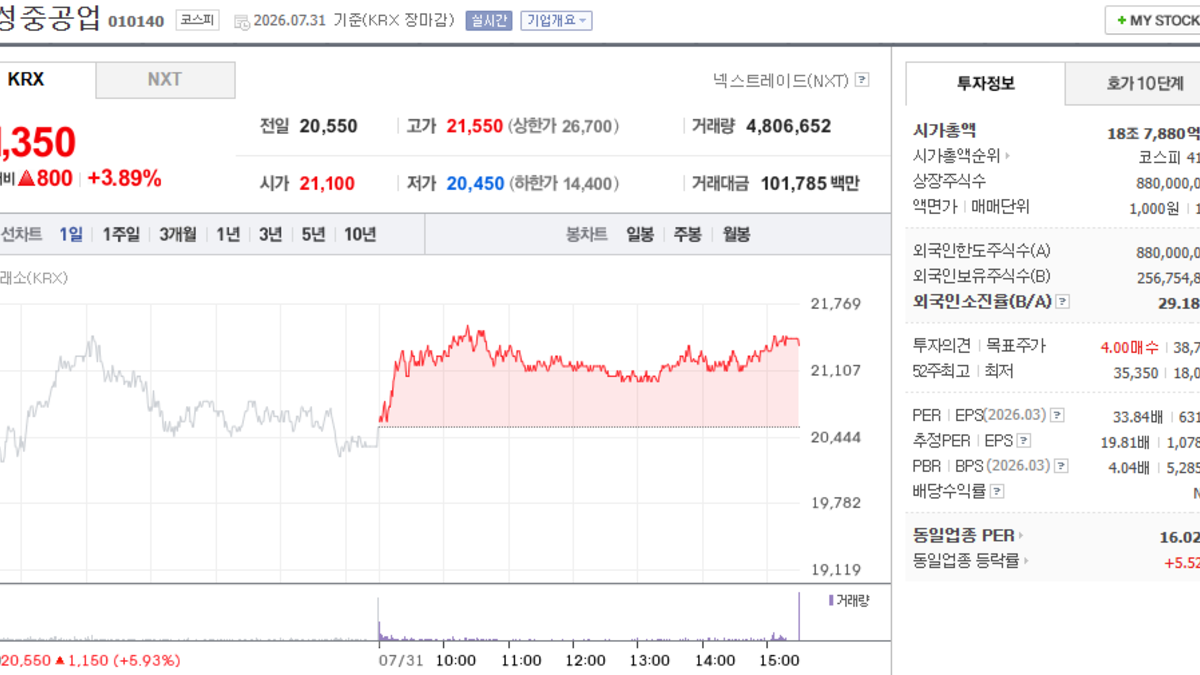
Samsung Heavy Industries’ Stock Rebounds in the Final Week of July After a Midweek Decline - Topstarnews
톱스타뉴스 · 2026.08.01
📰 View original
Comments 0
to comment Login